


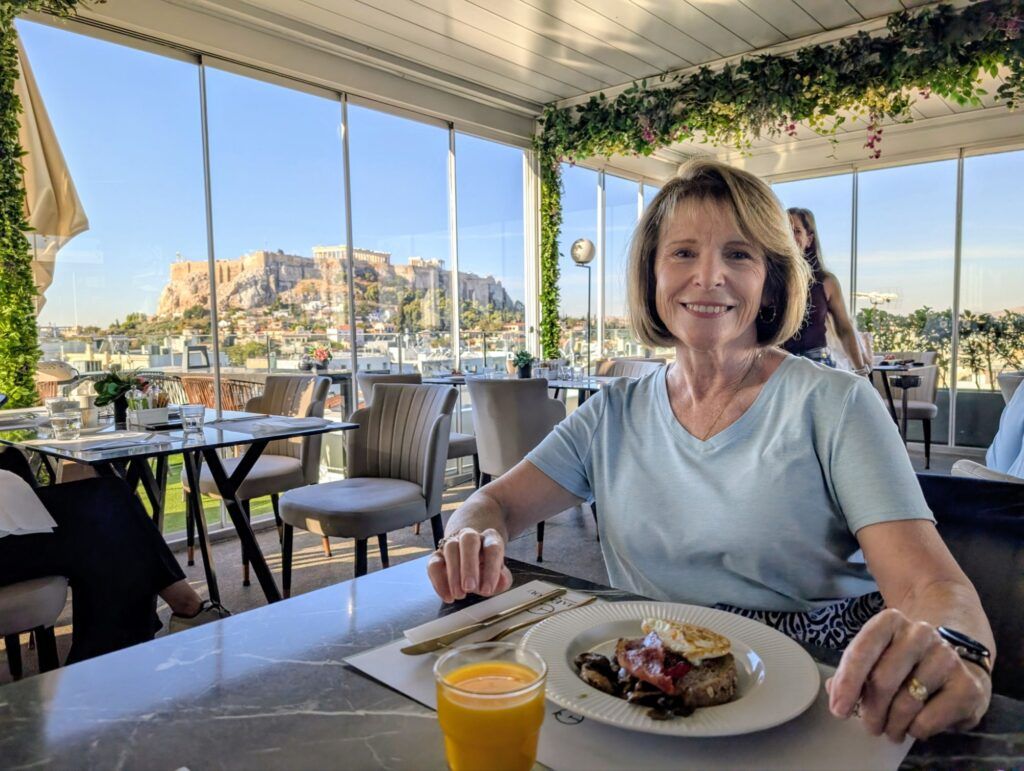
The breakfast view was pretty good this morning, and the spread was excellent. We tucked in and then set off to explore the inner city neighbourhoods.
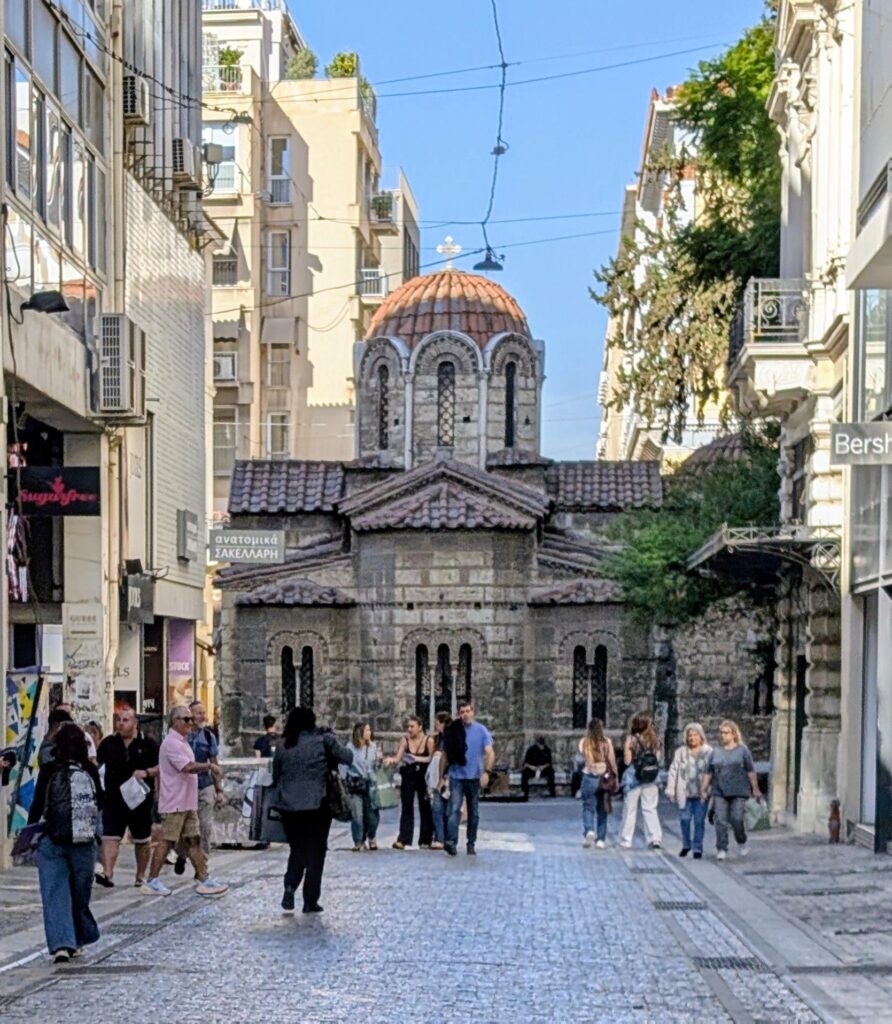
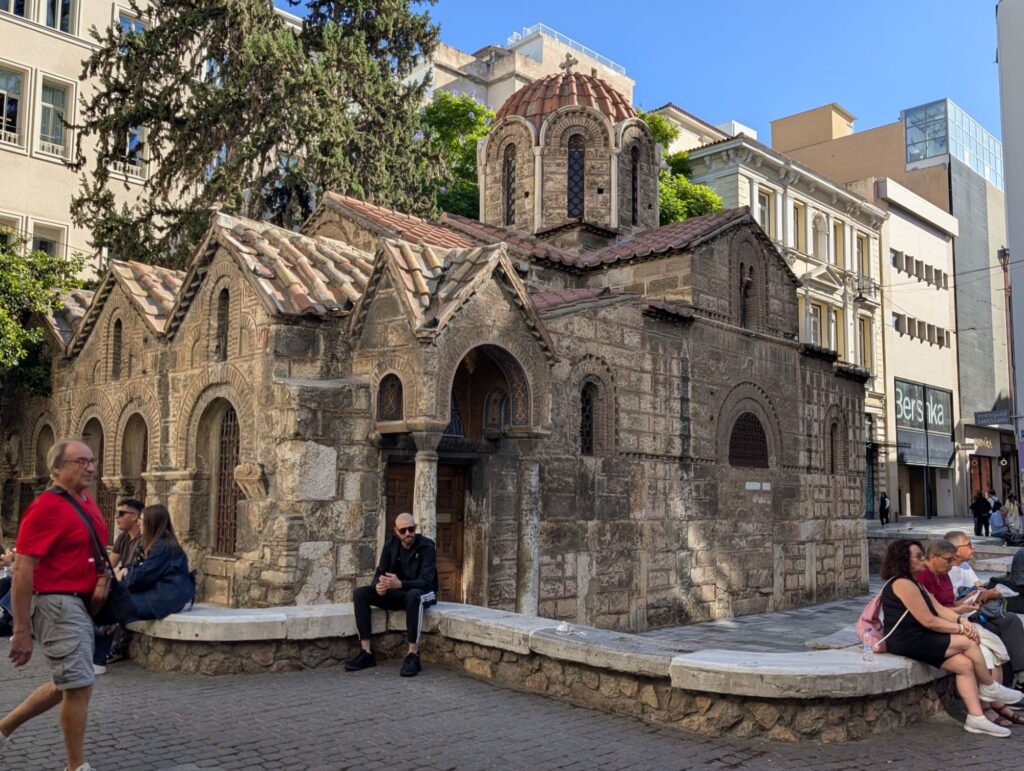
The hotel is on Ermou Street, one of the main shopping streets. However, only a short distance down the street the way is blocked by a cute little church in the middle of the road. The church of Kapnikarea was built around the year 1000, a classic Orthodox church in the Byzantine style.
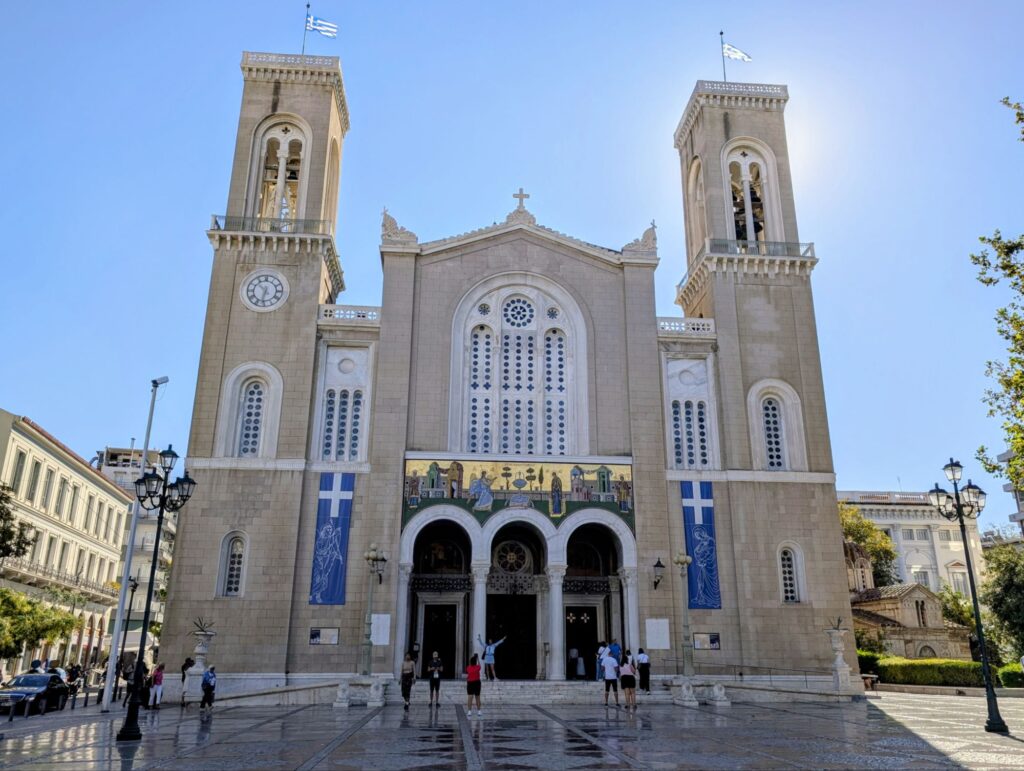
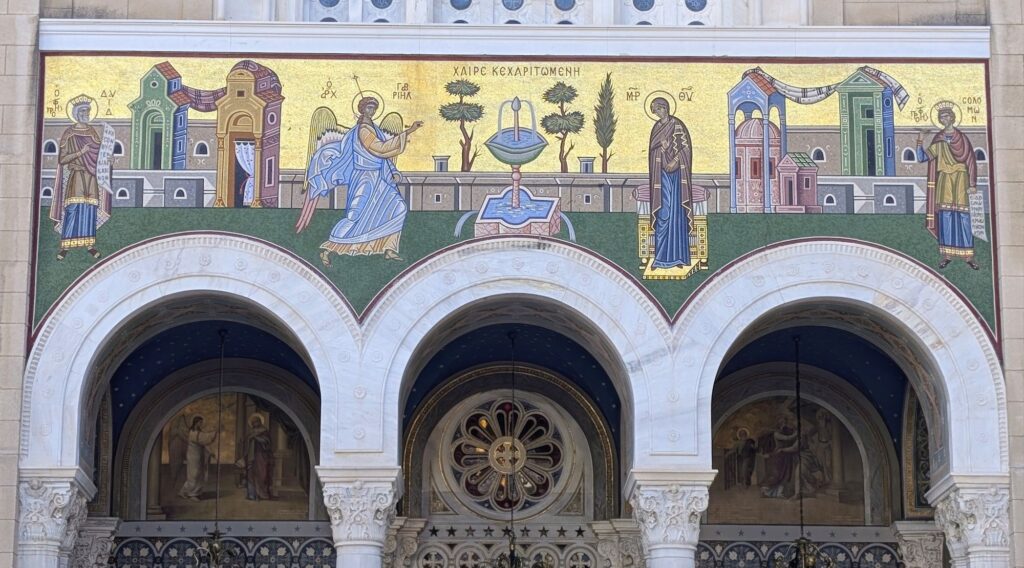
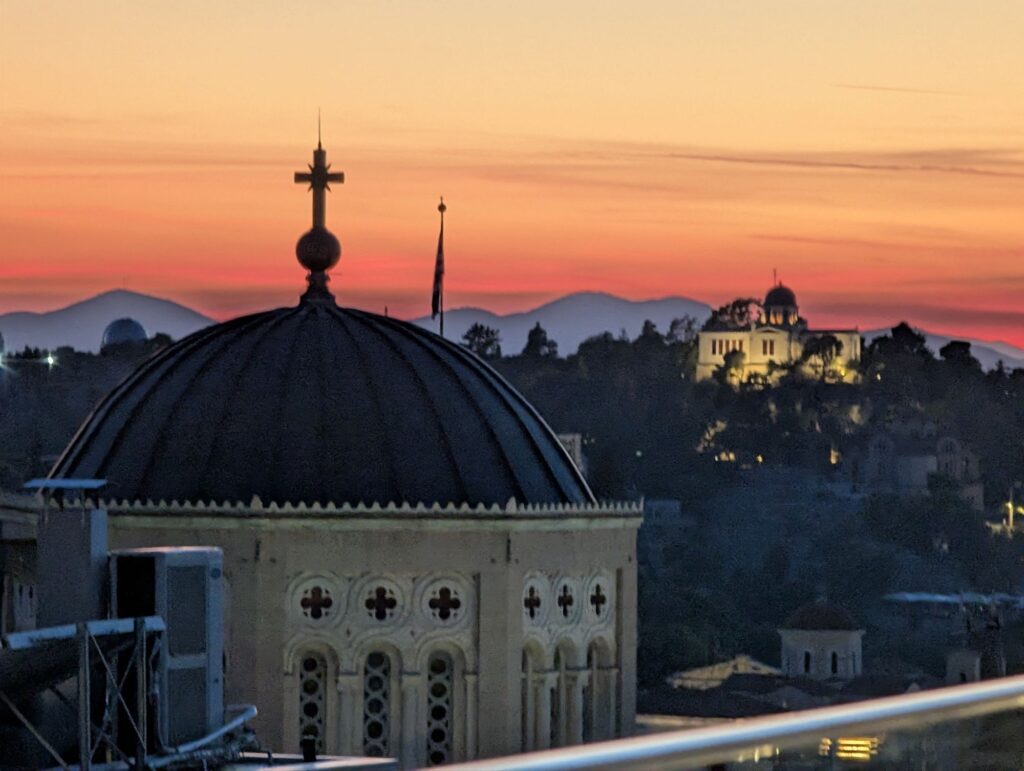
A few steps along a pretty shopping street we came to the most important church in the Greek Orthodox world, the cathedral that is effectively the Greek Vatican. It flys the Greek flag as it’s also the National Church. The structure only dates from 1842 but has many Byzantine features, tall windows, horseshoe arches etc.
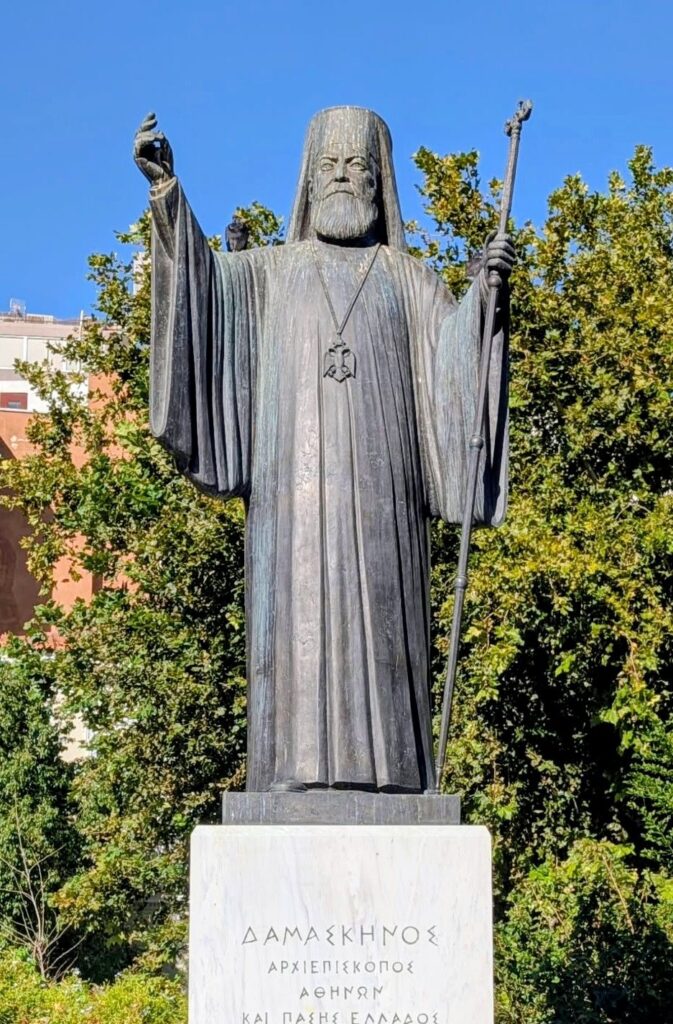
In the square before the cathedral there stands a statue of Archbishop Damaskinos. During the Nazi occupation of Greece, he was one of the rare Christian leaders who spoke out on behalf of the persecuted Jews. The Nazis threatened to put him in front of a firing squad. The feisty archbishop joked they should hang him instead in good Orthodox tradition. After the war he served as caretaker Prime-Minister.
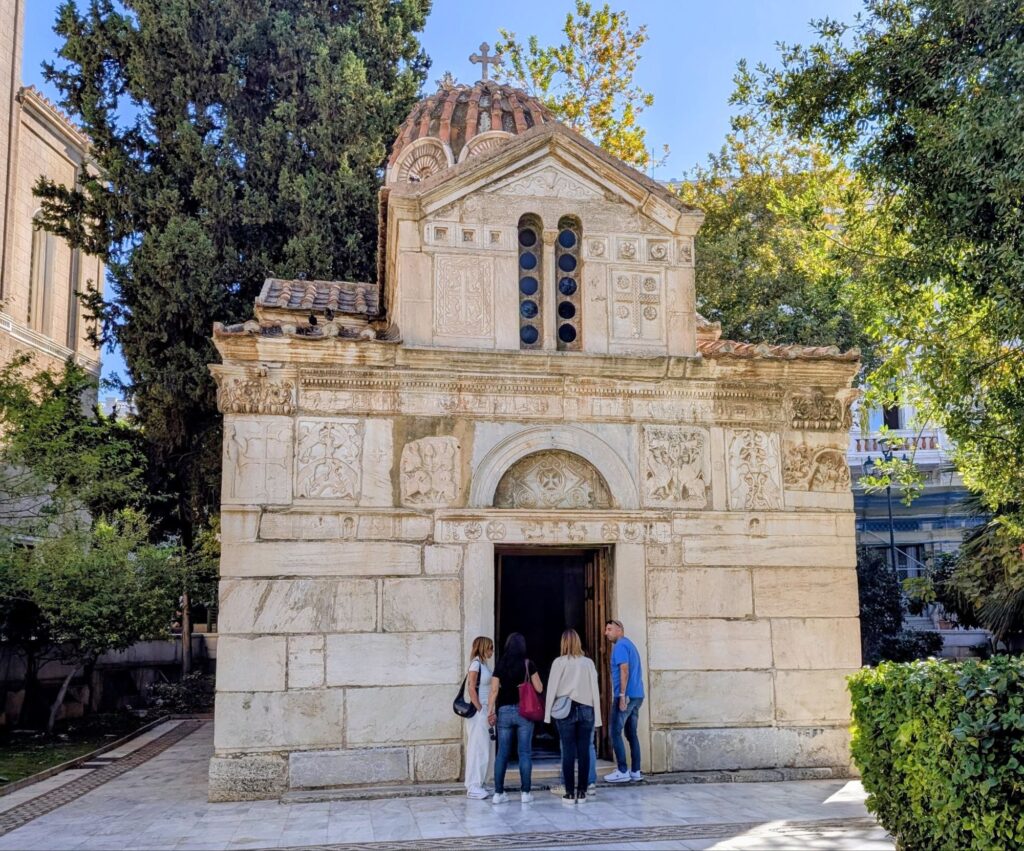
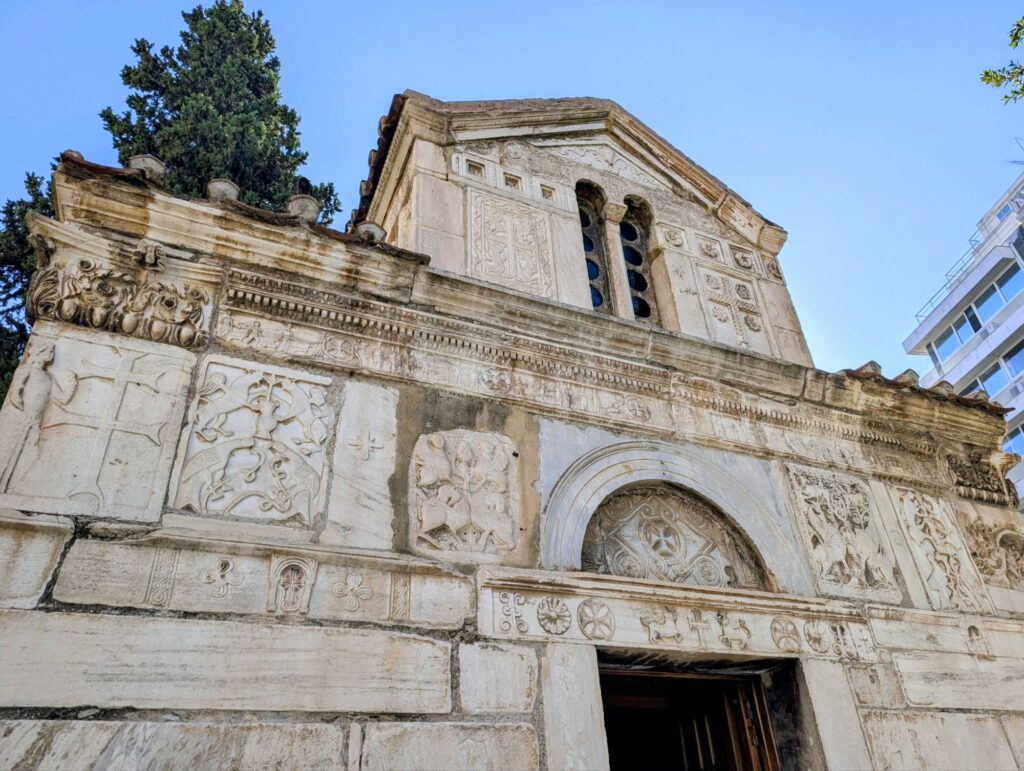
Right next to the cathedral is the tiny Church of Agios Eleftherios. Prior to the 1400s , the Parthenon served as the main Christian church. However at that time the Ottomans took control of the country and they turned the Parthenon into a Mosque, and the archbishop moved here to this little church.Built in the 12th and 13th centuries, its front wall is a jigsaw puzzle of reused stones from earlier monuments, some of them dating to before the time of Christ!
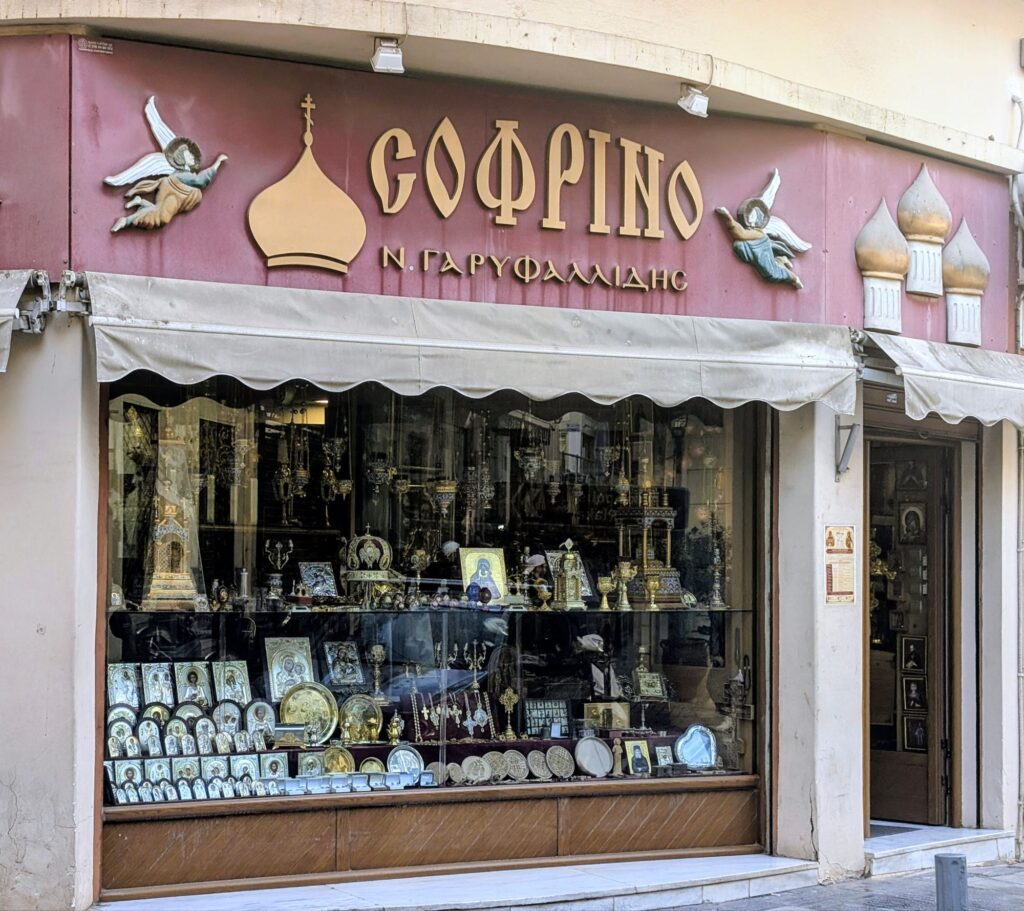
Behind the cathedral we walked up Agia Filotheis Street. This area is home to many stores selling all kinds of religious objects, and we saw some Orthodox Nuns and clerics going into the shops to buy their necessities.
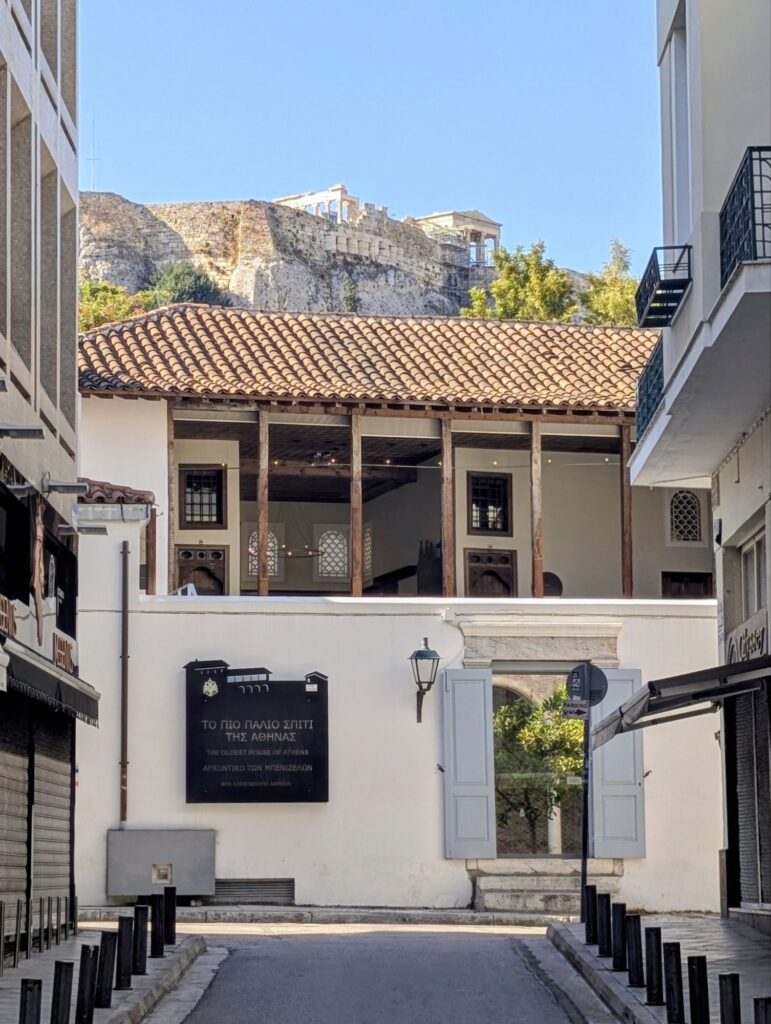
We took a detour down a side street to see the Benizelos Mansion, the oldest home in Athens. There used to be many of these traditional homes in the city, with their inner courtyard. The animals housed downstairs and the , usually wealthy, owners living upstairs. This one is the only one left .
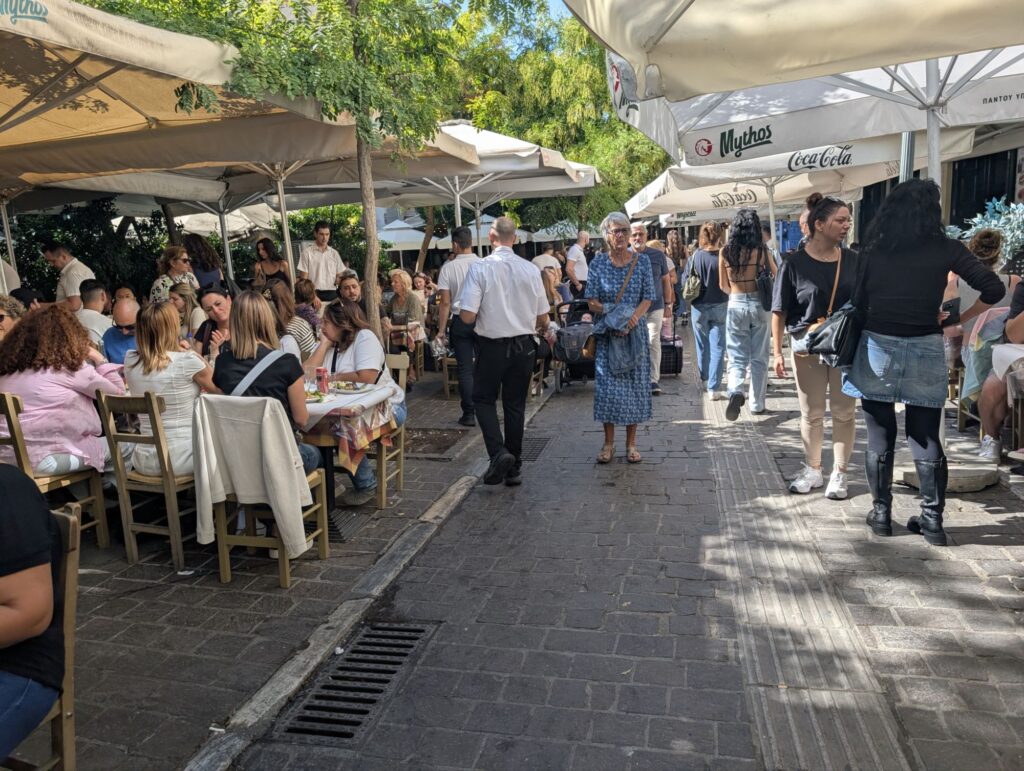
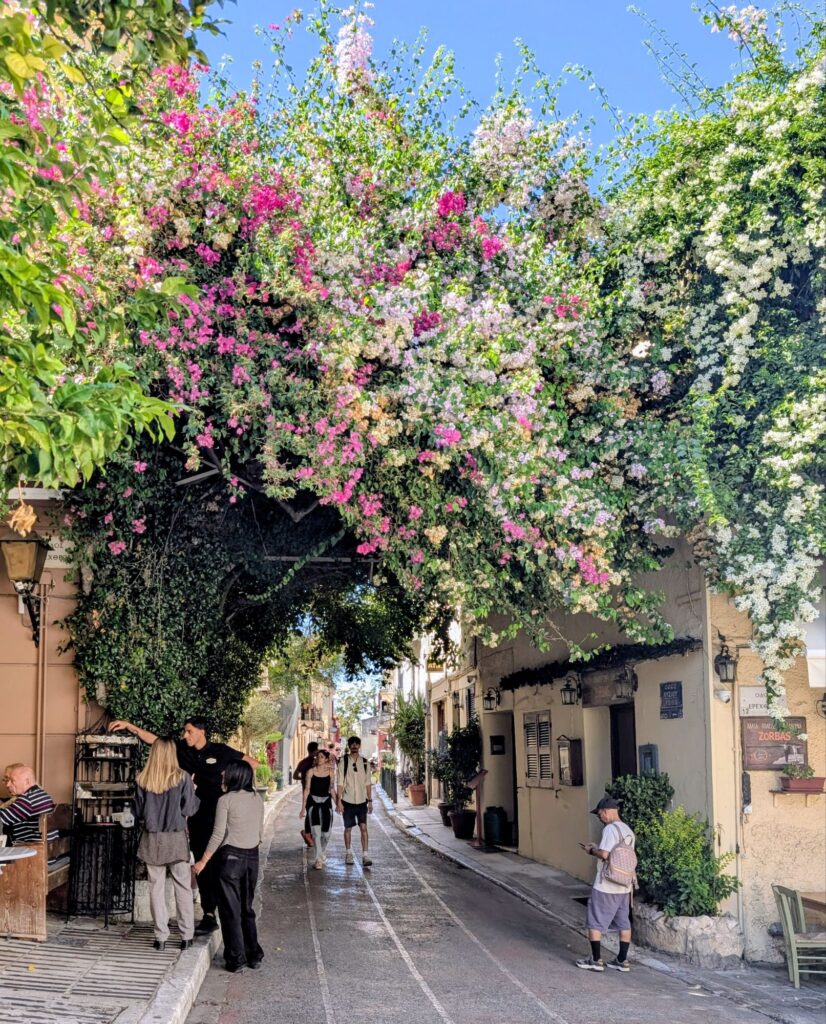
By now we’d arrived in the Plaka, one of the oldest areas in Athens with a maze of winding, narrow cobblestone streets. It is tourist central, full of shops and cafes, but still pretty despite that. I saw a few shops that I thought I’d like to return to later on or tomorrow.
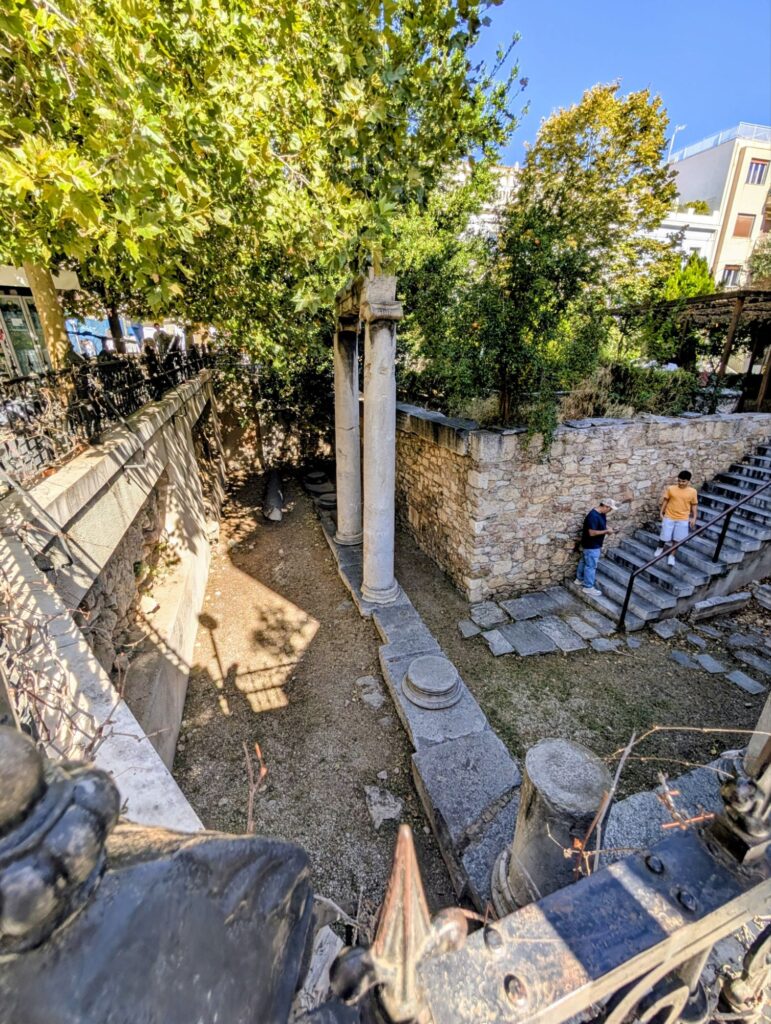
We also came across a spot where they had done an archeological dig, stairs leading down to the ground level as it was 2000 years ago!
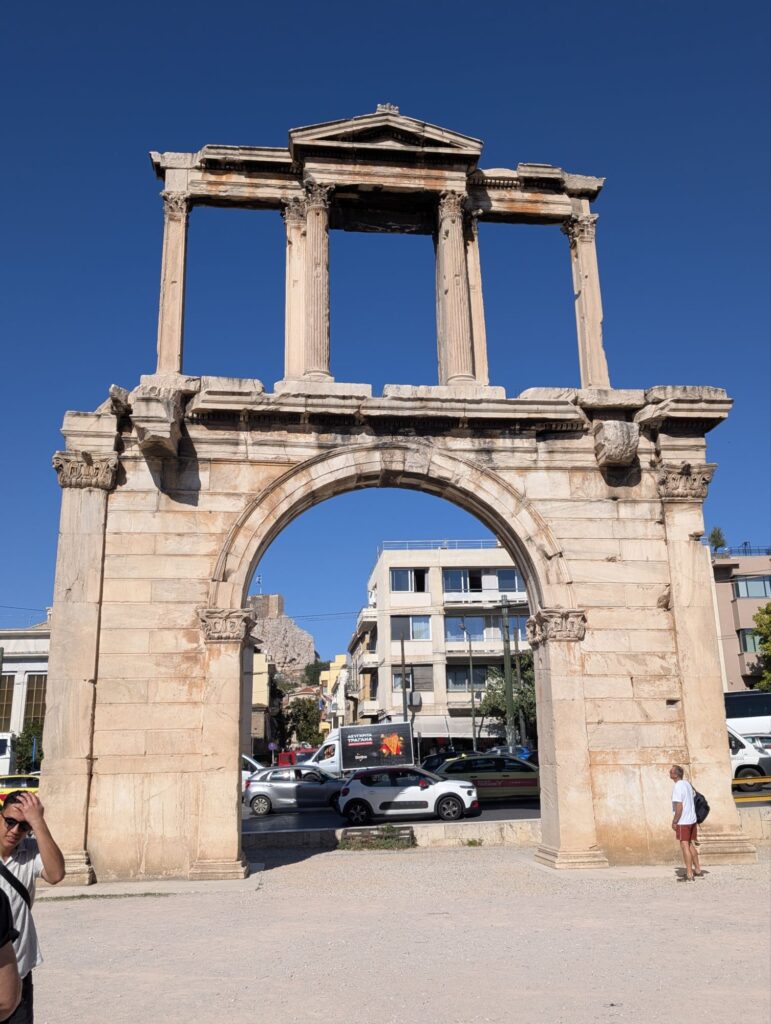
We walked out into a very busy main road and crossed to take a quick look at the Arch of Hadrian and Temple of Olympian Zeus. 146 BC, Athens came under the control of the growing Roman empire. The Romans loved Greek culture and architecture and did a lot of building that made the city even greater. Emperor Hadrian (known in Greece as Adrianou) built an enormous planned neighbourhood known as Hadrianopolis.The Arch of Hadrian marked the entrance to the planned community.
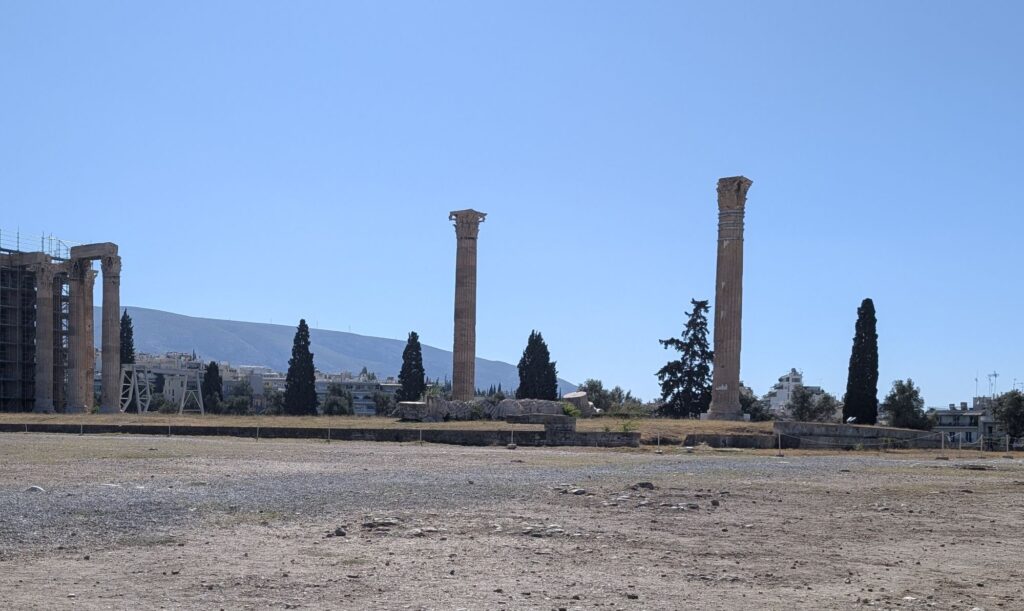
Only a few columns remain of the Temple of Olympian Zeus. This was the largest temple in Ancient Greece and took almost 700 years to complete!
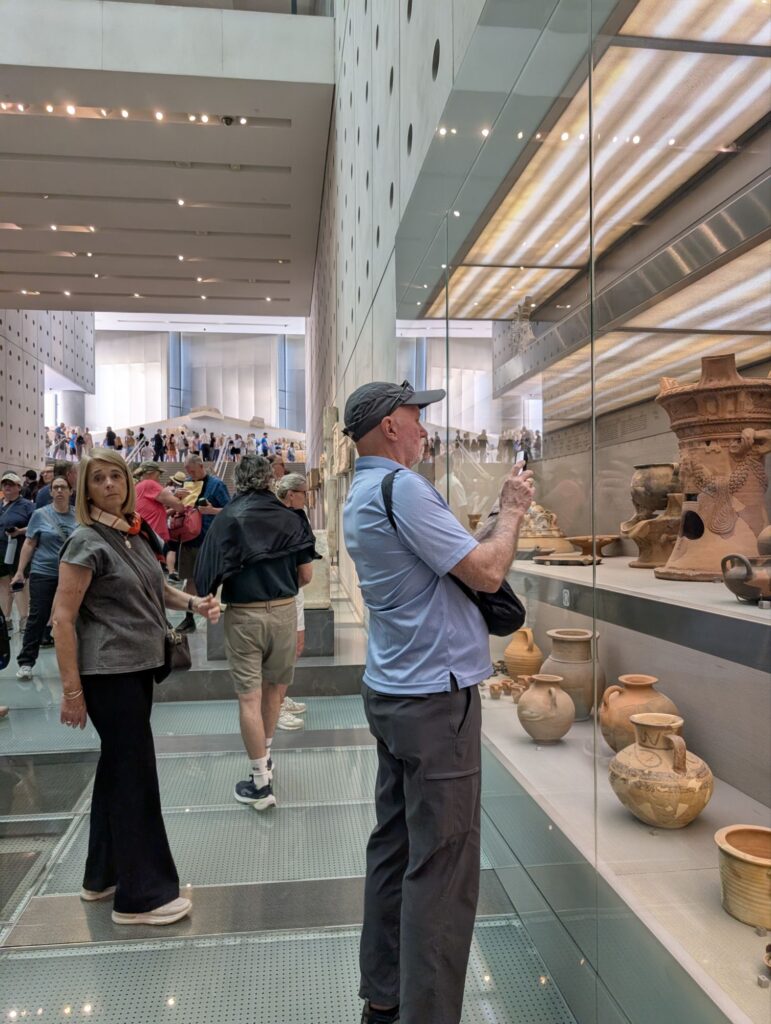
Back across the busy road we made our way to the Acropolis museum. It’s a huge, modern museum that houses most of the artifacts and statues that came from the Acropolis and the hills surrounding. At least, it contains what is left after so much of the statues and friezes were looted and destroyed. I’d read that it’s a good idea to see the museum before the Acropolis itself as it puts everything in context so we queued for a while to buy tickets and enter. The museum is built over three levels, from the entrance you pass up a wide sloped gallery where the walls are lined with hundreds of artifacts that were found on the slopes of the Acropolis. These were mainly everyday items belonging to the people that lived and worked there.
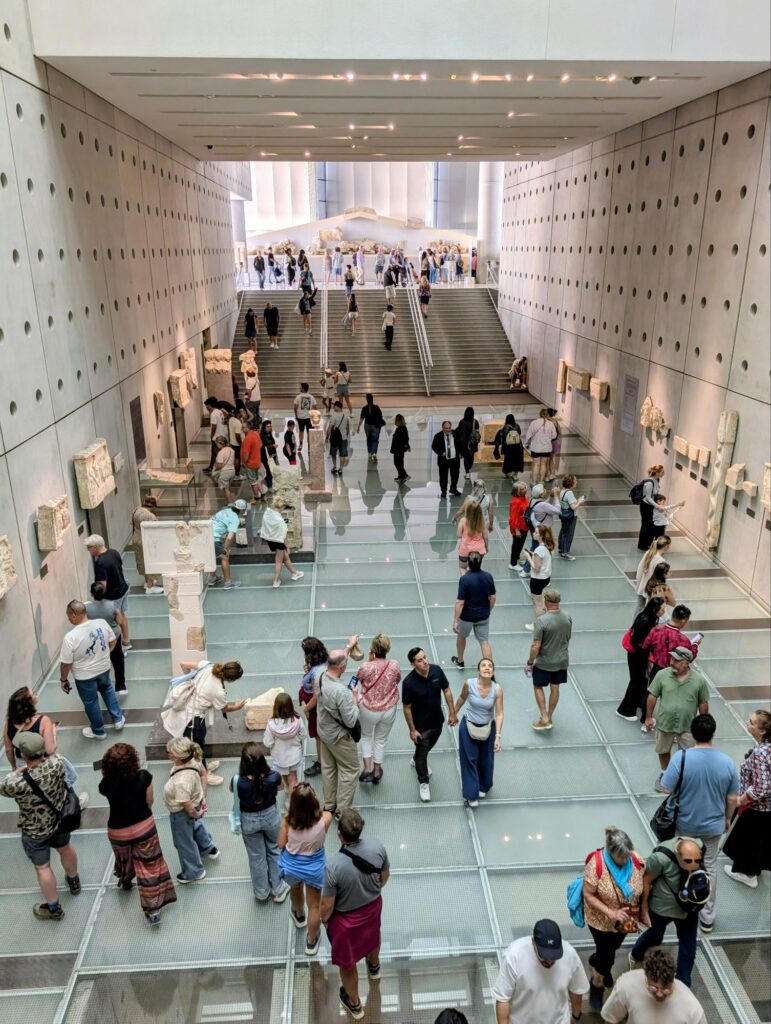
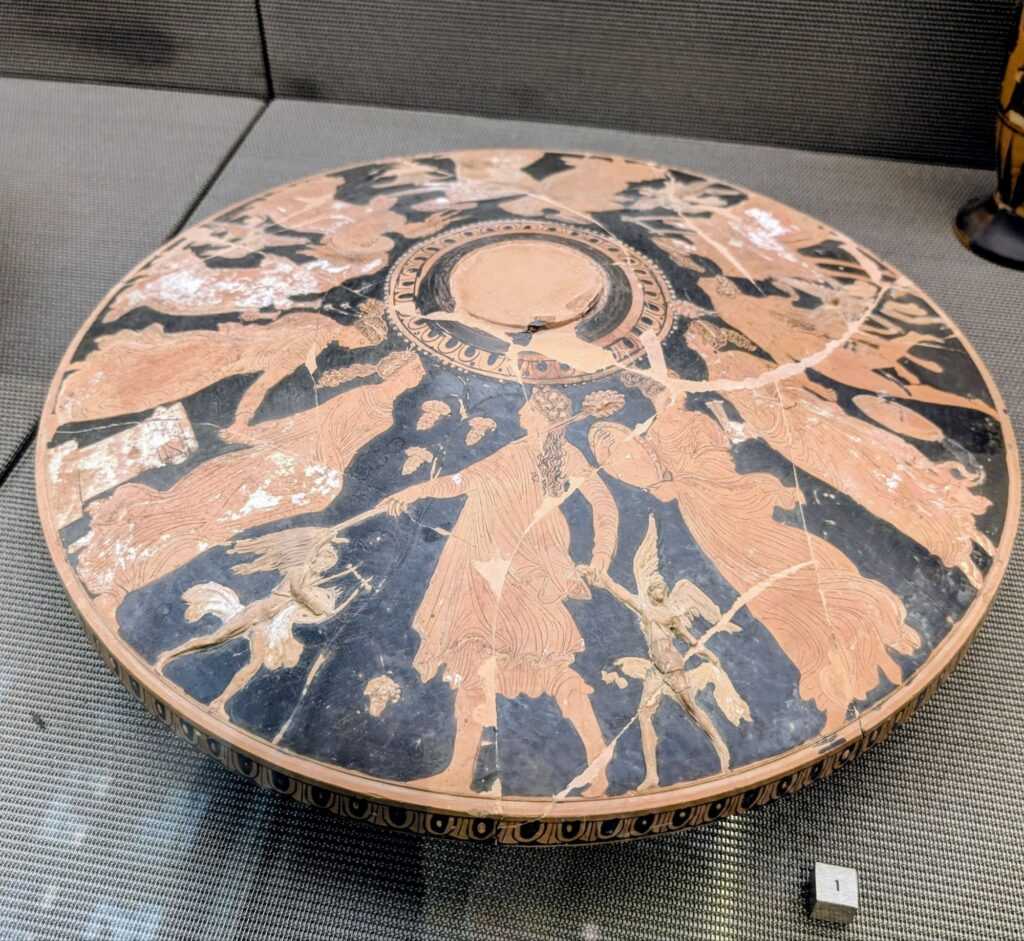
The second level is the Archaic Gallery, which had all the statuary that had been preserved from the Acropolis. We snapped a couple of pictures, then realised this area was “no photos!” , the attendants were having a busy time running around telling people to stop taking pictures
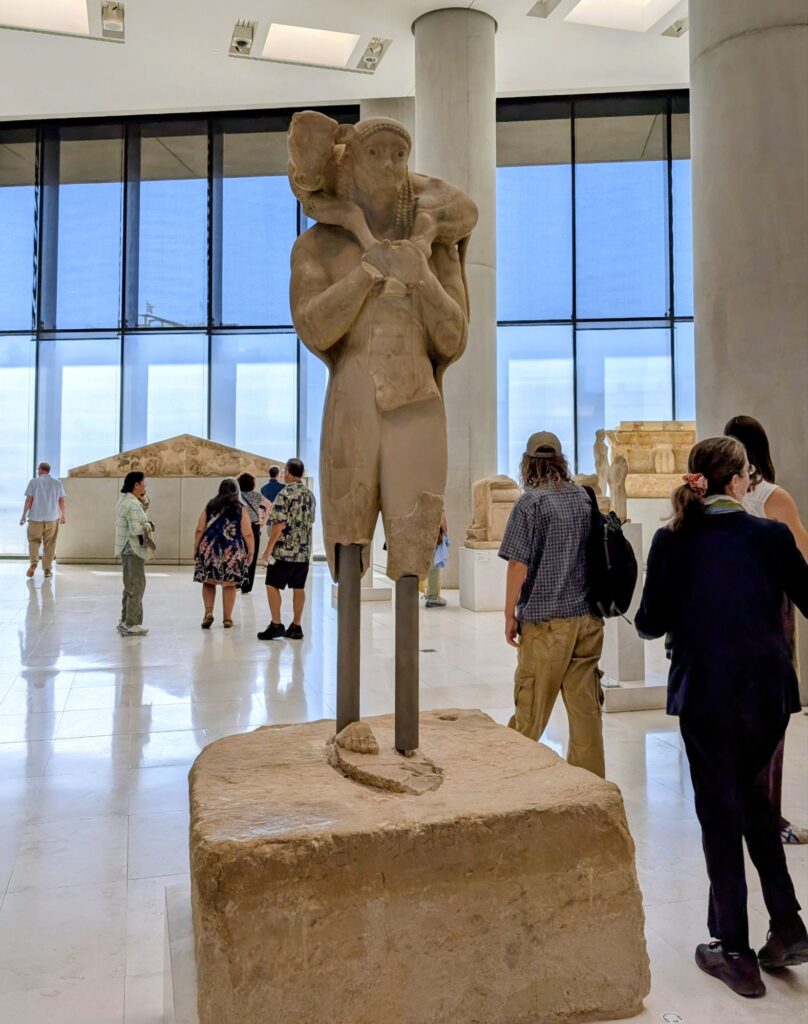
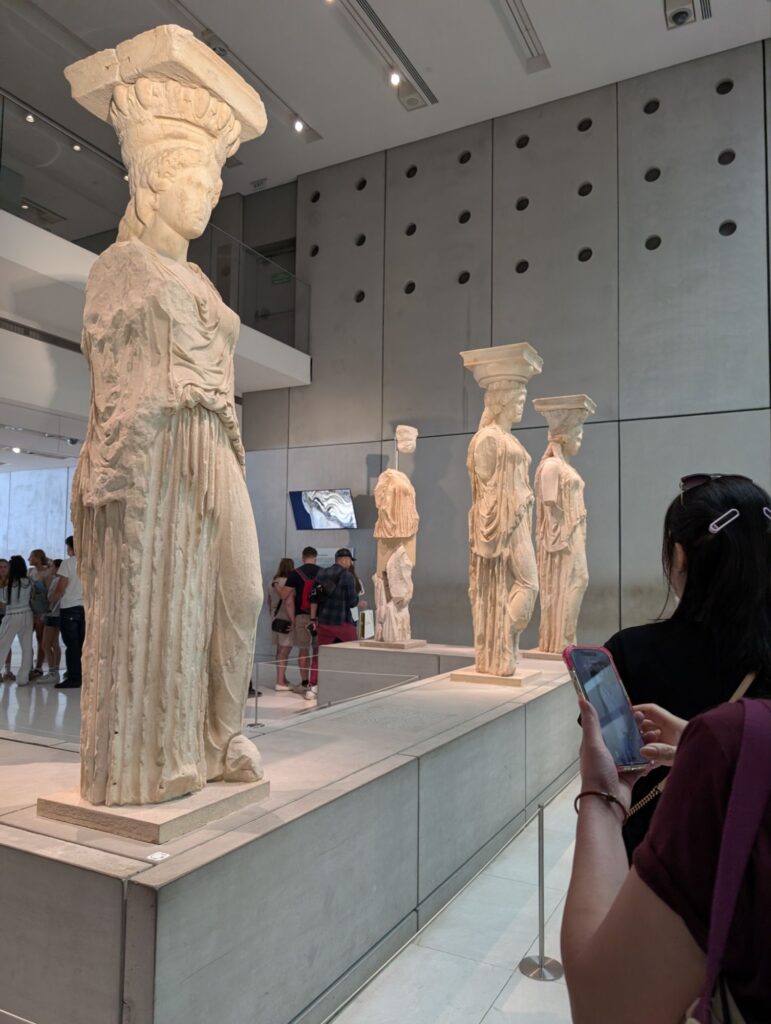
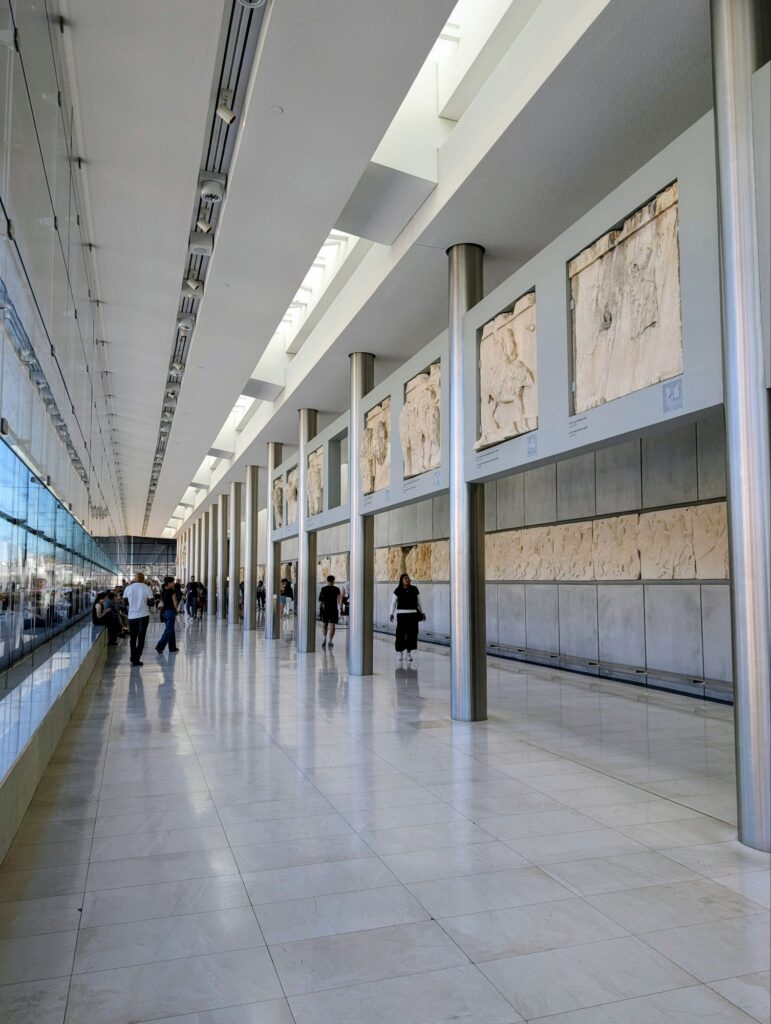
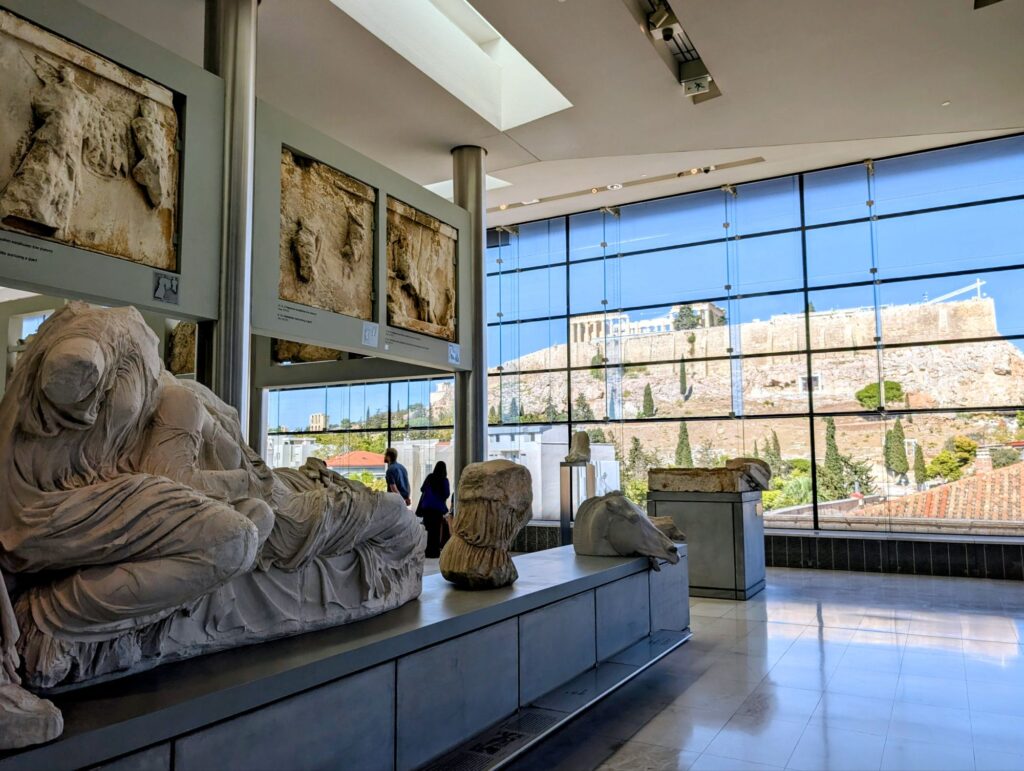
The top level is the Parthenon gallery. The entire floor is effectively a full size replica of the Parthenon . There are steel columns that correspond to those on the real thing and placed between them are reconstructed sections of the marble friezes that used to wrap around the Parthenon.
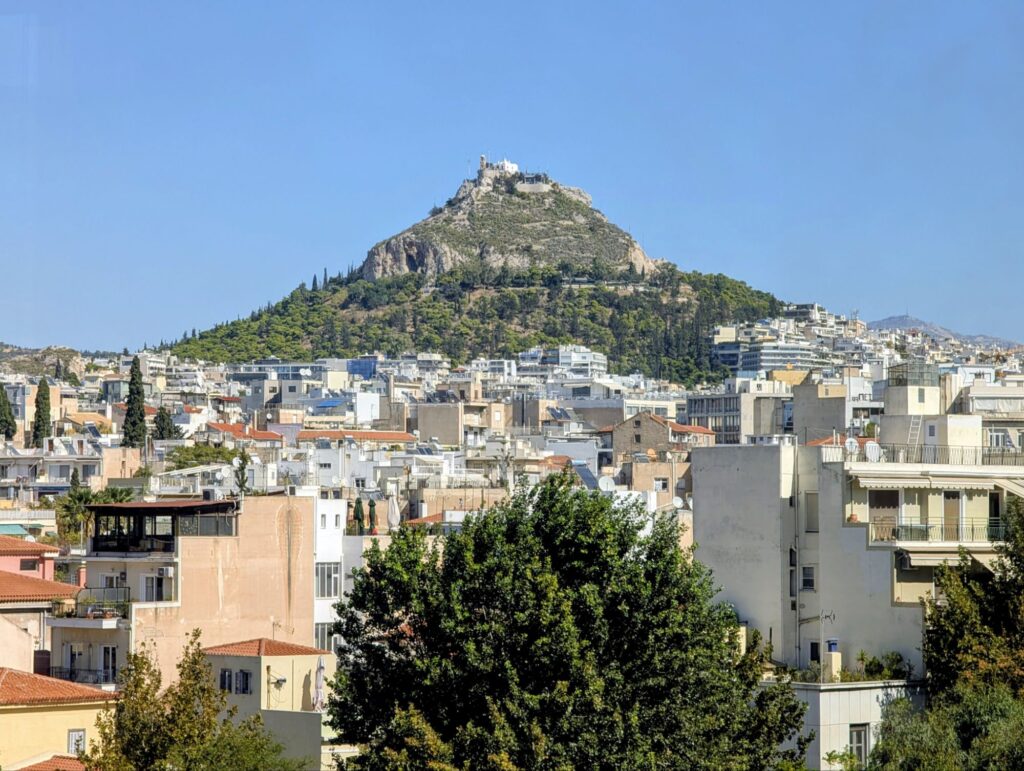
We enjoyed the views that we could see from the full height windows, up to the Acropolis and across to Lycabettus Hill
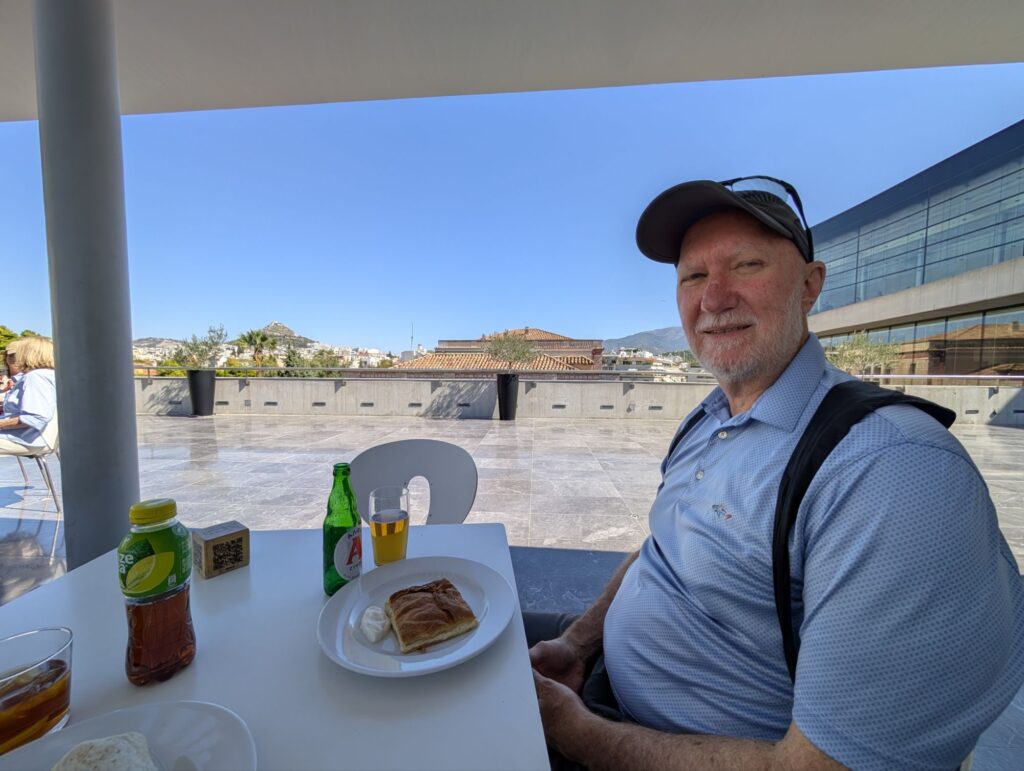
By now we were getting a bit peckish so we went down to the Museum’s cafe. It was lovely sitting outside under the canopy and enjoying the breeze.
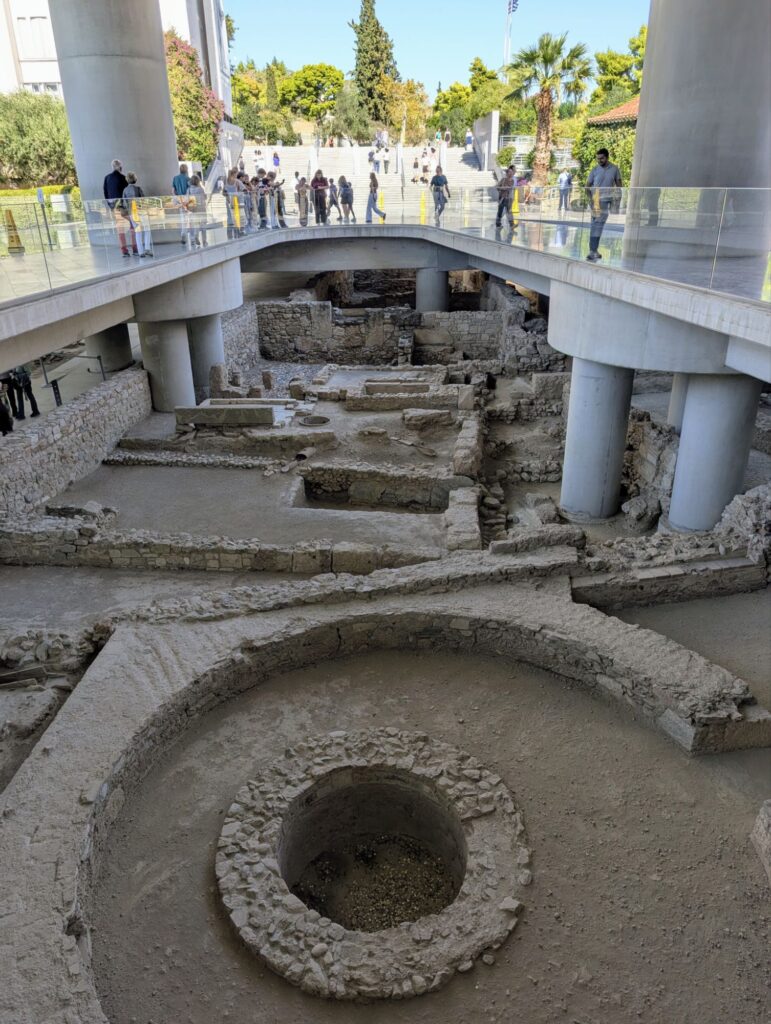
As we left the Museum we could look down to the massive archeological excavation they have done beneath its floors.
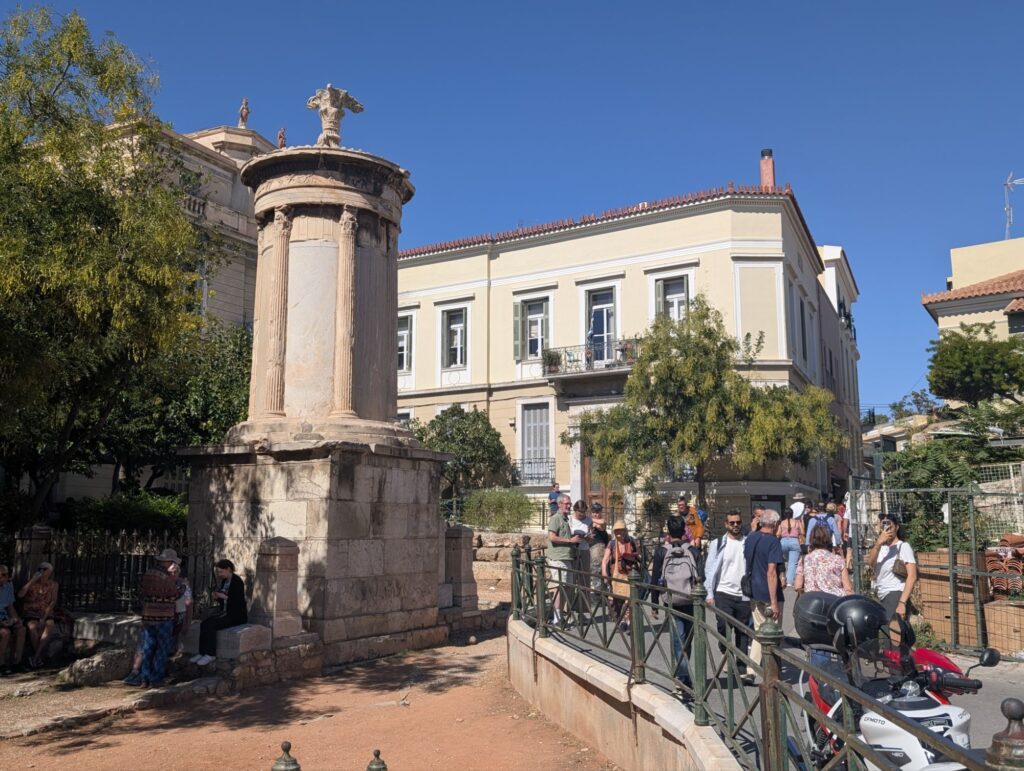
We took a different route back into Plaka, this time passing the Lysicrates Monument. Here the ancient “Oscars” were awarded to winners of theatrical competitions staged at the nearby Theatre of Dionysus. This monument honors the winning choral team from the year 334 BC!
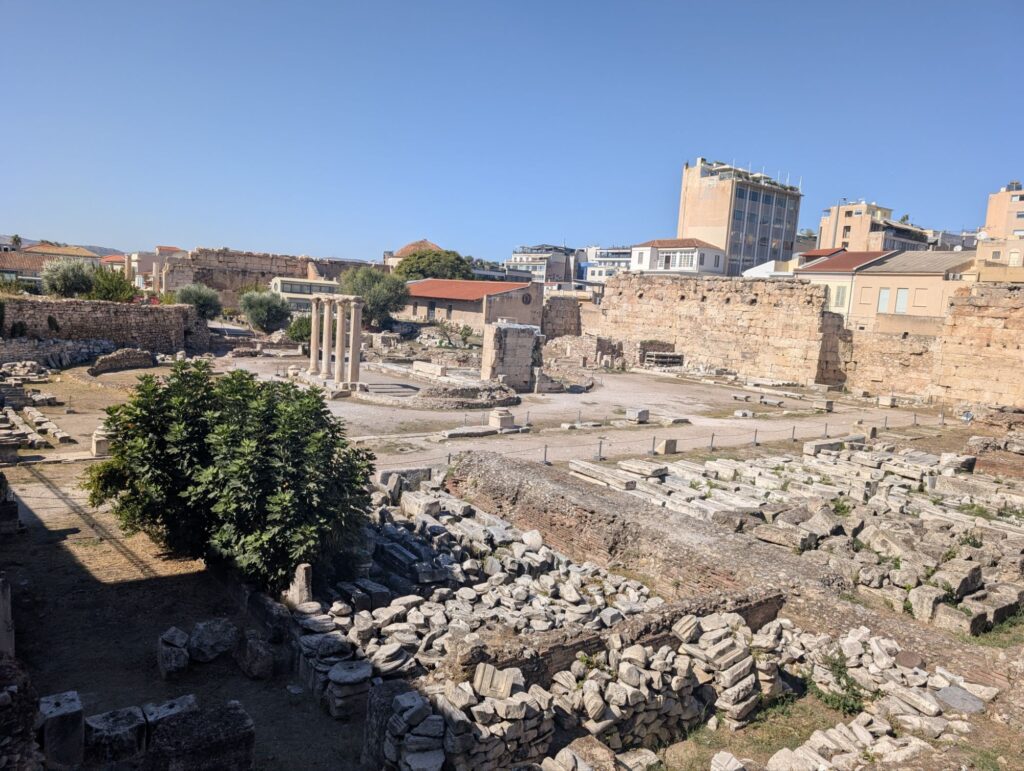
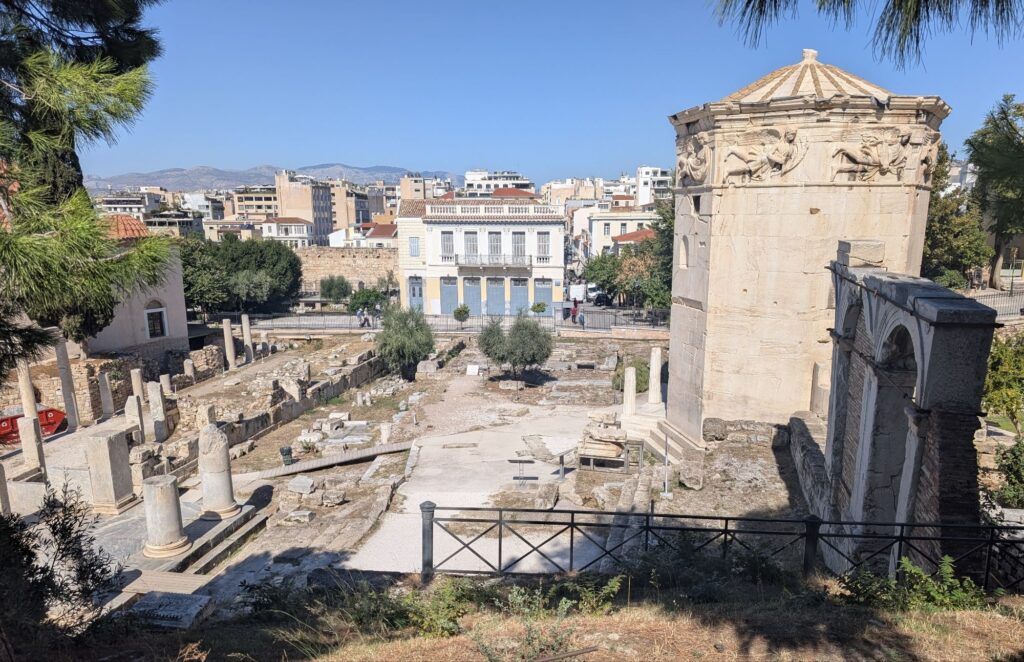
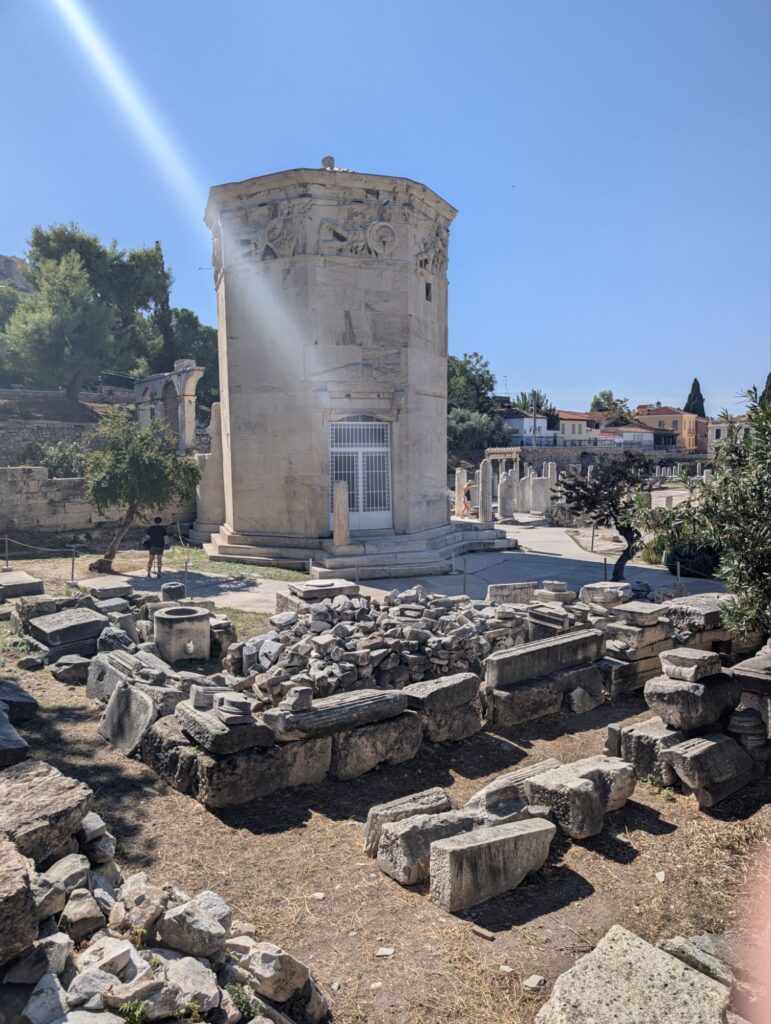
From here we took a meandering route back towards our hotel. We passed a section of the Roman Agora and the Temple of the Four Winds. This was the commercial centre of Roman Athens. The tower was built in the first century BC it was an ingenious combination of clock, weather station and guide to the planets. It housed a sophisticated water clock and was capped with bronze weathervane in the form of Triton.
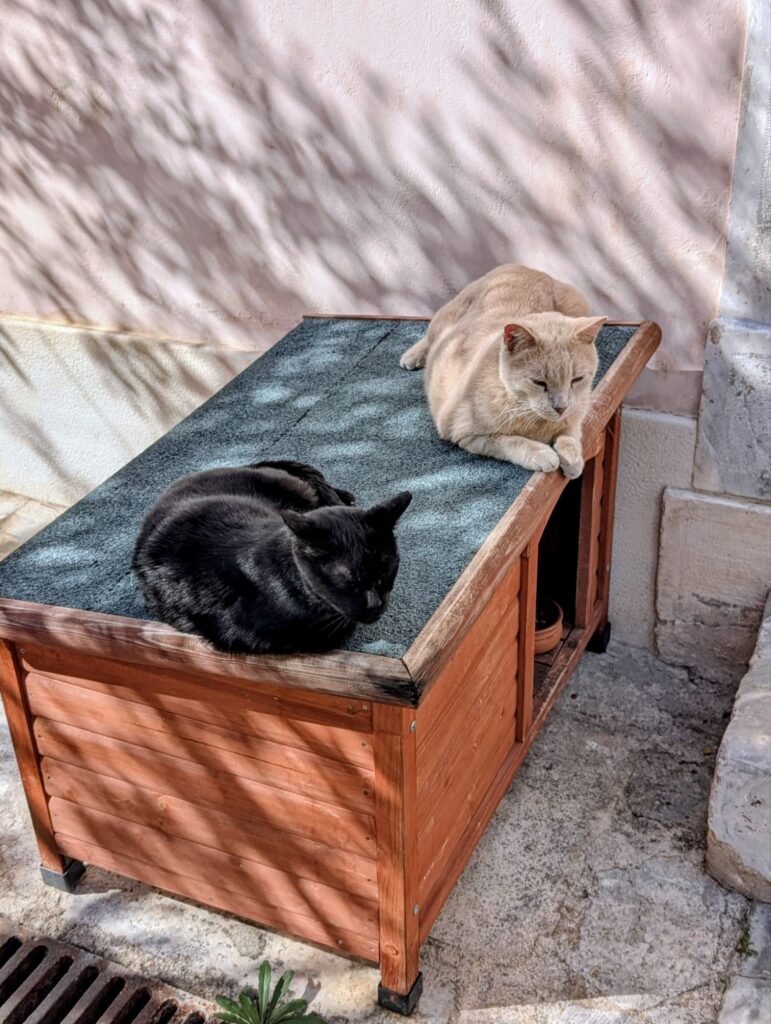
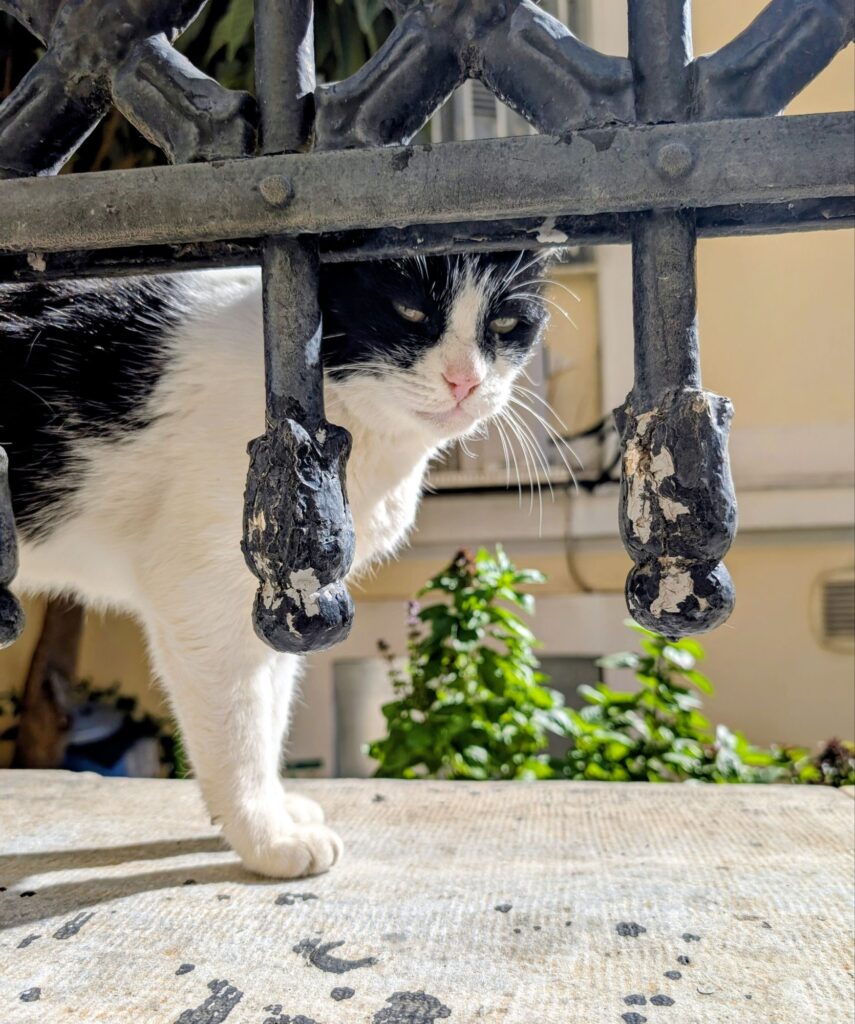
As a cat lover I’ve enjoyed seeing all the kitties that roam the old streets. Some had little houses and were eating food that had been put out for them. Most looked reasonably content and well cared for. I’m accumulating a bunch of photos of the “Cats of Athens”
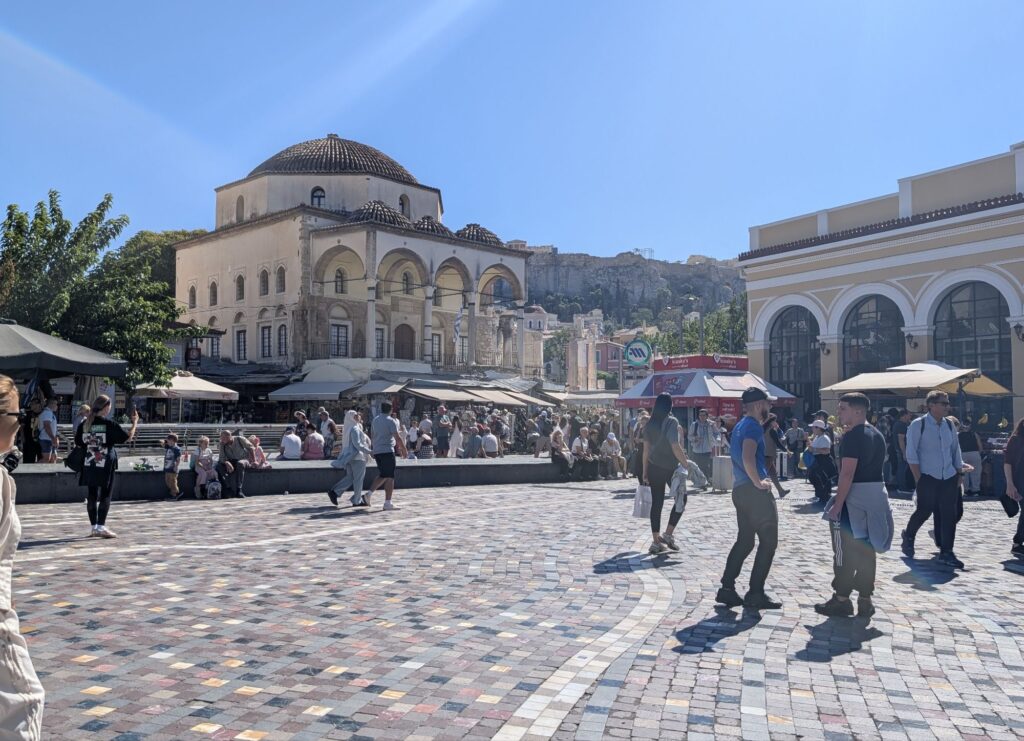
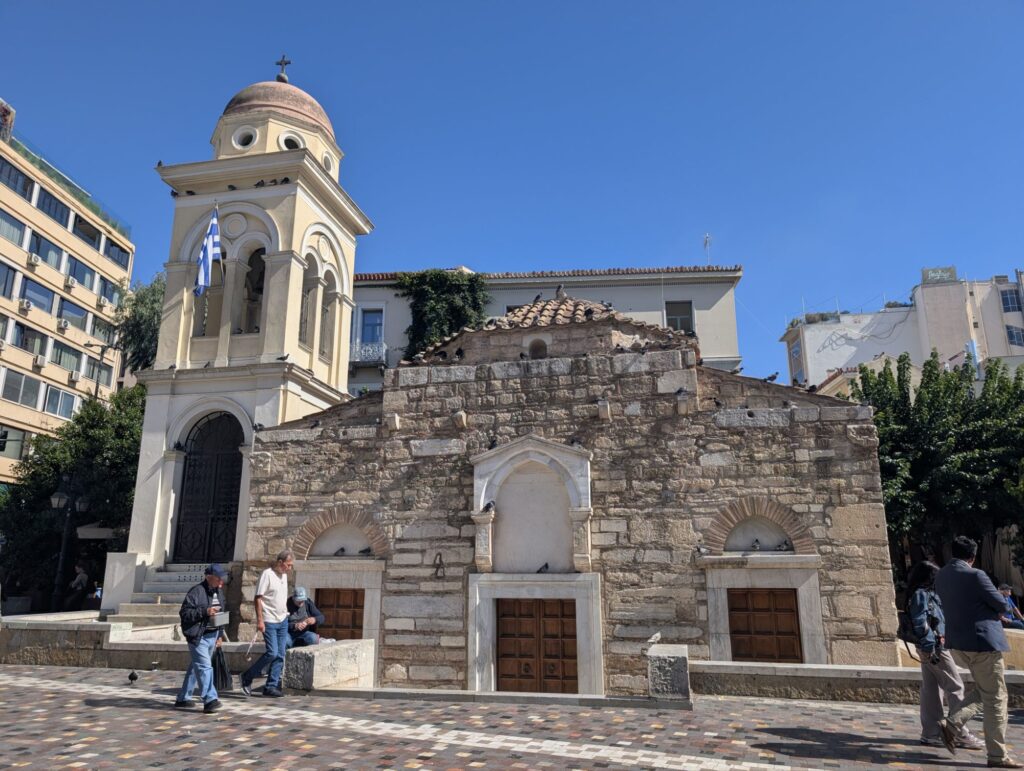
We passed row after row of tavernas on leafy Mitropoleos St, which is Athens “souvlaki row” and then popped out into Monastiraki Square, one of the two main squares in the city. Monastiraki means “Little Monastery” referring to the cute Church of the Virgin, the 12th Century Byzantine church in the centre of the square. At the bottom of the square there is also a domed building that is a former mosque.
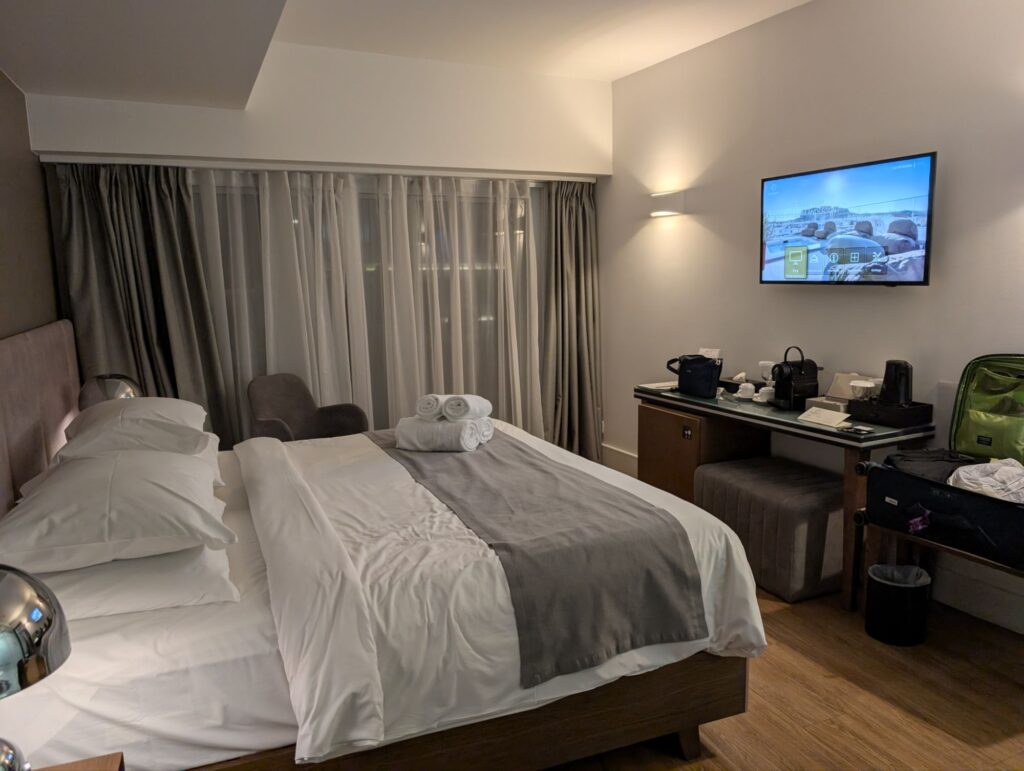
Our collective knees, hamstrings and feet needed a rest by now so we were glad to get back to the hotel for a breather. It’s a nice room, not big but comfortable. The one thing I’m not living here so far in Greece is not being able to flush the toilet paper down the toilet, it goes in a little bin. We haven’t struck that before and it’s a bit of an adjustment trying to remember !
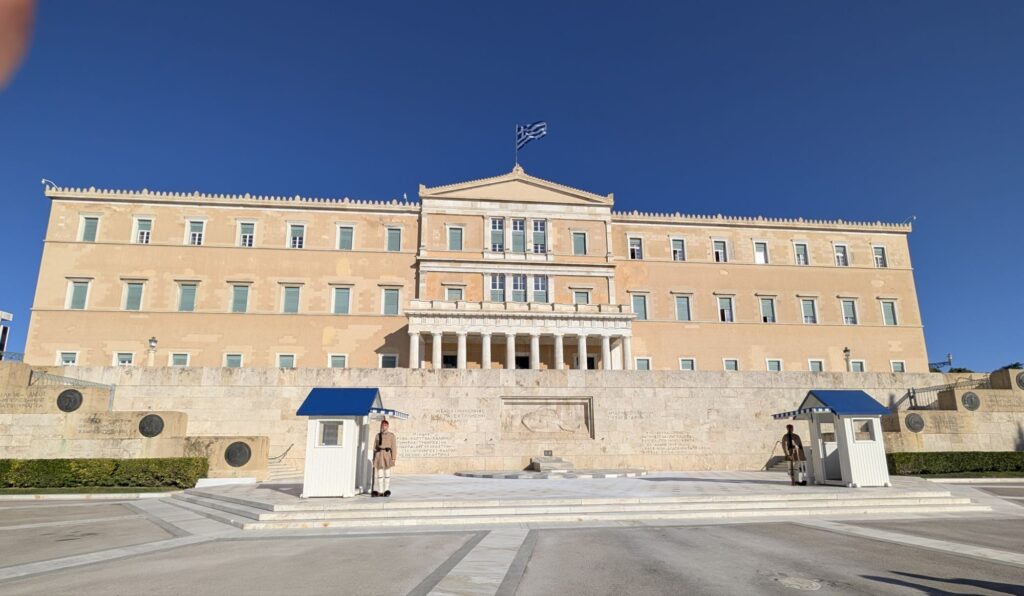
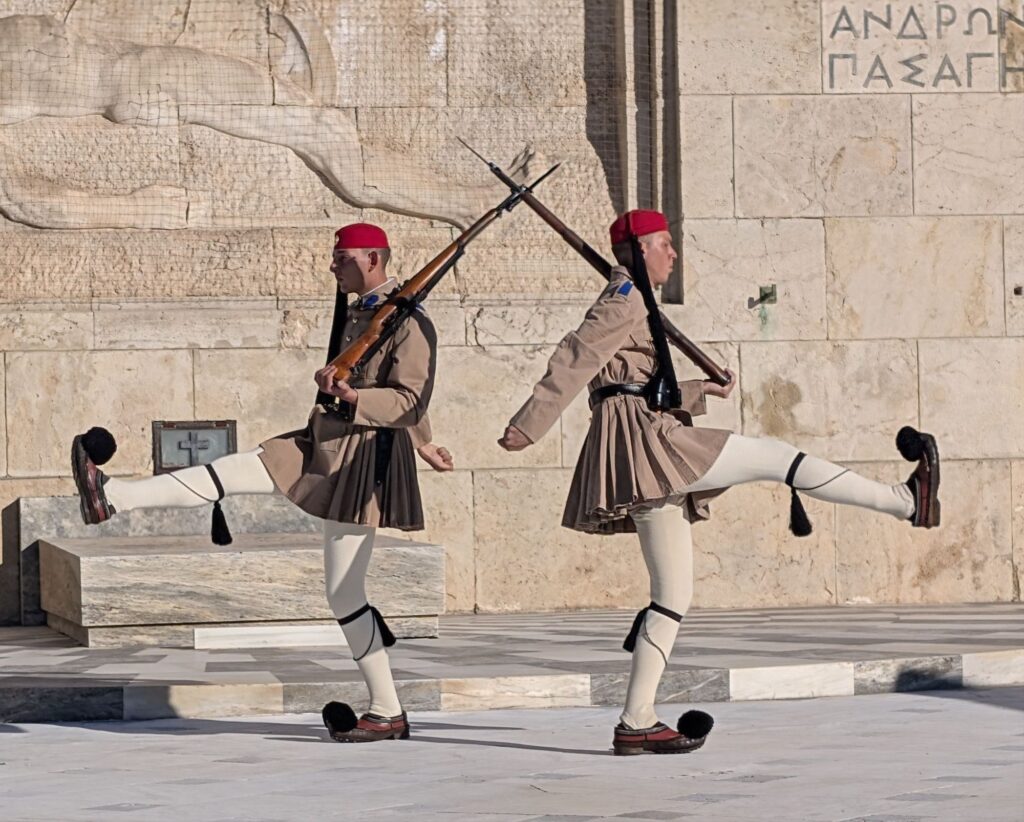
After a break we set out for the five minutes walk to Syntagma Square. This is where we could see the Greek parliament building and the famous Evzone Guards. Every hour they have a very unique changing of the guard ceremony. The guards are from an elite infantry unit of the Greek Army. They remind the Greeks of the crucial moment when modern Greece was born in 1821. After nearly 4 centuries of Ottoman Turkish rule, the Greeks rose up. They were led by a band of mountain guerilla fighters, and their uniforms were based on ancient warriors, complete with Mycenean pom-poms and the current guards proudly wear the same outfit.
They look fantastic with their huge pom poms on their metal soled boots, with their pleated skirt jackets and their tasselled hats. The new guard marched around from the back of parliament and they began an intricate series of steps, involving scaling their metal soled on the ground and much high lifted knees and legs. Fascinating!
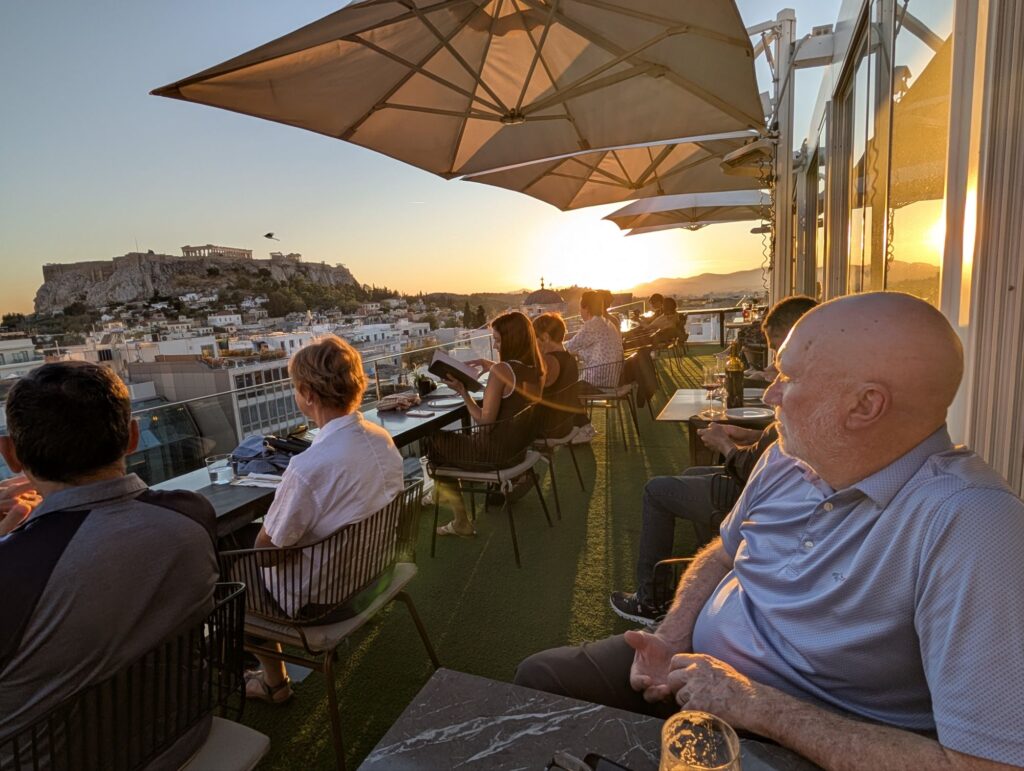
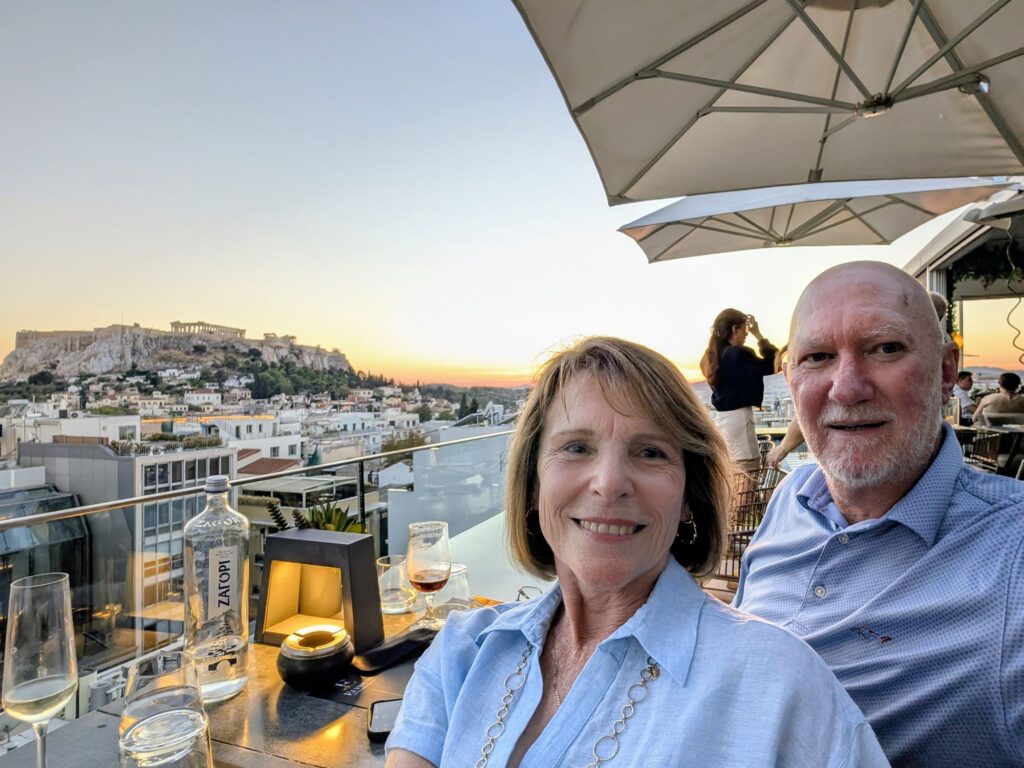
Back at the hotel we changed and decided to go up to the rooftop bar for a drink and to book a table for dinner. We sat and enjoyed the views and chatted briefly to a group of friends who travel together every year after meeting a few years ago for the first time while walking in Spain. One was from Calgary and another from Manly!
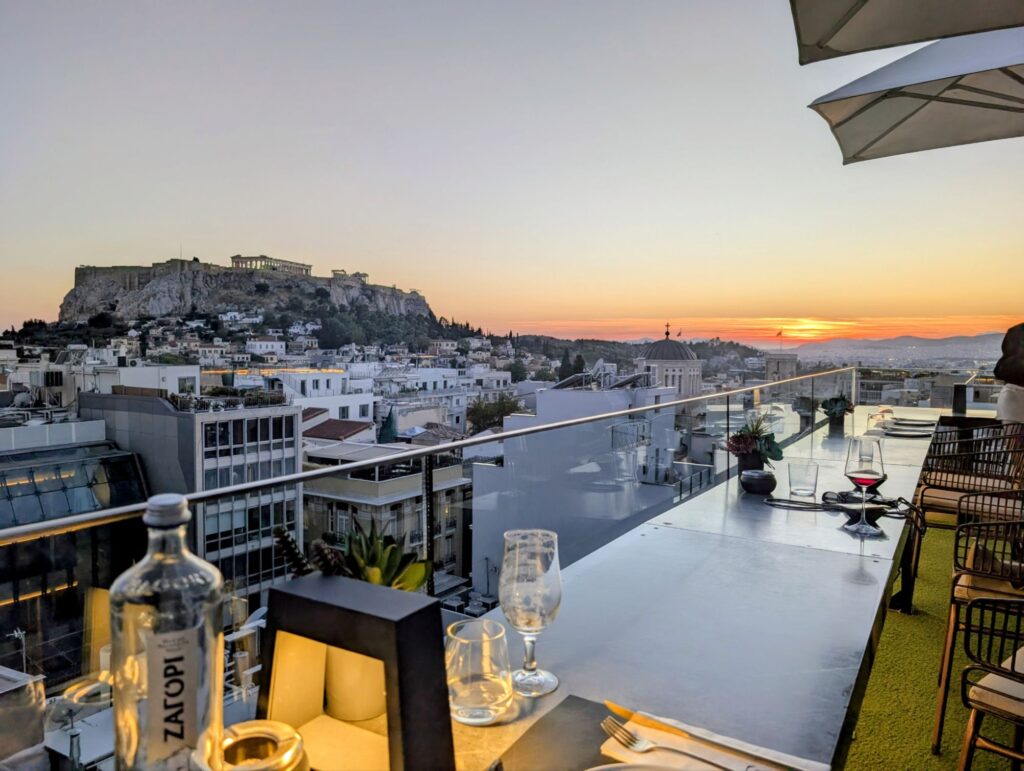
We watched the sun go down from one table and then were moved to a front row balcony table for our dinner, which was wonderful! The waiter was great, very helpful with food suggestions and even gave us advice about where to go in Crete!
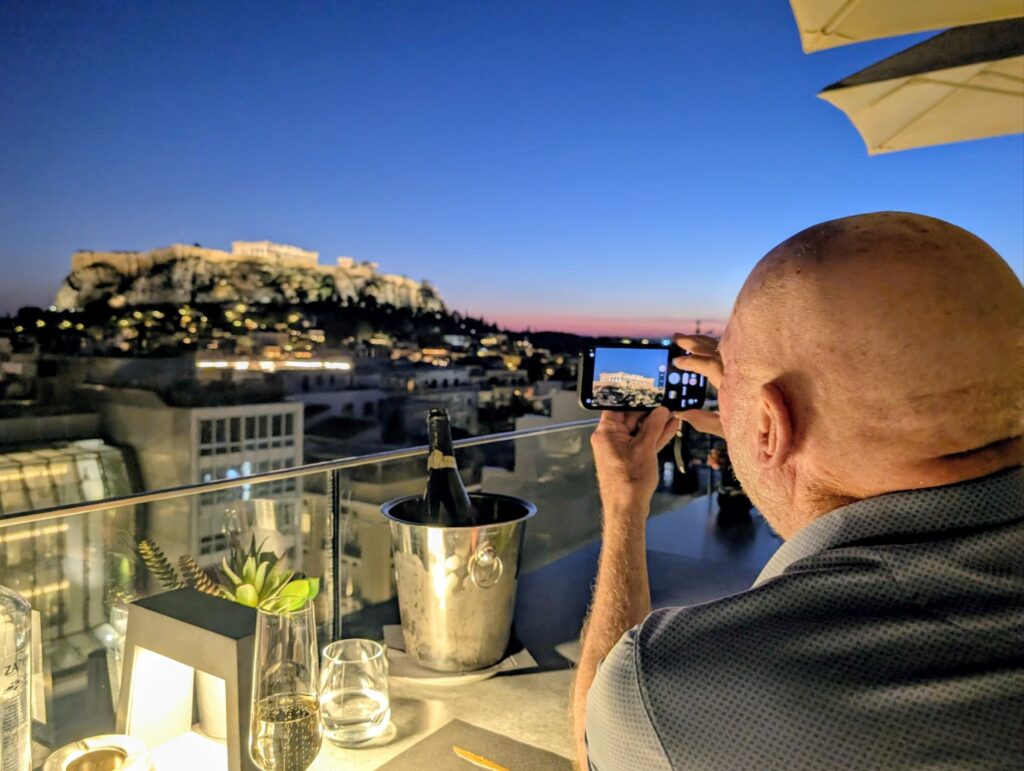
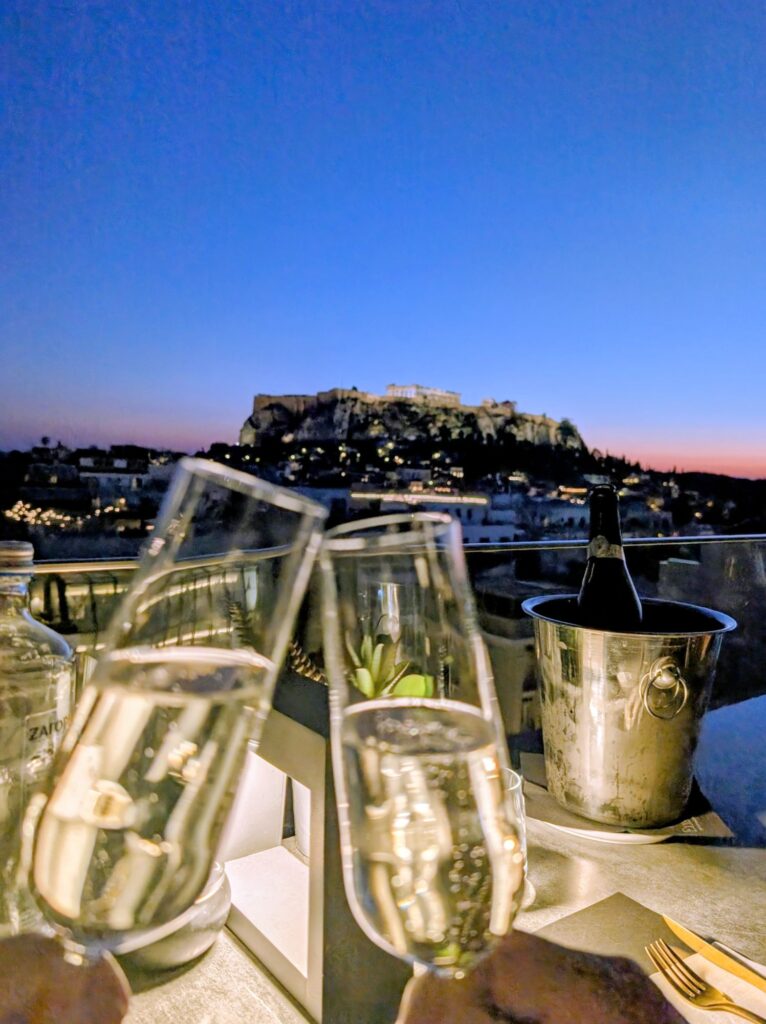
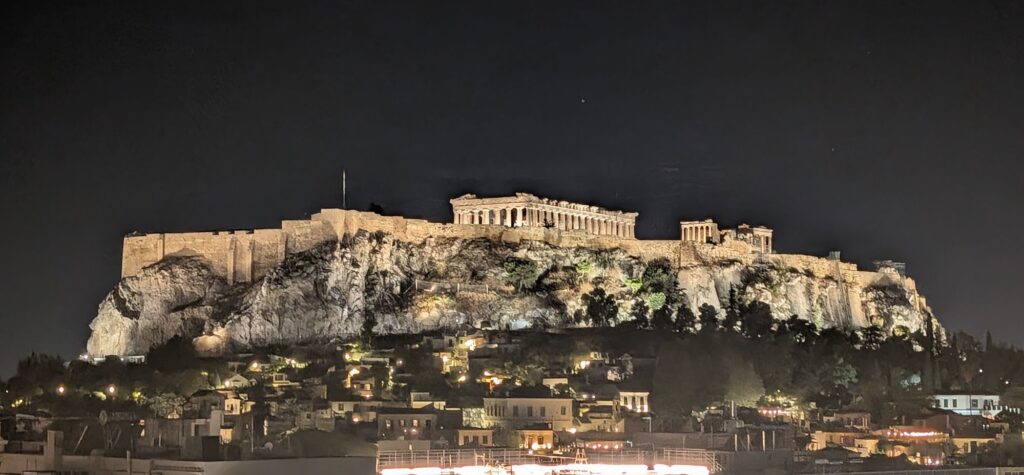
It was a fabulous finish to our first full day in Greece. Tomorrow we climb the Acropolis!