


We have one day to really explore Bologna, famously known as the city of the three nicknames: La Rossa (The Red), La Dotta (The Learned), and La Grassa (The Fat).
La Rossa (The Red) because it’s historic centre is full of red-brick buildings, terracotta roofs, and warm reddish porticoes. Also because it’s politics has a long history of left-wing, communist leanings.
La Dotta (The Learned) because the University of Bologna, founded in 1088, is the oldest continuously operating university in the Western world!
La Grassa (The Fat) because of the rich, heavy, and world-renowned culinary tradition of the Emilia-Romagna region .
The breakfast room was packed when we went down just before nine. We could see that there was at least one large tour group there and we picked up a mix of Aussie and English accents. The two ladies sitting next to us, from Adelaide, told us they were on a music lovers tour and were going to visit a variety of cities and opera houses.
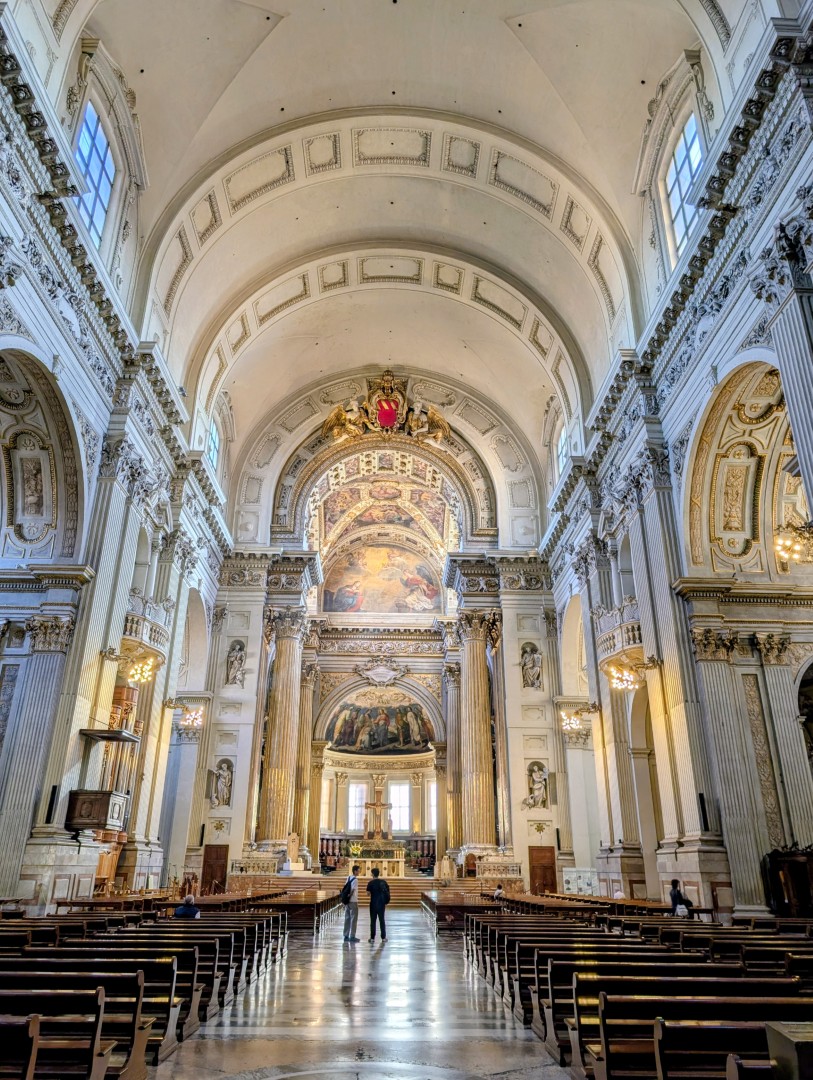
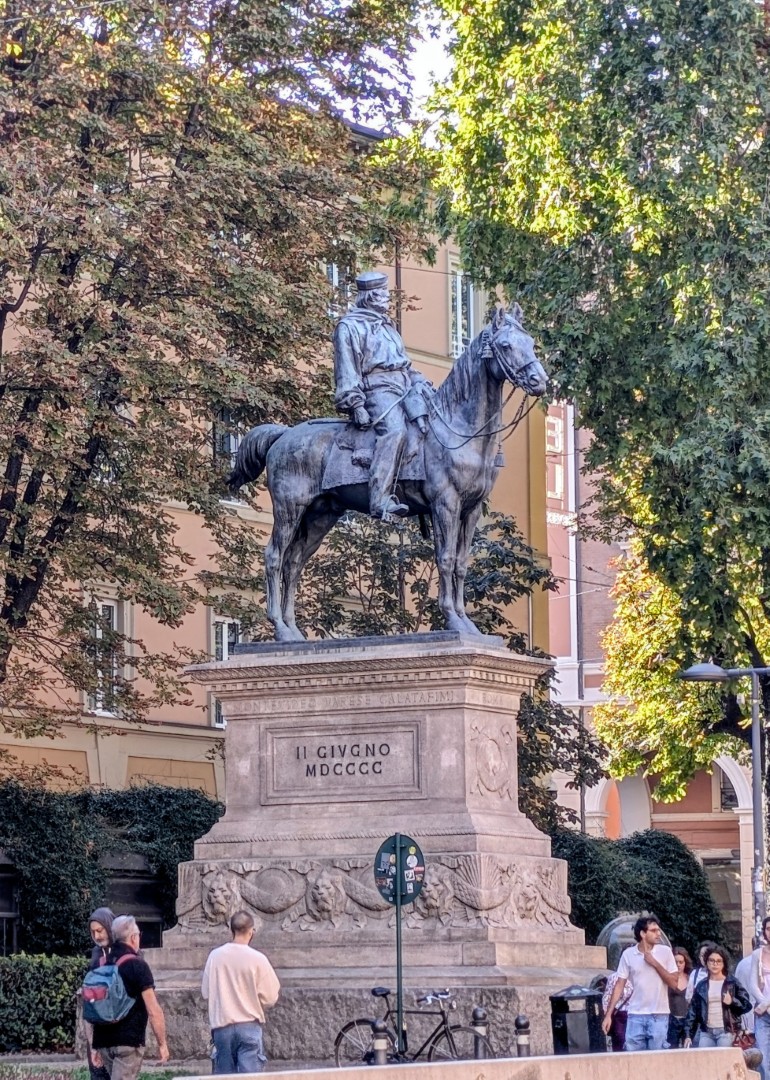
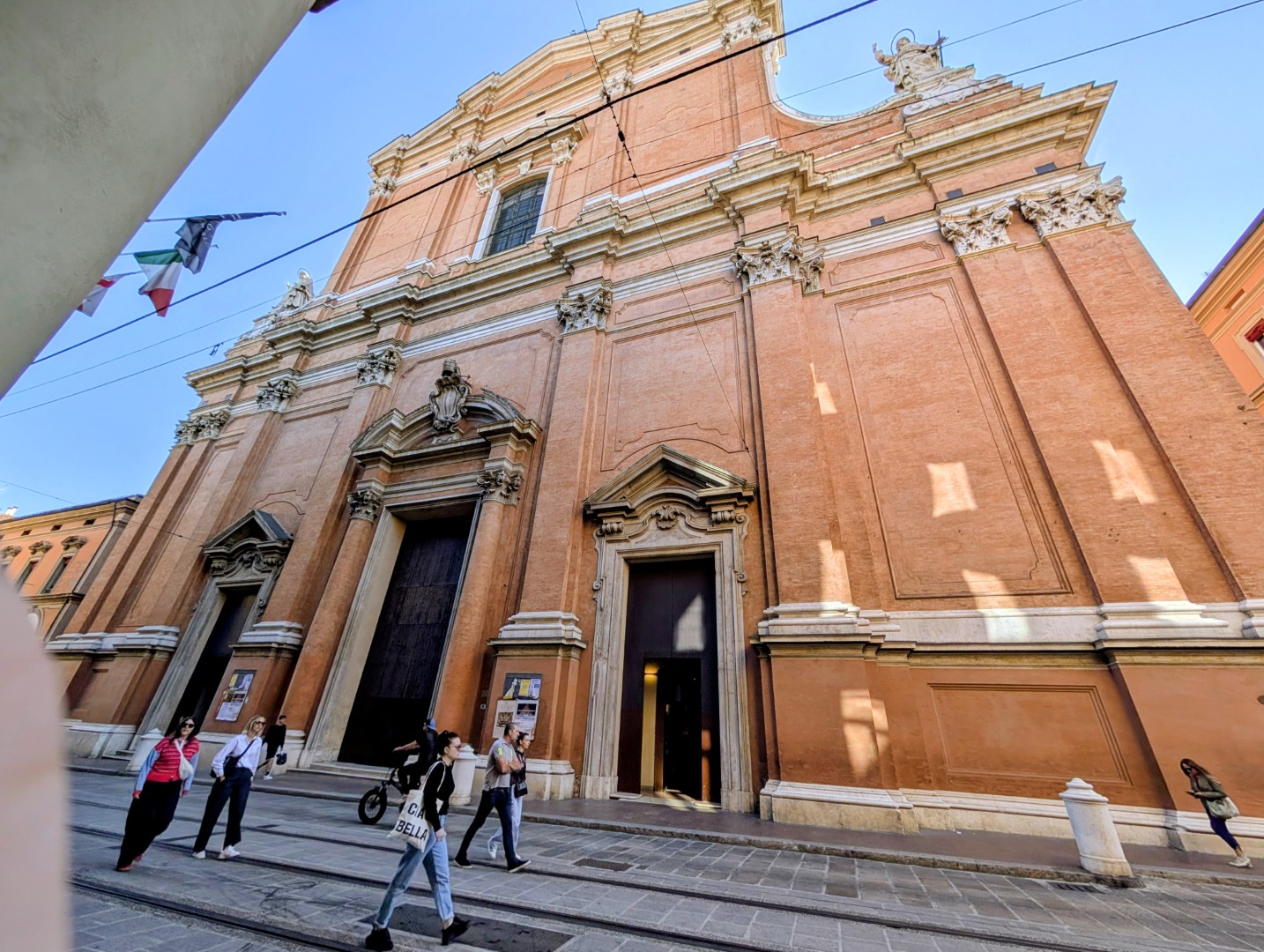
After breakfast we set out and walked down Via Dell’Indepenza towards the historical centre of the city. Much of the street is currently blocked off from traffic as they appear to be building a tram line that will run all the way from the centre of the old city to the main train station and beyond. That will be a huge bonus for visitors to the city. We passed a small green park nearby in which Garbaldi has a prominent statue. A little further on we popped in to the Cattedrale Metripolitano di San Pietro. Its red brick exterior is hard to photograph as the church just front on to the street rather than have a large piazza infront of it. However the interior was bautifully painted, like so many churches in Italy.
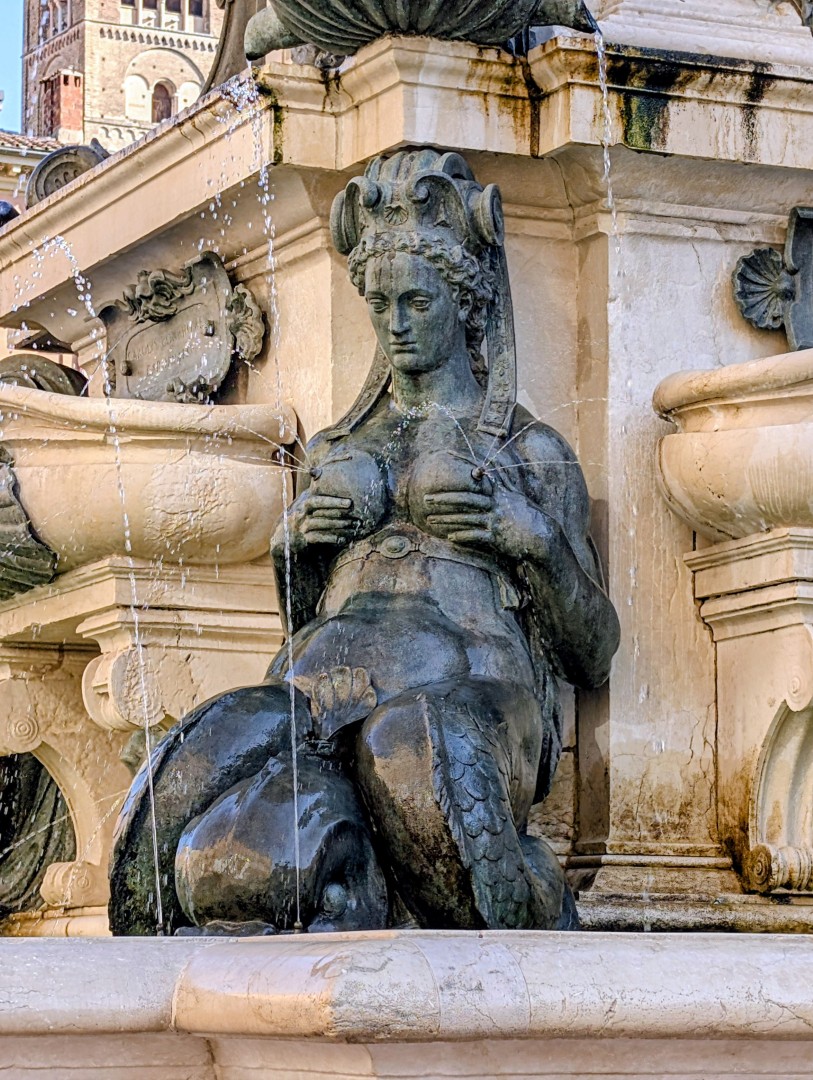
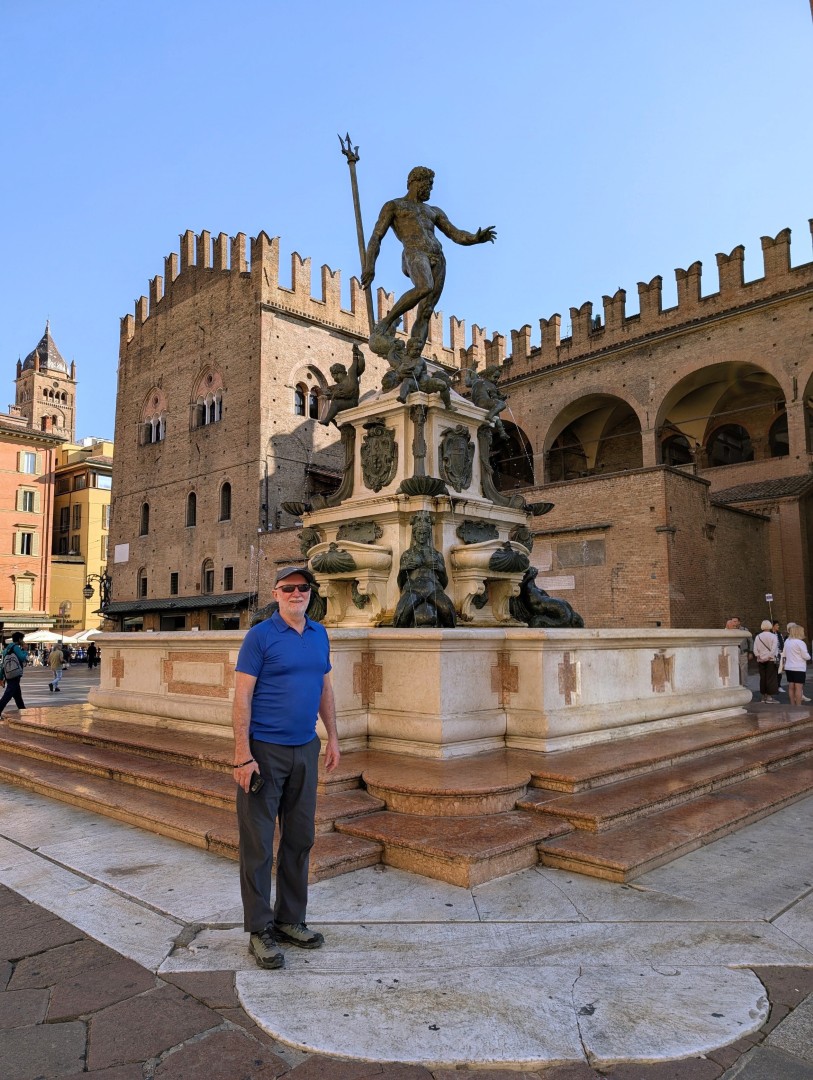
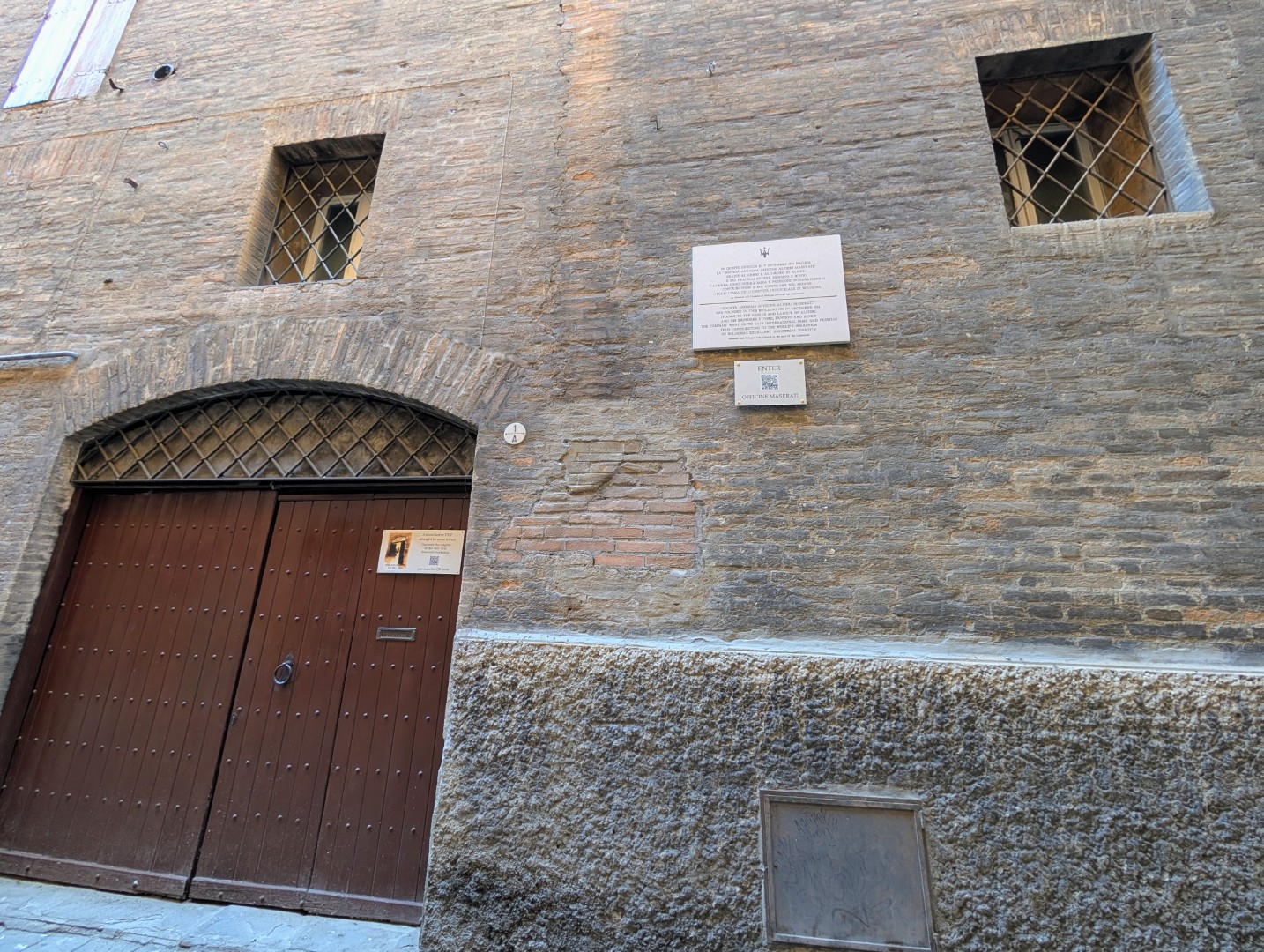
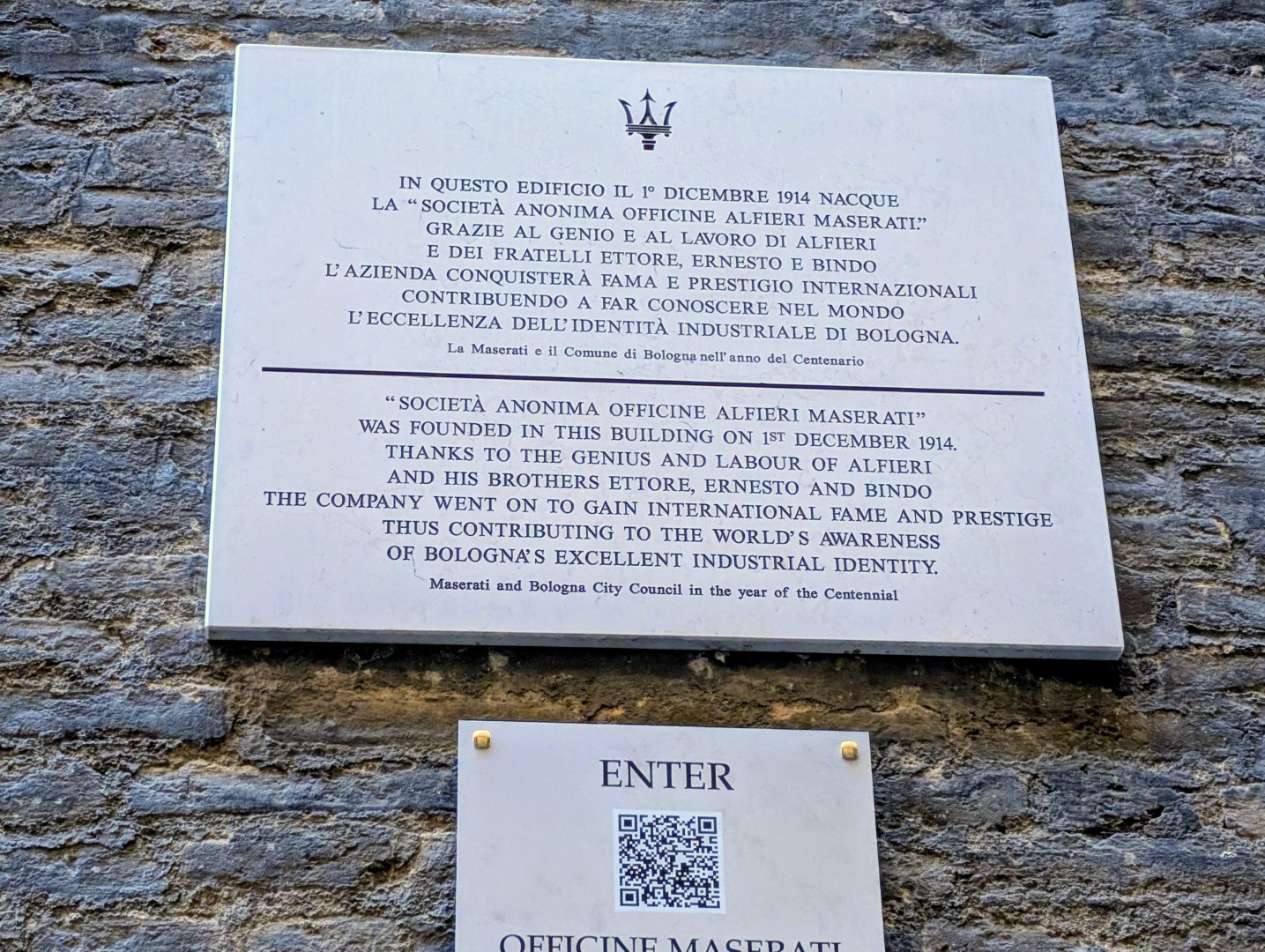
In Piazza del Nettuno we were intrigued by the the Fountain of Neptune, affectionately known locally as “Il Gigante” (The Giant). Flemish sculptor Giambologna created the towering bronze statue of Neptune between 1563 and 1566, a commission of Pope Pius IV and his nephew Cardinal Charles Borromeo. Interestingly, the trident held by Neptune directly inspired the iconic logo of the luxury car manufacturer Maserati, which was founded in Bologna in 1926 in a small garage in the back streets. We stumbled on the garage a little later.
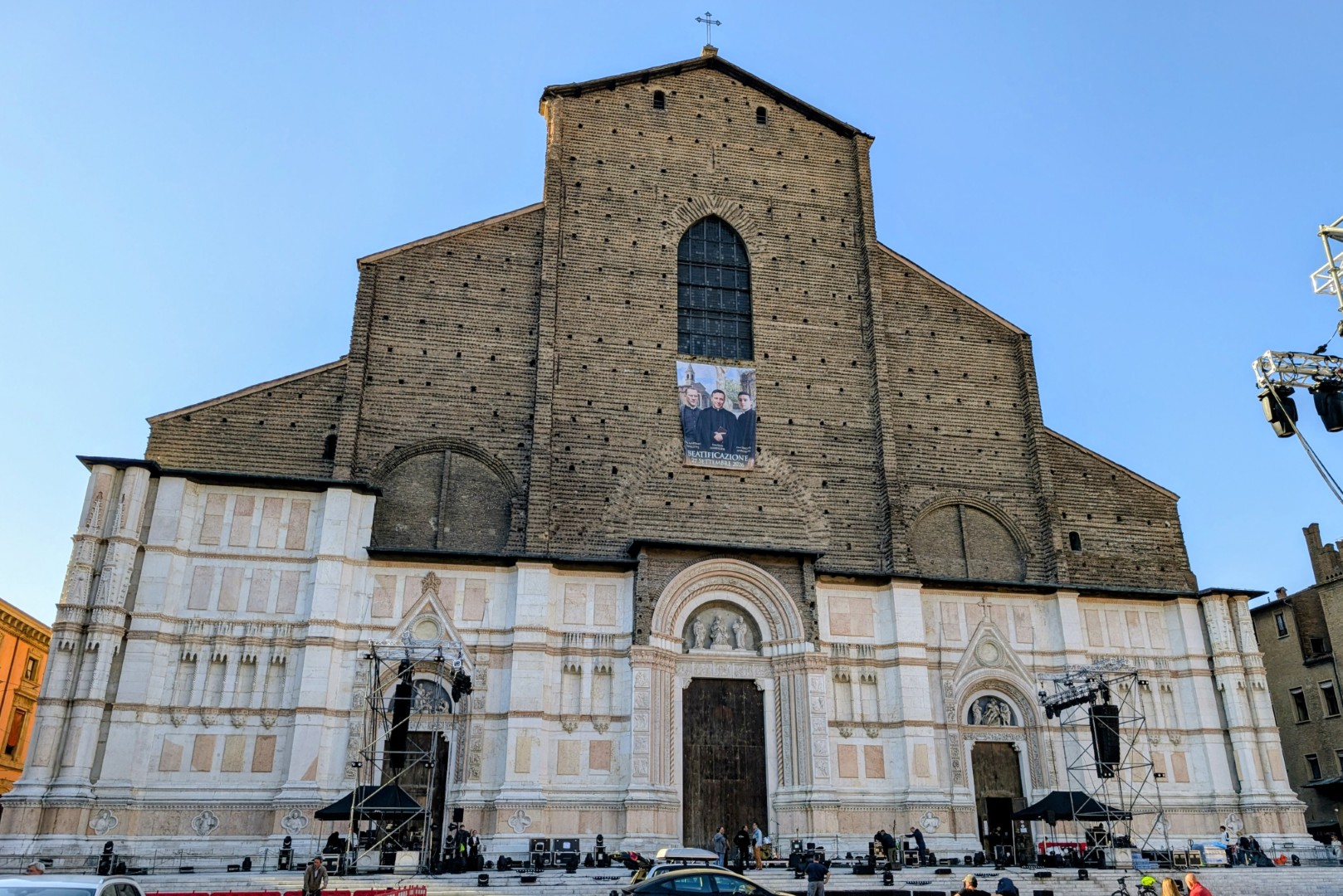
Behind Piazza Nettuno is the huge Piazza Maggiore, flanked by the huge Basilica di San Petronio and the Palazzo d’Accursio. The Piazza was a busy place to day, there were several stall set up that seemed to be fundraising for the Italian Red Cross and other medical charities and the steps of the Basilica were being set up with huge speakers and lights and sound equipment for a concert that is happening there tonight. The Basilica is huge! Its constuction was started in 1390 and commisioned not by the church but by the local civic authorities. The plan was to build a colossal Latin cross church that would exceed the size of St. Peter’s Basilica in Rome. However it never quite got there! The facade is unfinished, the red brick only has it’s marble cover for the lower half. Popular local lore claims that Pope Pius IV halted the ambitious project because he did not want a civic municipal church to outshine St. Peter’s in Rome, redirecting papal funds instead to build the nearby Archiginnasio.
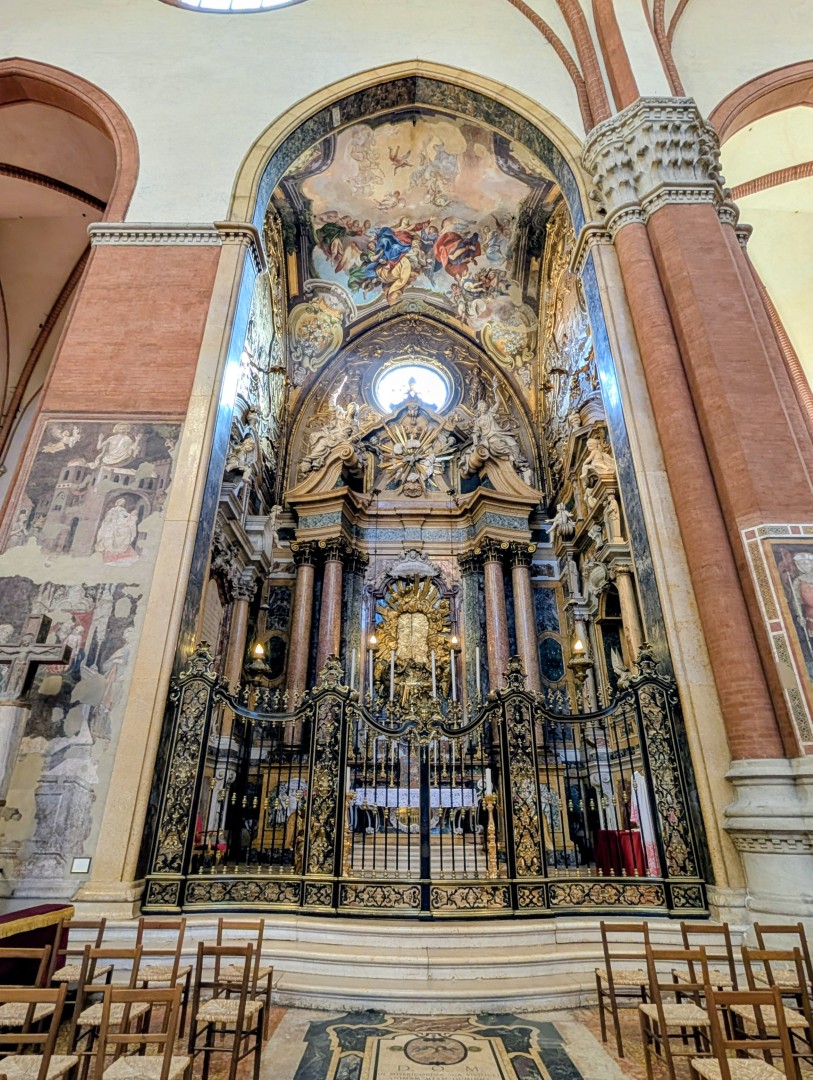
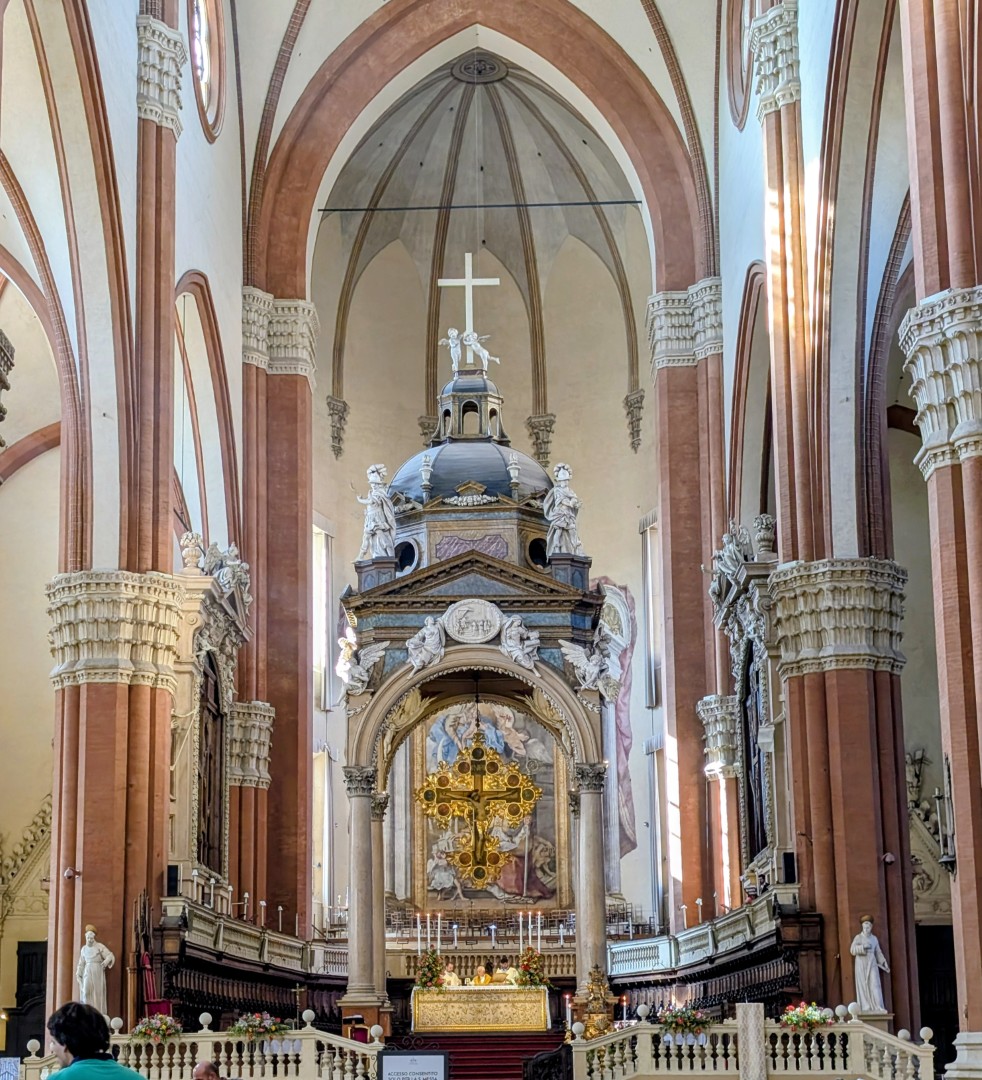
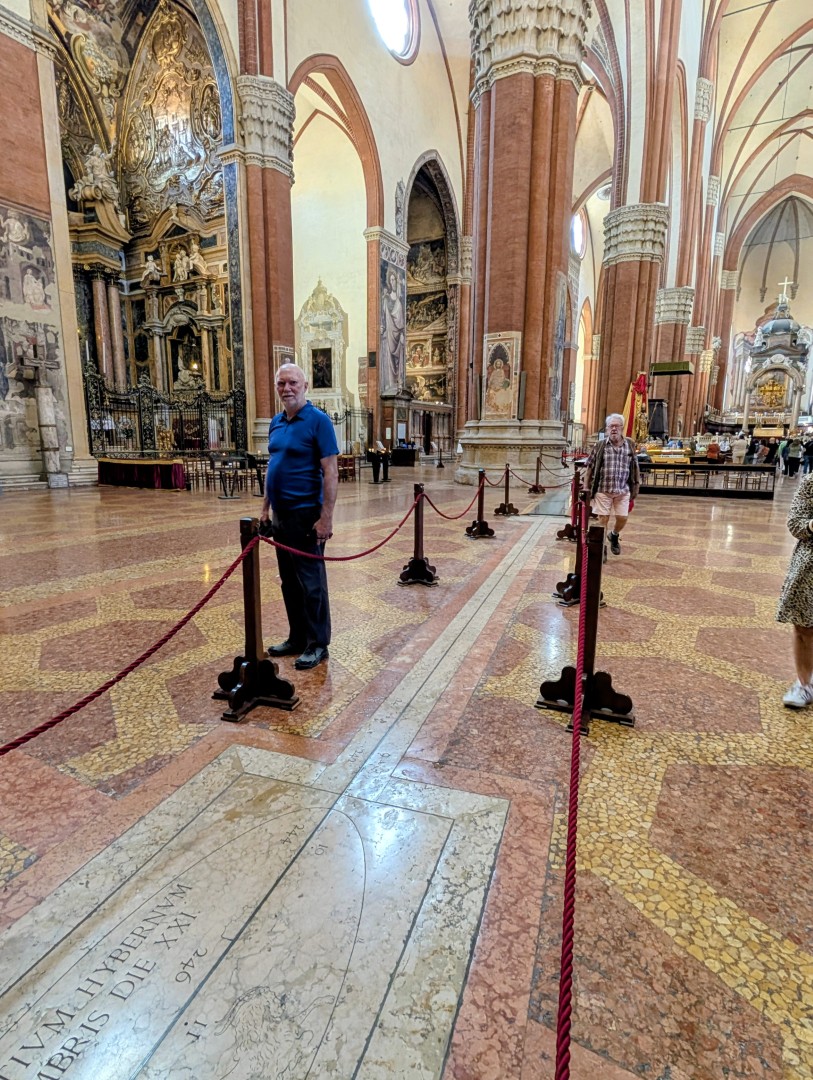
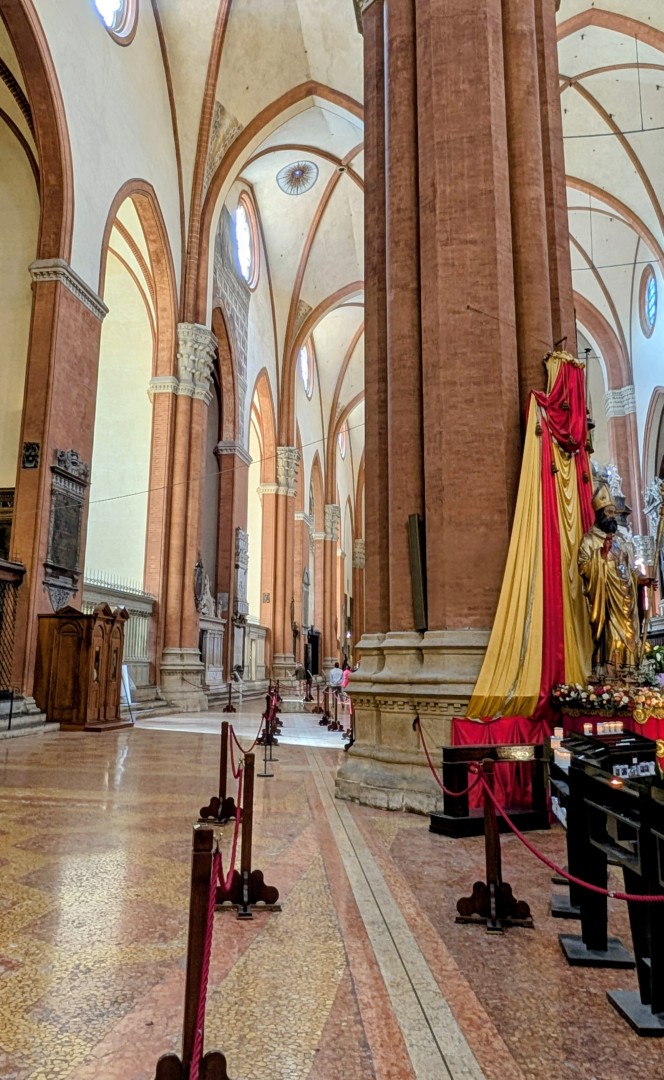
Mind you, it’s still a big church! As built, it remains the largest brick Gothic church in the world, stretching 132 meters long! The interior soars overhead and there was a service underway when we went inside. We sat for a little while to enjoy the music.
Inside we also found the extraordinary Meridian Line, designed by astronomer Gian Domenico Cassini in the mid 1600s. It is the longest indoor solar meridian line in the world, stretching 66.8 meters along the church floor. It acts as a massive pinhole camera (camera obscura) .Every day at solar noon, a bright beam of sunlight passes through a tiny pinhole opening in the cathedral’s ceiling and strikes the bronze line on the floor. The line is aligned perfectly along the local north-south astronomical meridian.
The marble surrounding the bronze line is engraved with a variety of symbols indictaing The Signs of the Zodiac, the days of the year and hours and minutes. It works as a highly accurate civil calendar and tracks the exact length of the day . The accuracy is so staggering that it calculates the length of the year to within seconds!!
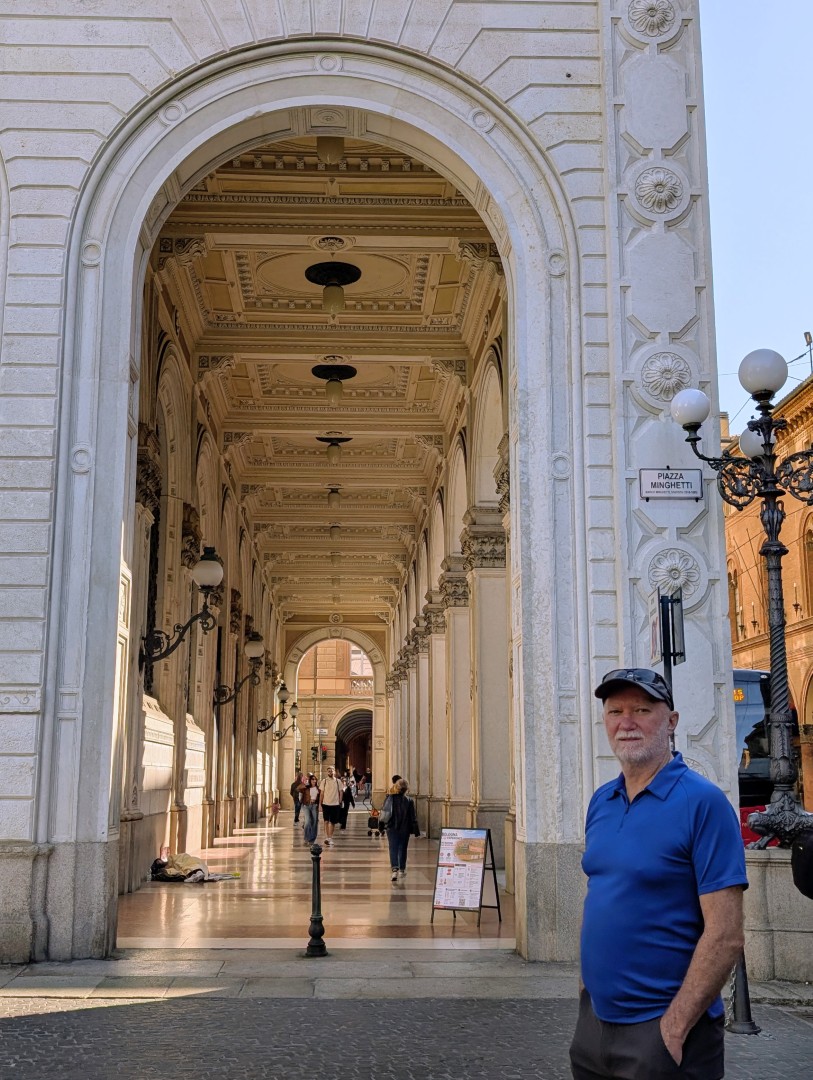
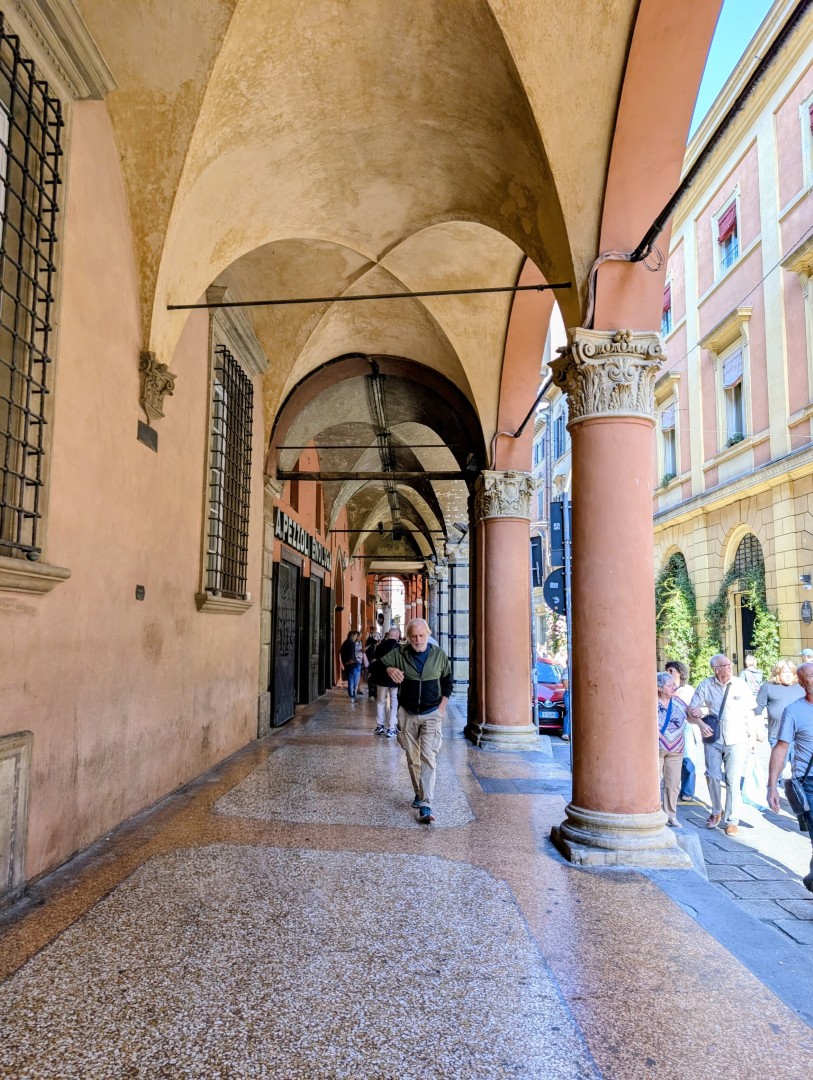
From the back of the Basilica we walked along some of Bologna’s famous porticos and came across the spot where Alfieri, Ettore, and Ernesto Maserati founded their business in a little garage workshop in 1914.
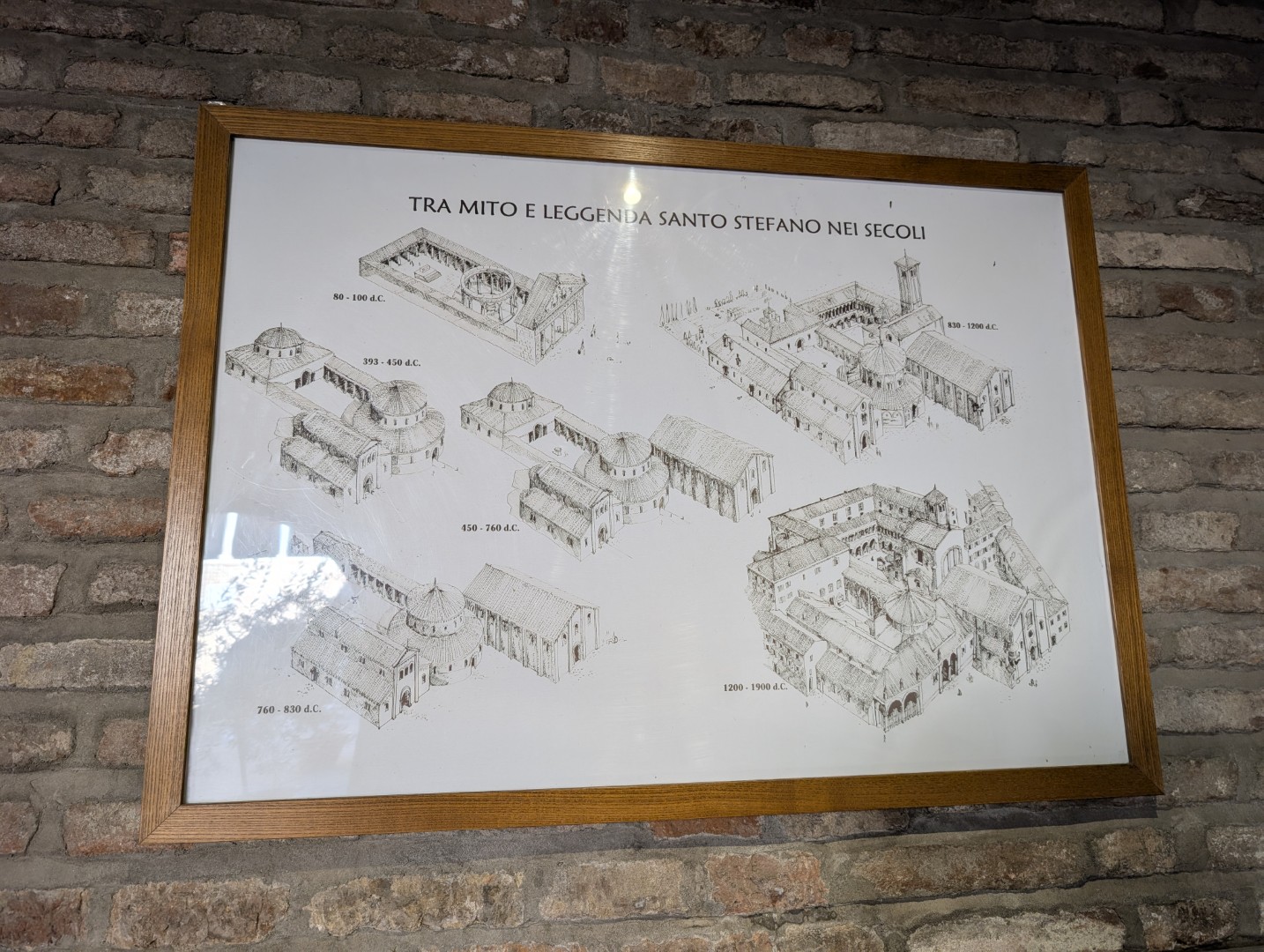
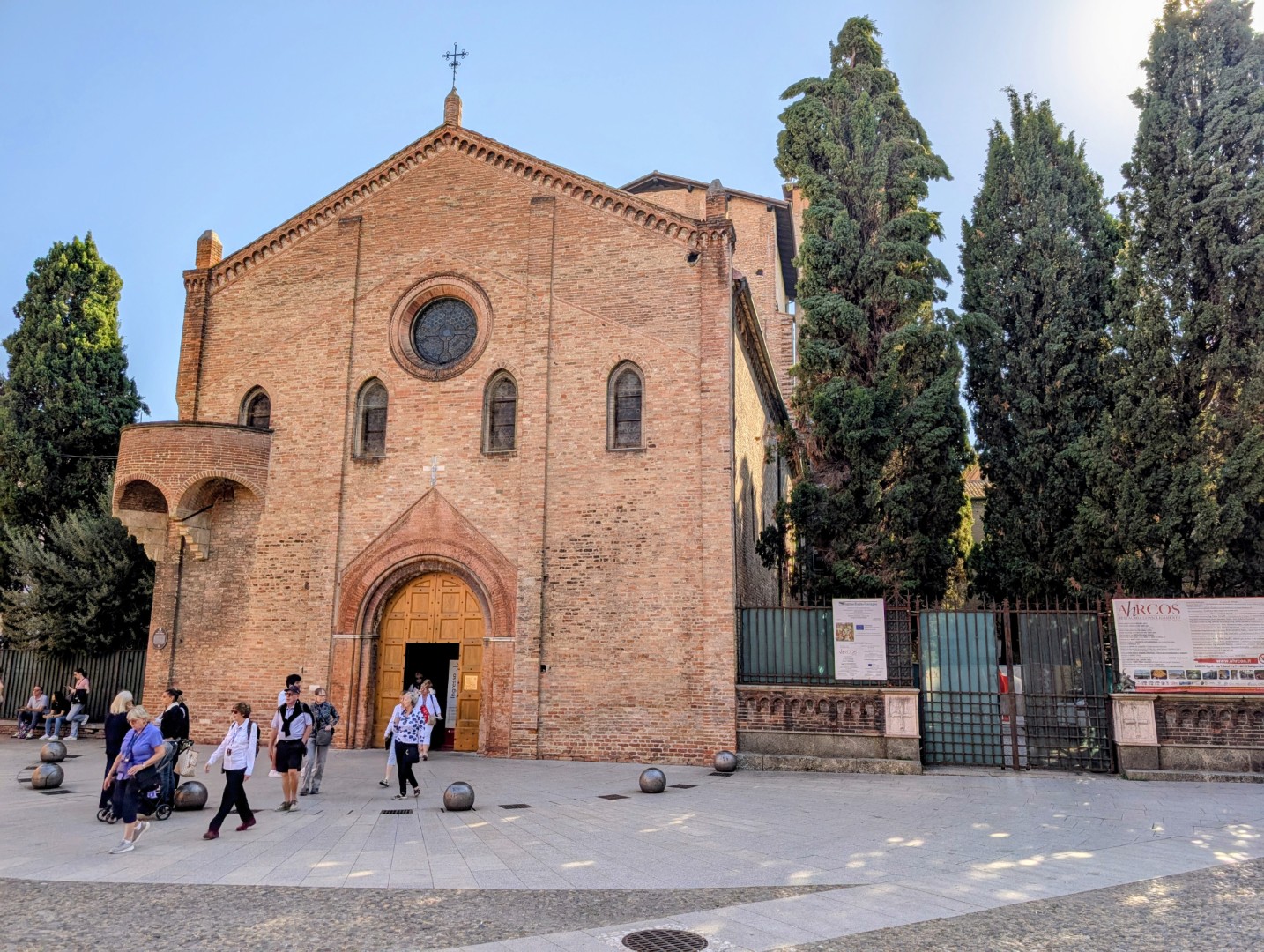
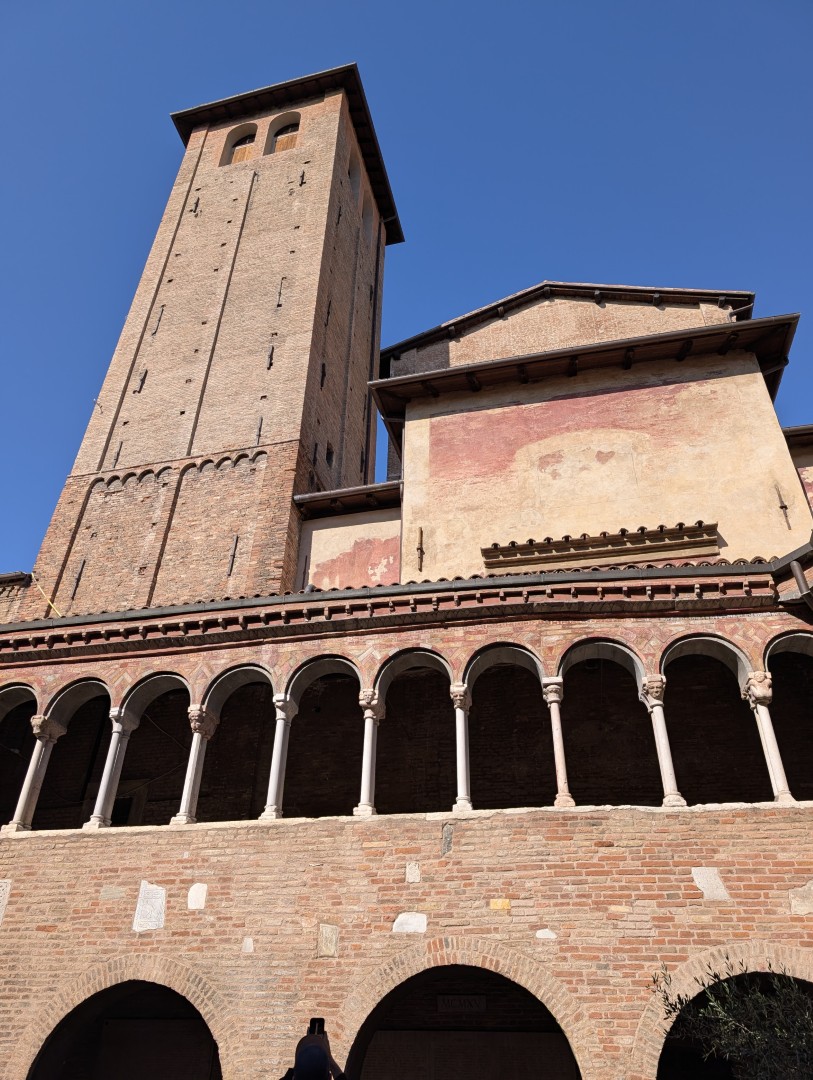
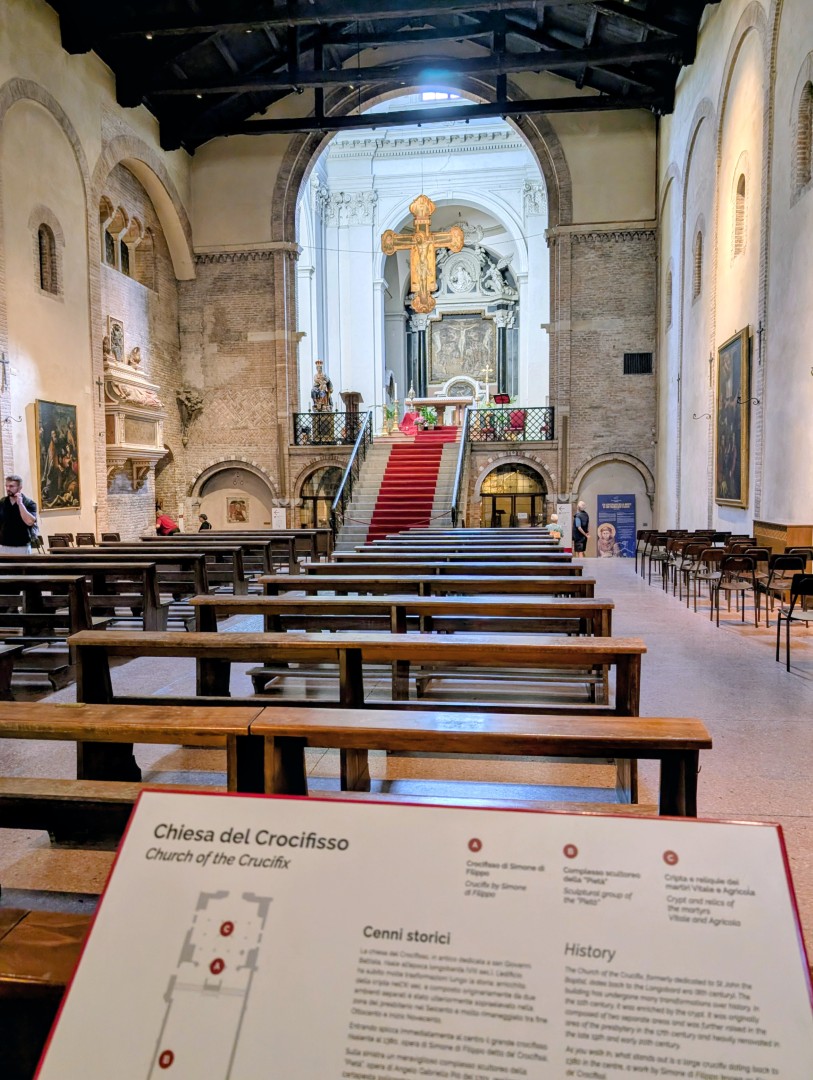
Just beyond the garage we arrived at the Santa Stefano Seven hurches complex. The complex was built over the top of an older, circular Roman temple dedicated to the Egyptian goddess Isis. Petronius, the Bishop of Bologna and patron saint of the city designed the site after returning from a pilgrimage to the Holy Land. The oldest surviving section is the 4th-century Church of Saints Vitale and Agricola, dedicated to local early Christian martyrs. Then in the 7th and 8th centuries, the Lombards added the Church of the Crucifix. Later, Benedictine monks extensively renovated the complex in the Romanesque style during the 11th and 12th centuries. The result is an interconnected cluster of religious buoindings in very different styles.
Of course, being in Europe there had to be scaffolding! There was quite alot of restoration work being undertaken but it was interesting to walk through what felt like a bit of a maze.
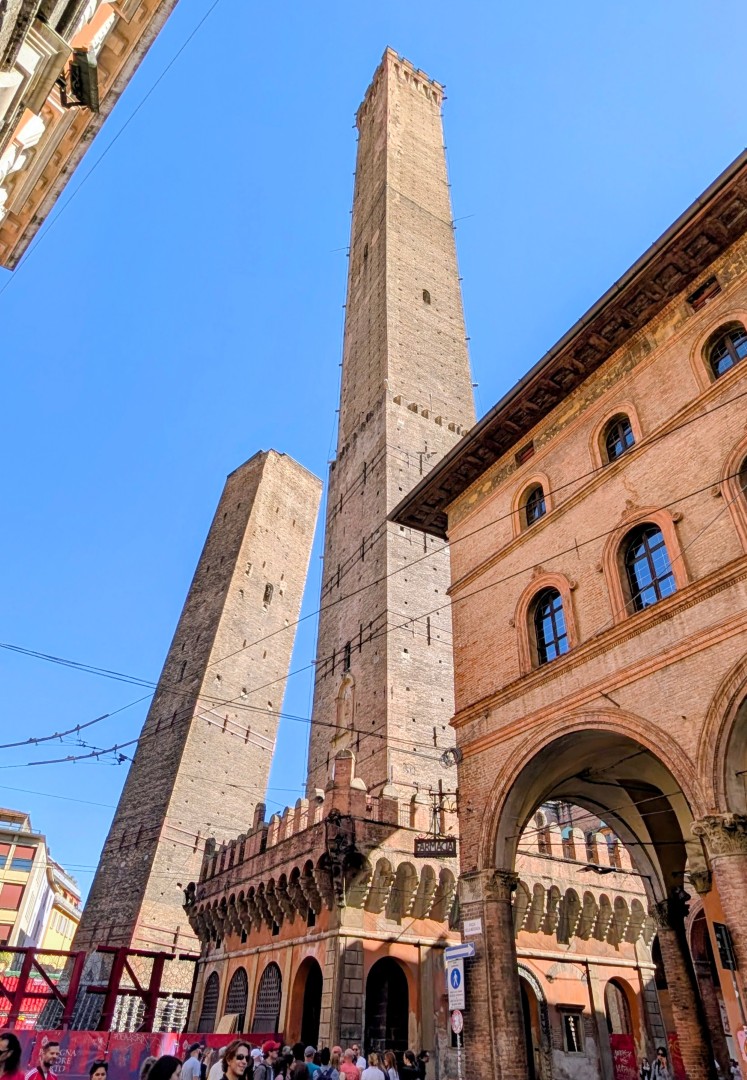
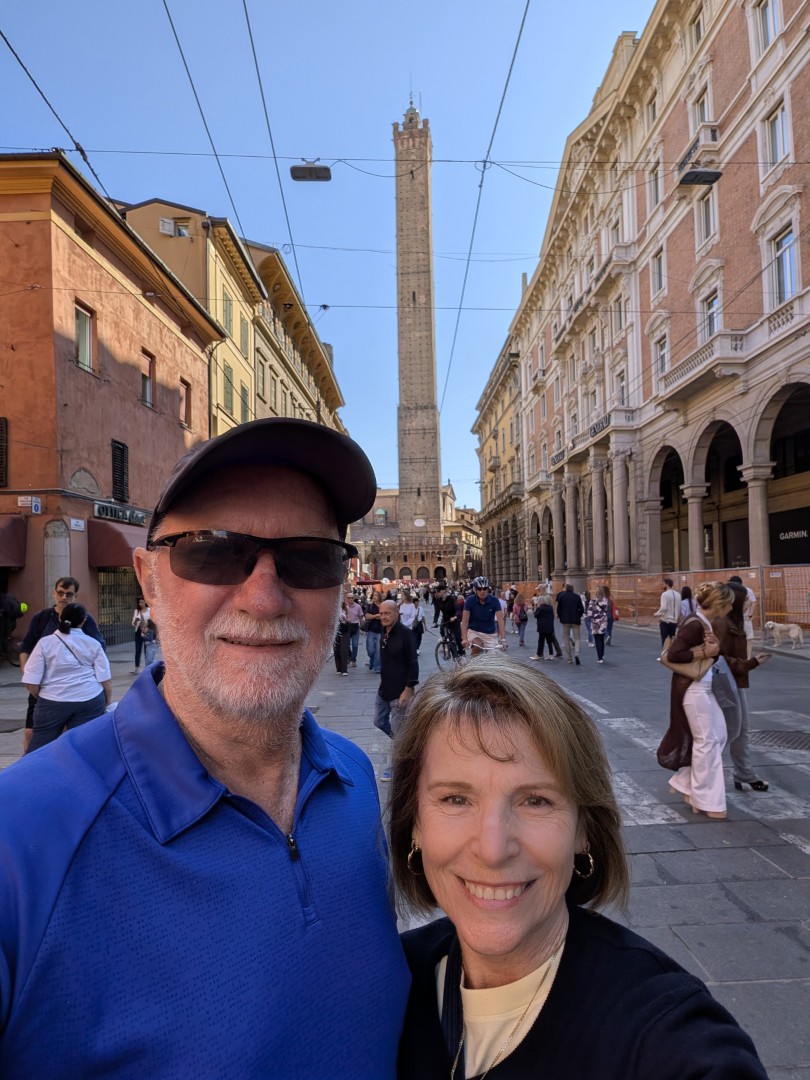
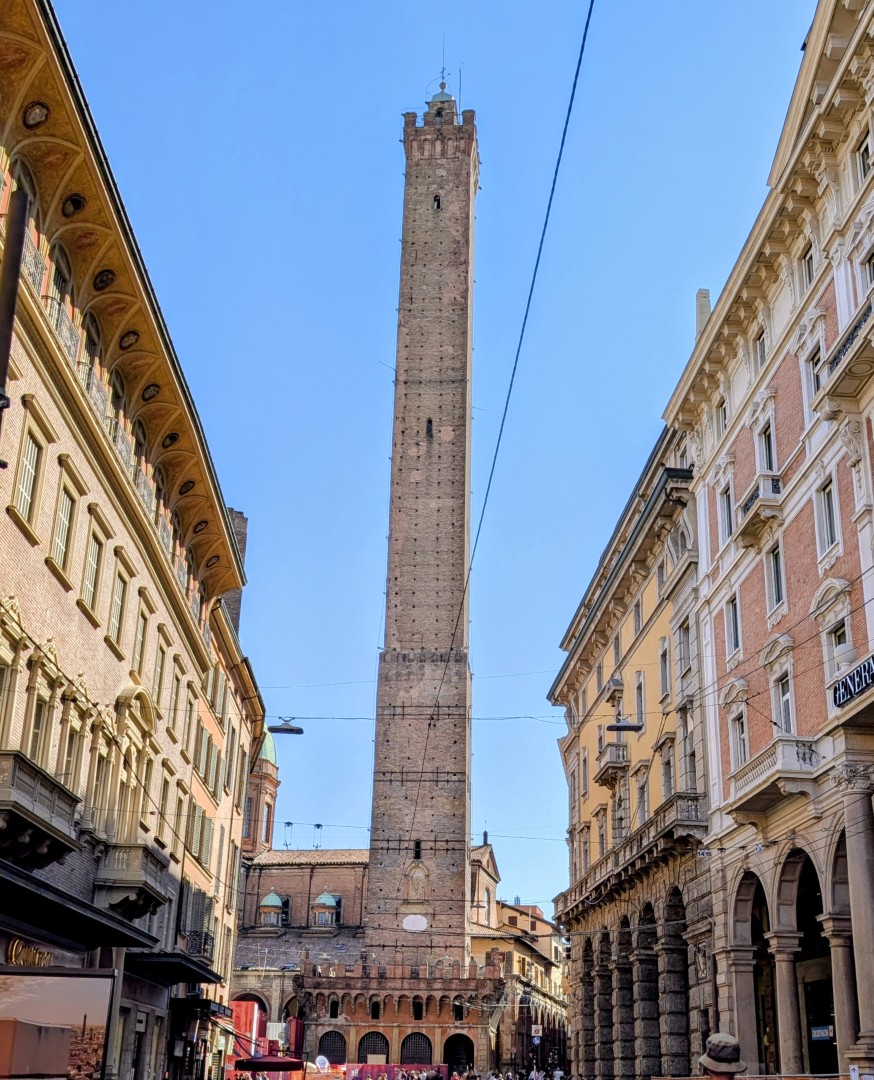
Heading north from the complex we found our way to Le Due Torri, Bologna’s Twin Towers. These are one of the major symbols of the city and very striking. Torre degli Asinellli is 97.2 metres high, with a modest lean it’s the tallest leaning medieval tower in the world! But the one you really notice is Torre Garisenda. It is much shorter but has a very dramatic 4-degree lean due to shifting ground beneath its foundation. The look very wonky together, thats for sure!
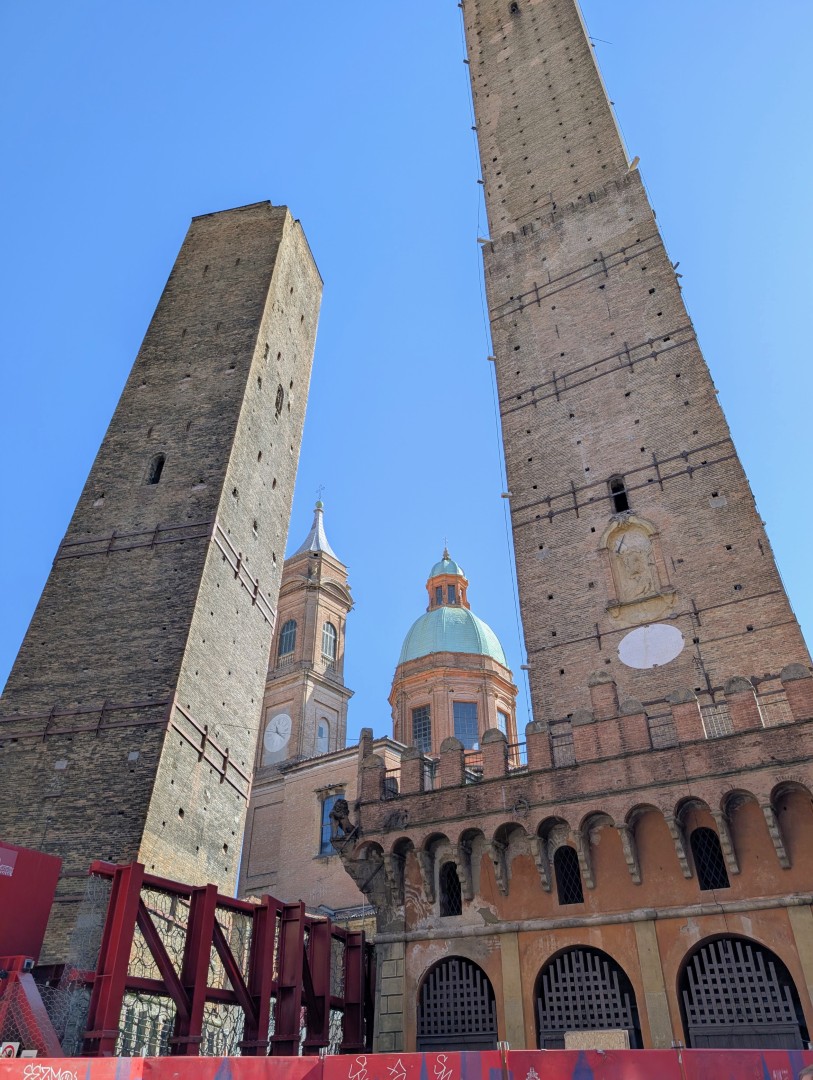
We walked away from the towers back towards Piazza Maggiore. From this angle you could only see the straight one 🙂
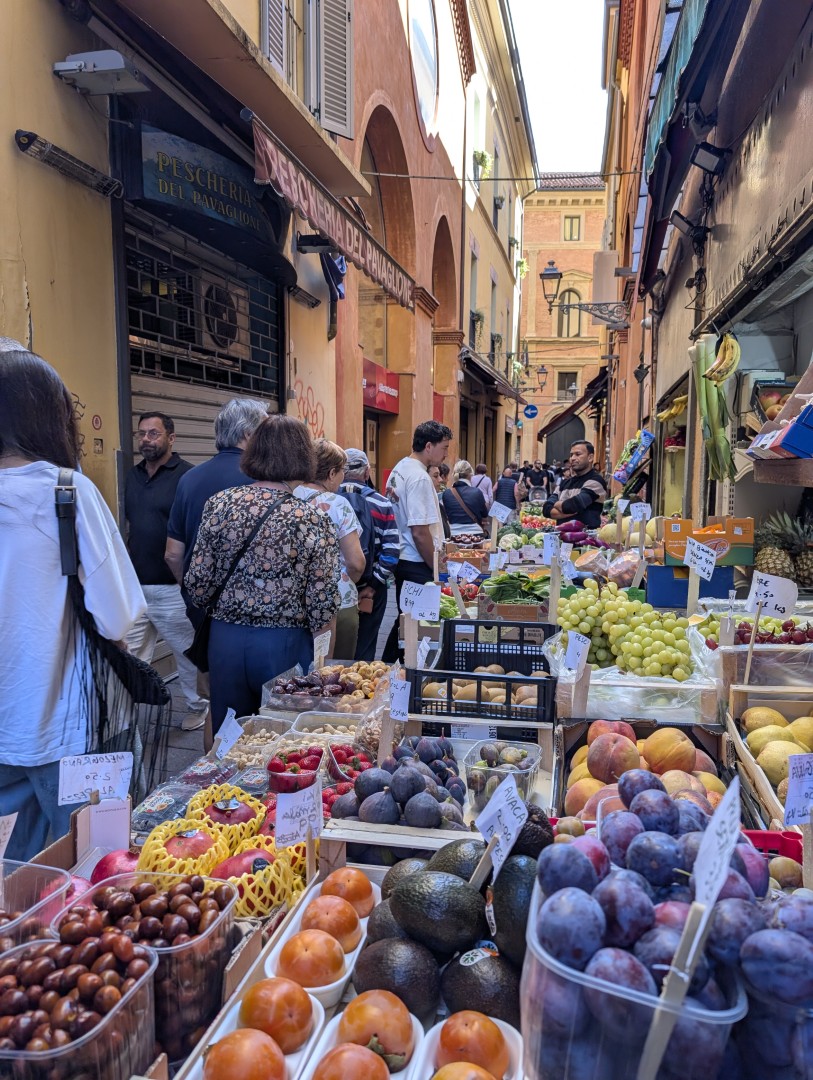
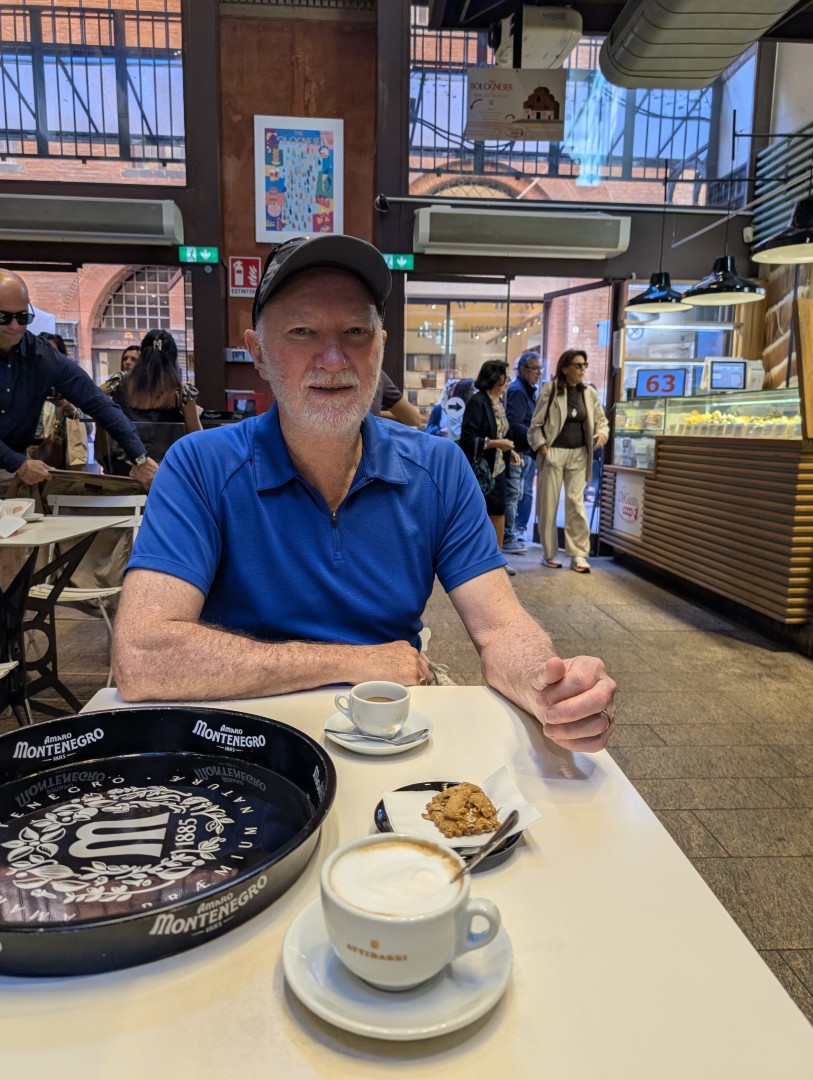
By now we were ready for a sit down so we made our way to the Quadrilateral Market area, the city’s oldest medieval market district, functioning as a living, aromatic food hub and trading center since the Middle Ages. There are narrow outdoor lanes with stalls selling all sorts of fresh foods as well as covered areas. We found a cafe and sat down for a break of coffee and biscotti.
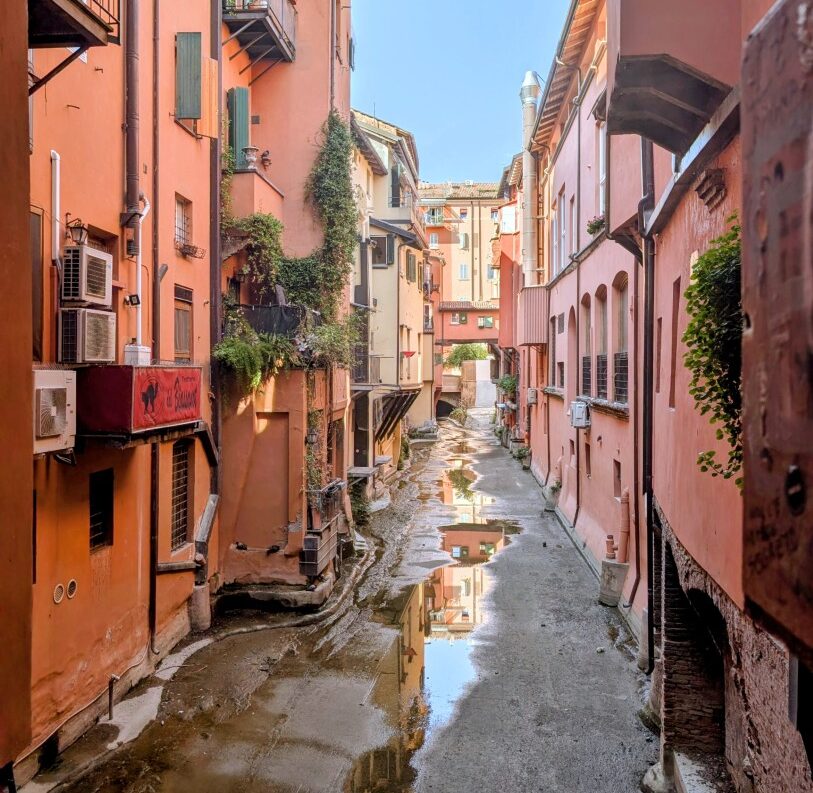
We made our way back to the hotel past the “Finestrella” , a little window on the Canale delle Moline and a bridge which both overlooking the canal. This part of the city is known as “little Venice” because you can see one of the few stretches of running water which was not covered with asphalt between the beginning of the twentieth century and the postwar period. However, I have to ay that the Venetian canals dont really need to worry about competition from Bologna, what we saw looked more like a puddle than a canal!
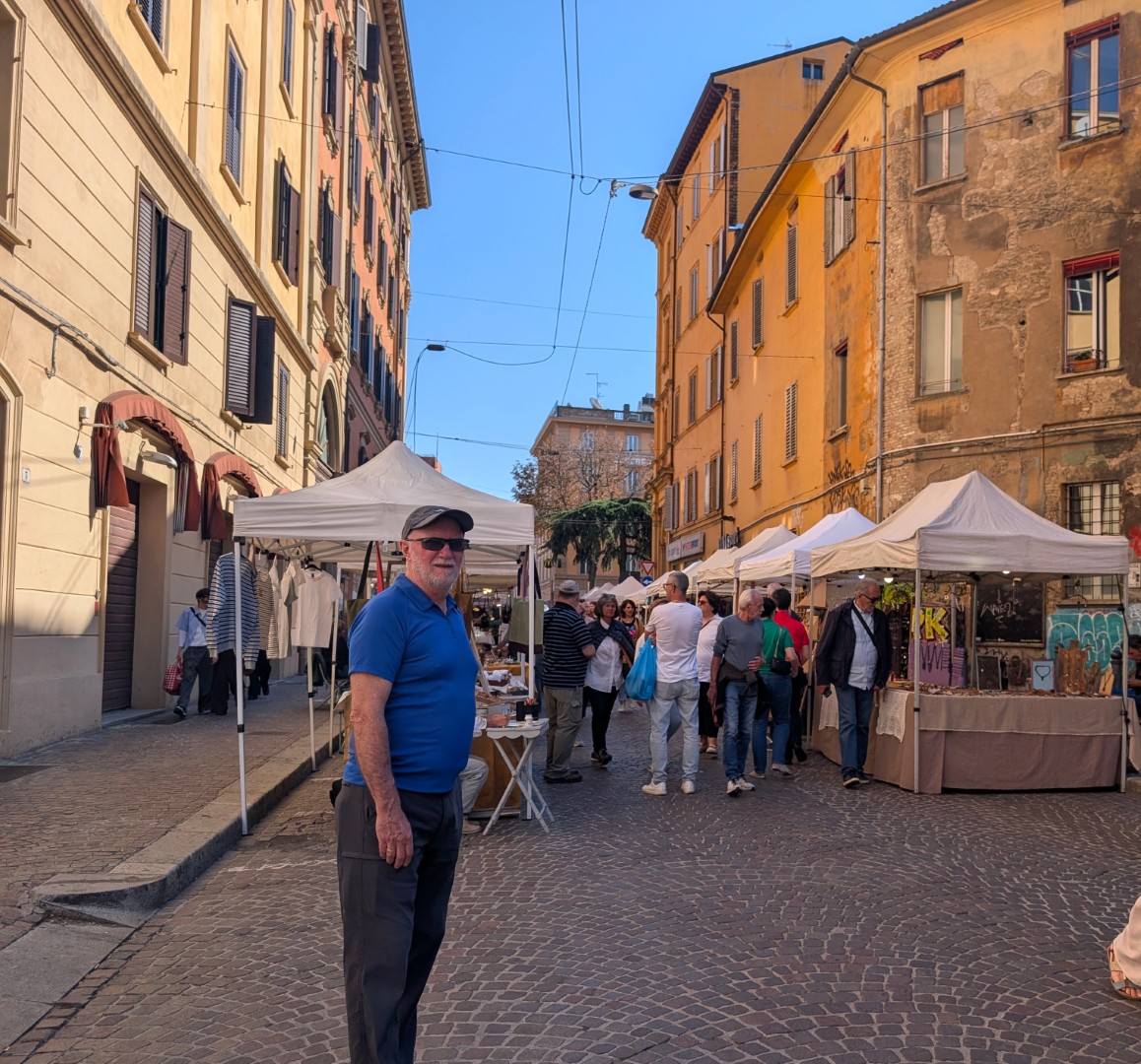
We headed back to the hotel via a market area nearby. One part was a flea market with lots of stalls selling clothes, shoes and handbags and another section was selling crafts by local artisans. I still didnt find the perfect handbag!
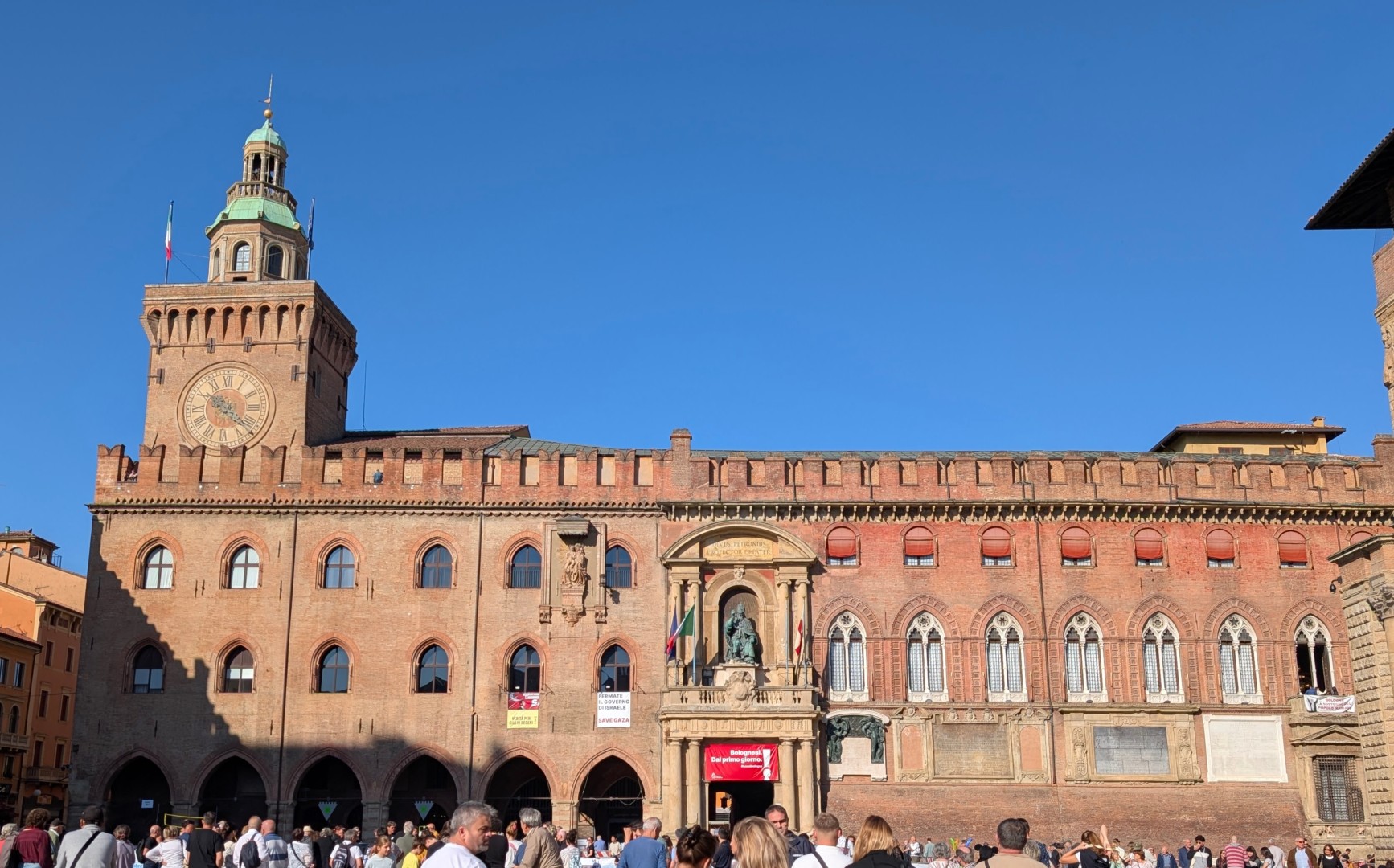
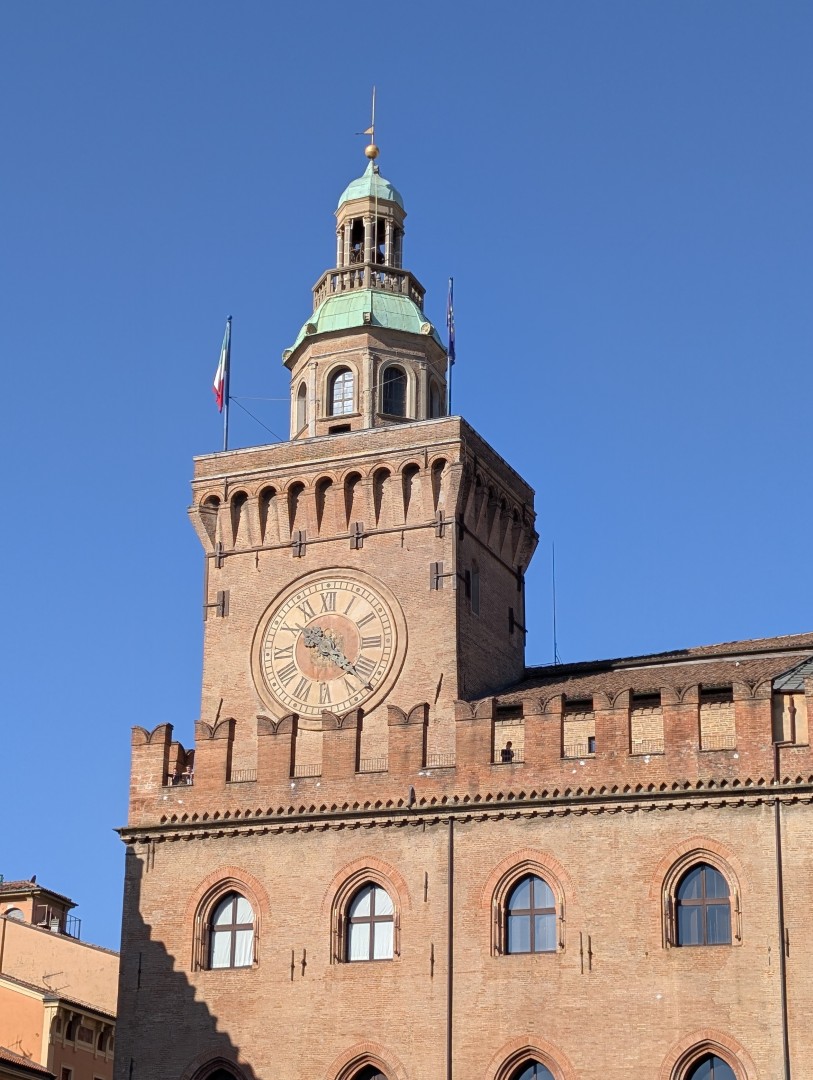
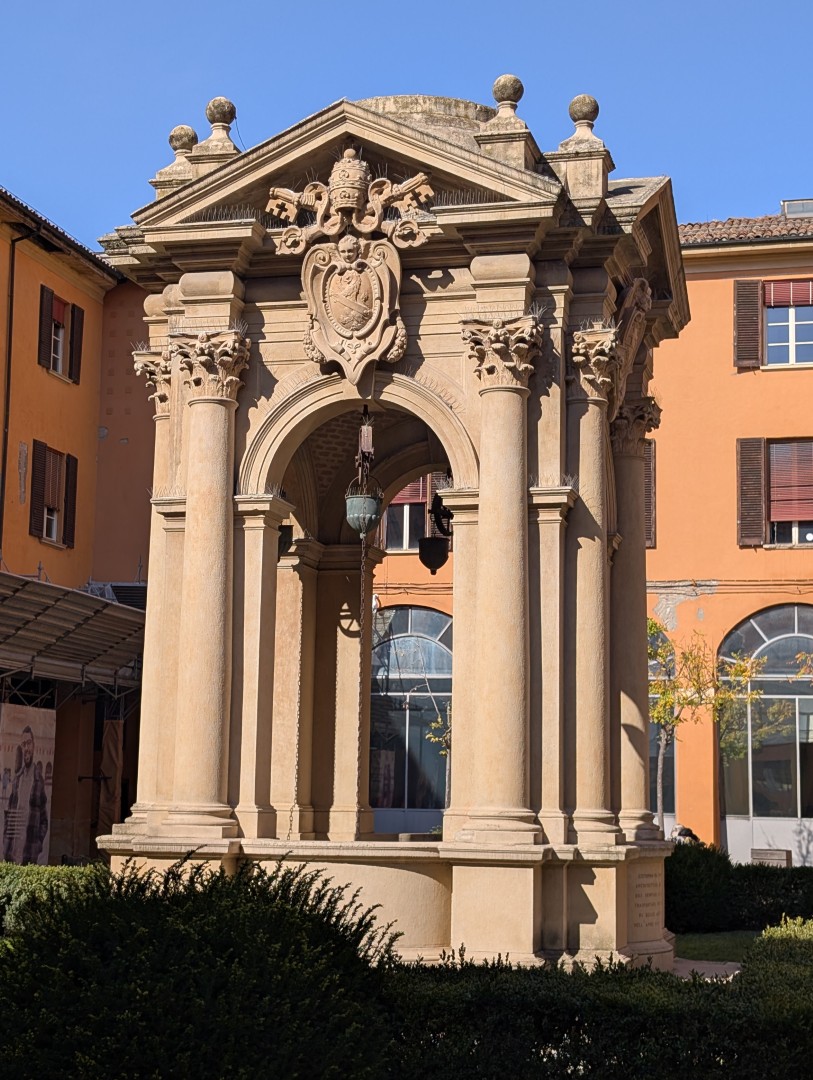
We relaxed for a while in the hotel’s garden and decided to have their tasty Emilian Tapas again for lunch. After lunch and a good rest we decided to go out for anothe walk and wandered down to Piazza Maggiore again. This time we took a loser look at the Palazzo d’Accursio. It’s also known as th Palazzo Communale and started out in the 13th century as the private residence of the renowned jurist and university law professor Accursio. However, it’s acted as the seat of Bologna’s municipal government and highest magistrates since 1336. The top level is now given over the the City Art Museum and the energetic can pay a small fee to climb the clock tower. We were not feeling energetic so we just strolled through it coartyard to the back where there is a replica of the original city well.
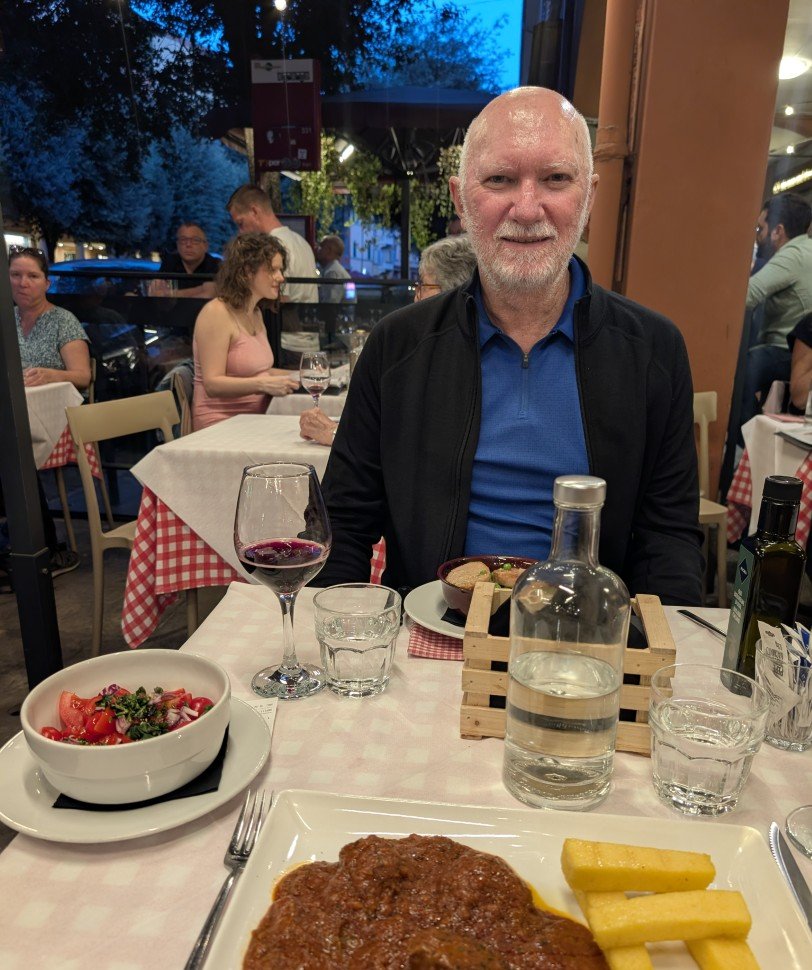
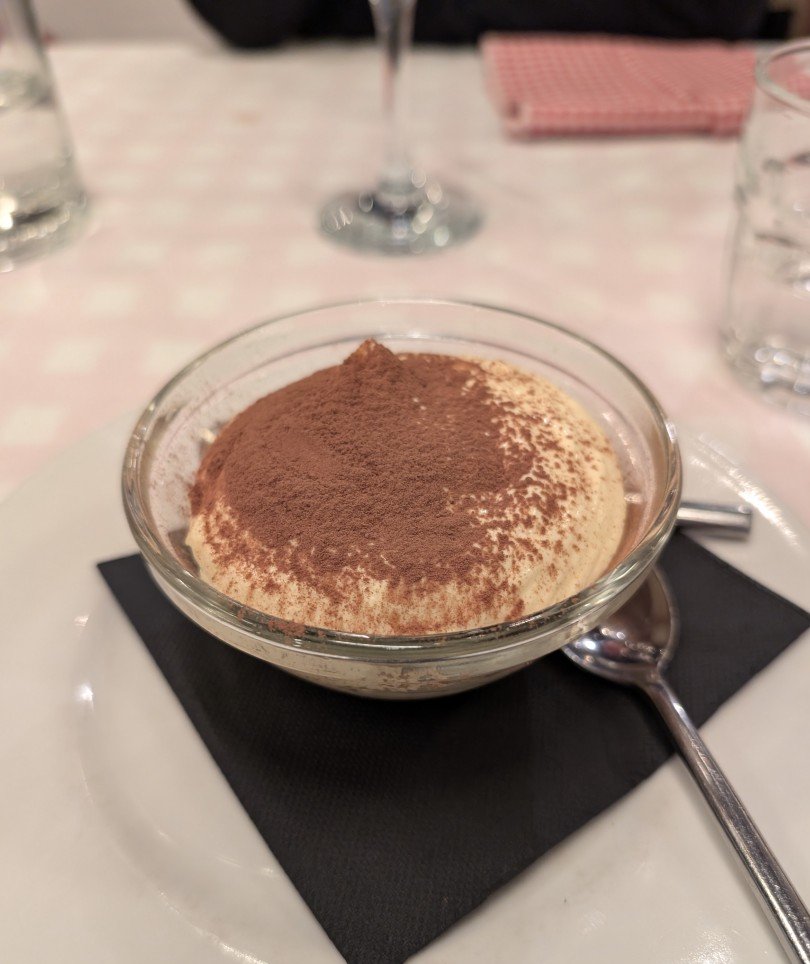
We went back to the hotel to rest for a while before heading out again for dinner. We headed in the same direction as last night but this time we stopped at Trattoria Tony and chose a table outdoors. The waiter wasn’t as friendly as the staff last night but he gradually warmed up. I couldn’t fult the food though. My Pork cheek in a rich tomato sauce with Polenta chips was sooo good. And I tried the Bolognese version of Tiramisu, which uses a crisp biscuit instead of sponge biscuits and unlike the traditional Tiramisu isn’t done in layers. The marscapone cream was light and fresh and I loved the crispy biscuit texture. The food here has been just what I like, tasty, heart and unpretentious.
So that’s a wrap on our revisit to Italy. We had loved Italy so much on our first visit in 2013, I’d been a bit apprehensive that it wouldn’t live up to our previous experience. I needn’t have worried, we have loved it all over again! Tomorrow we move on the Greece, a new country for us. We’re really looking forward to it.