
They had muchrooms at breakfast this morning…but no tomatoes! It seems it’s either/or at the Millenium Hotel Rotorua 🙂
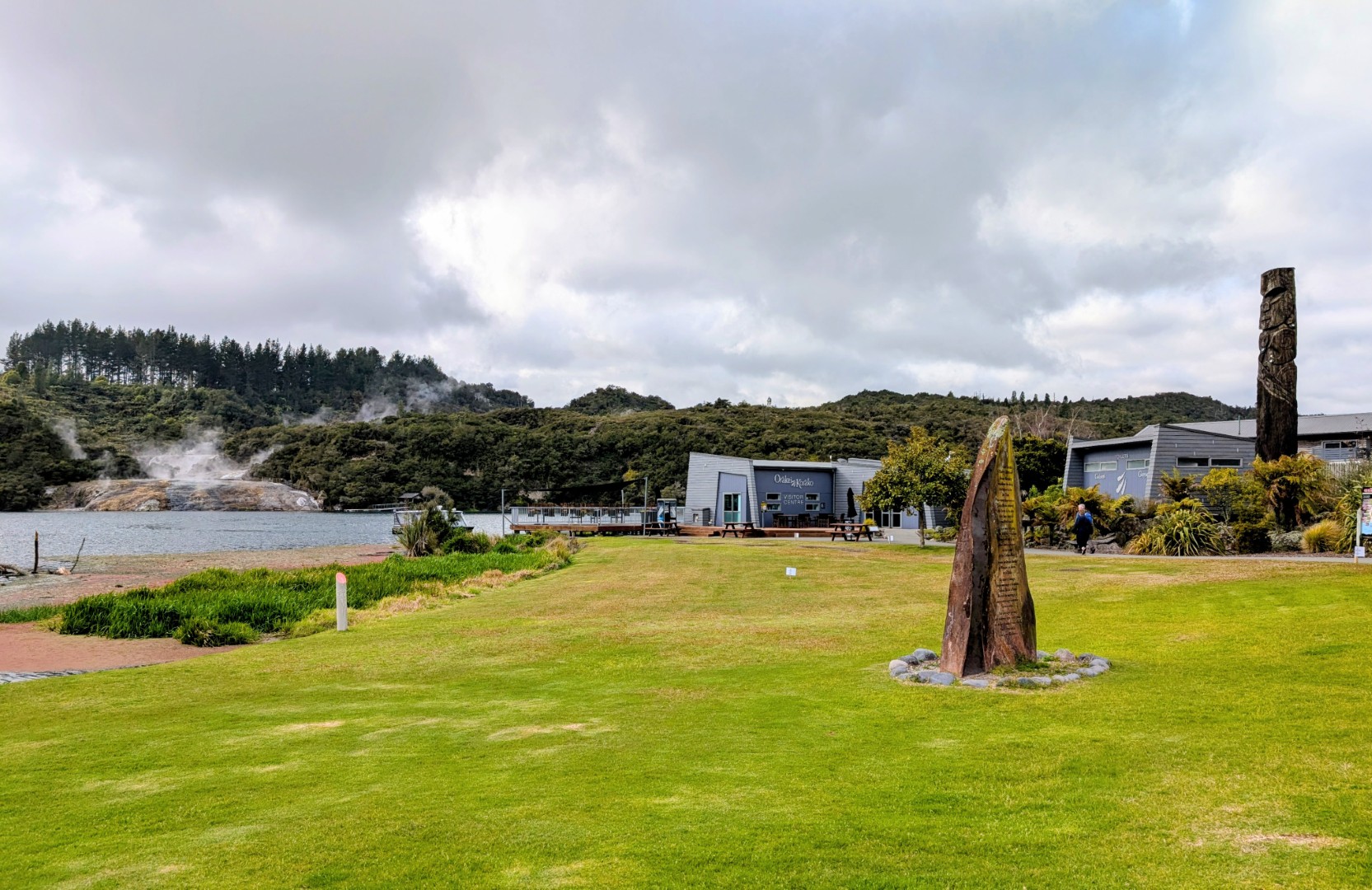
We checked out and set our sights south towards Lake Taupo, but we had one more geothermal area to see. It’s a little off the beaten path, but I had read that Lonely Planet described the Orakei Korako Geothermal Park & Cave thus “since the destruction of the Pink and White Terraces, it is arguably the best thermal area left in NZ, even though three-quarters of it now lies beneath the dam waters of Lake Ohakuri.” So, having been a little underwhelmed by the geothermal activity we’d seen in the area so far, we figured we should see the “best of the best”, before we dismissed the area as definitely nowhere near as good as Yellowstone National Park ( which is one of our favourites!).
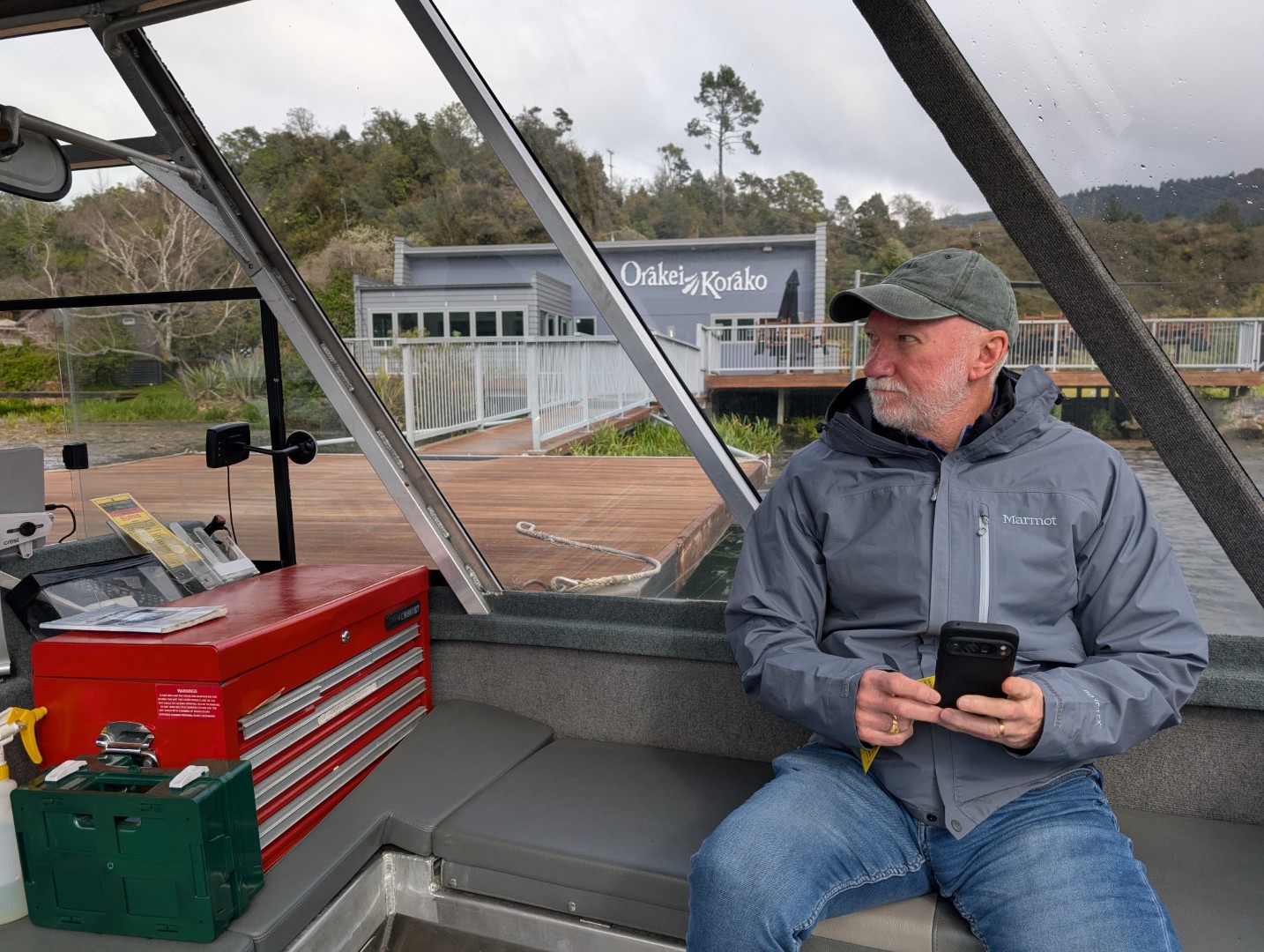
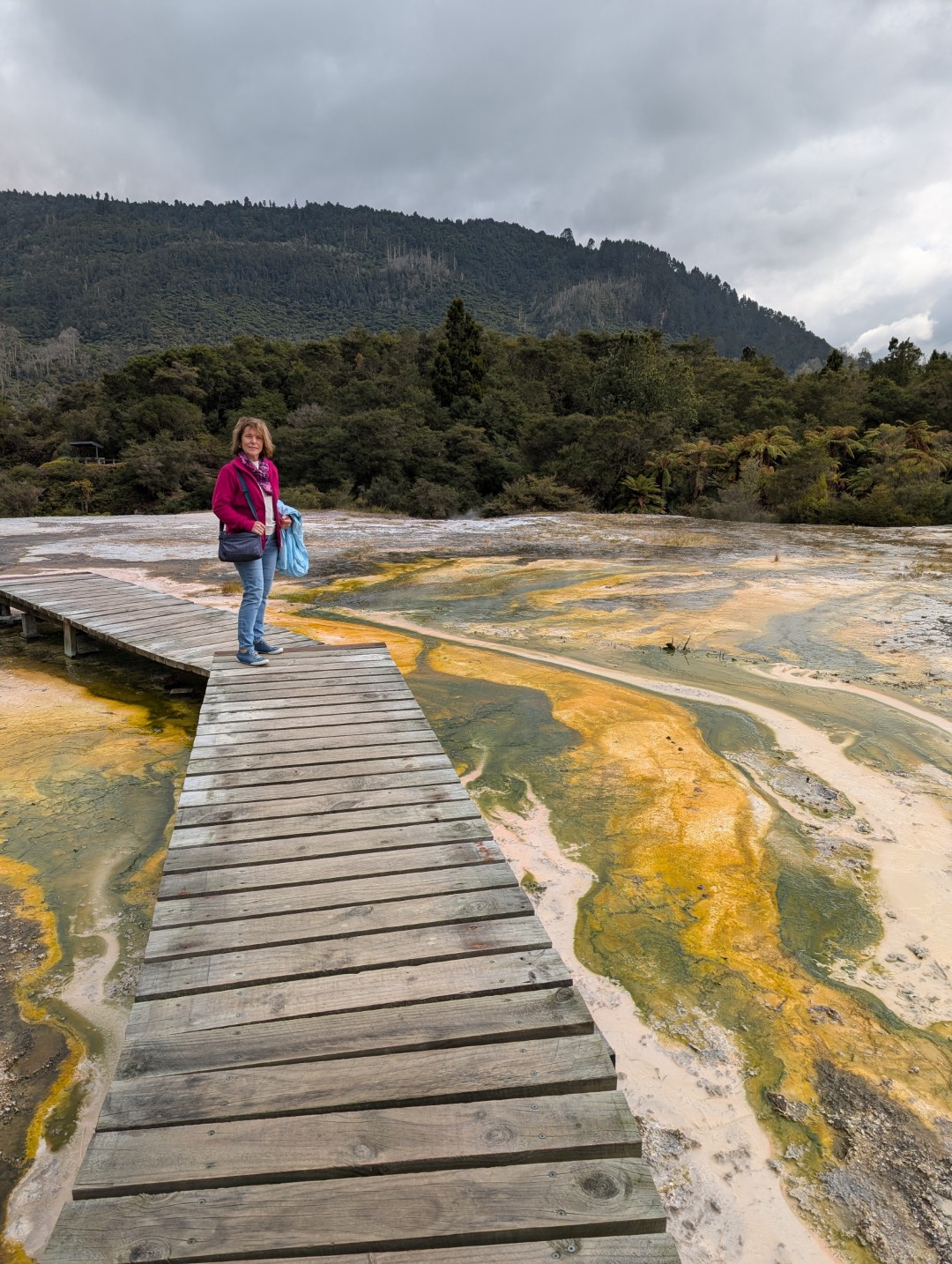
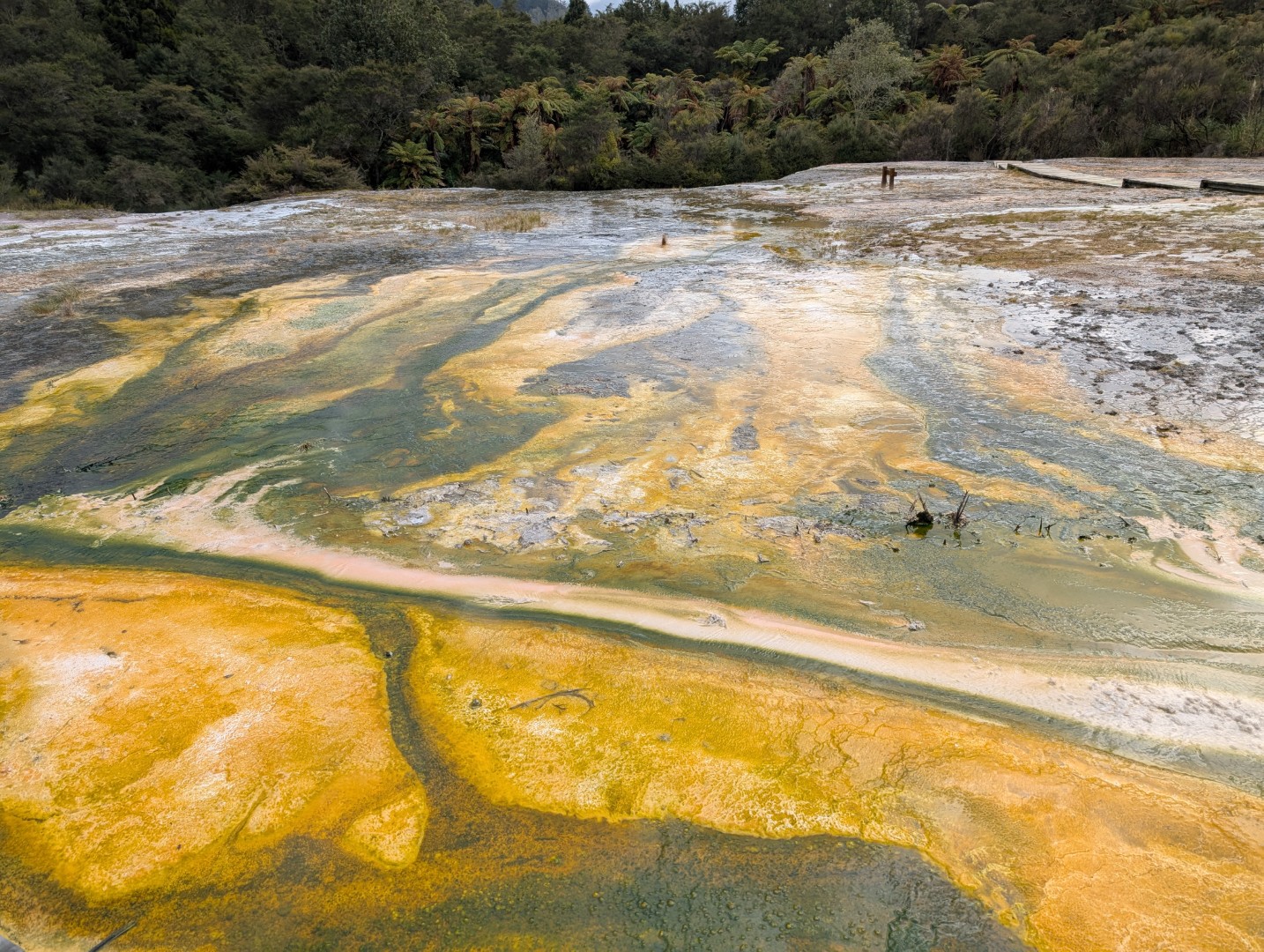
And, I’m so glad we did! As we arrived at their Reception building we could already see the steaming mineral terrace across the lake. The only way to reach the site is by a little boat that shuttles back and forth across the river all day. Once we stepped of the boat we started making our way up the boardwalks and steps so we could cross the colourful terraces and see all the bubbling cauldrons, and mudpools. It’s a very extensive site, and you climb gradually up to the top for a great view over the whole terraced area.
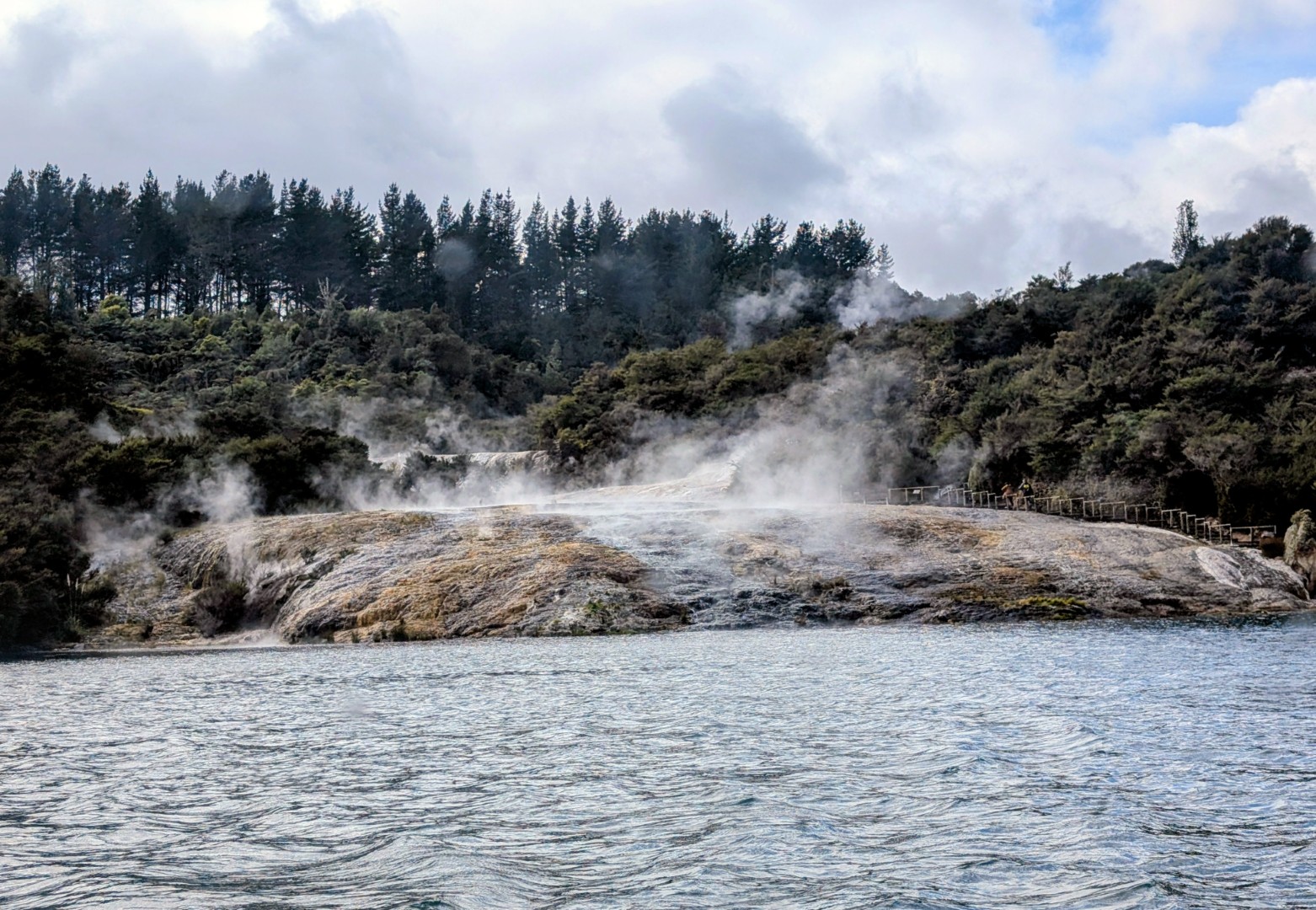
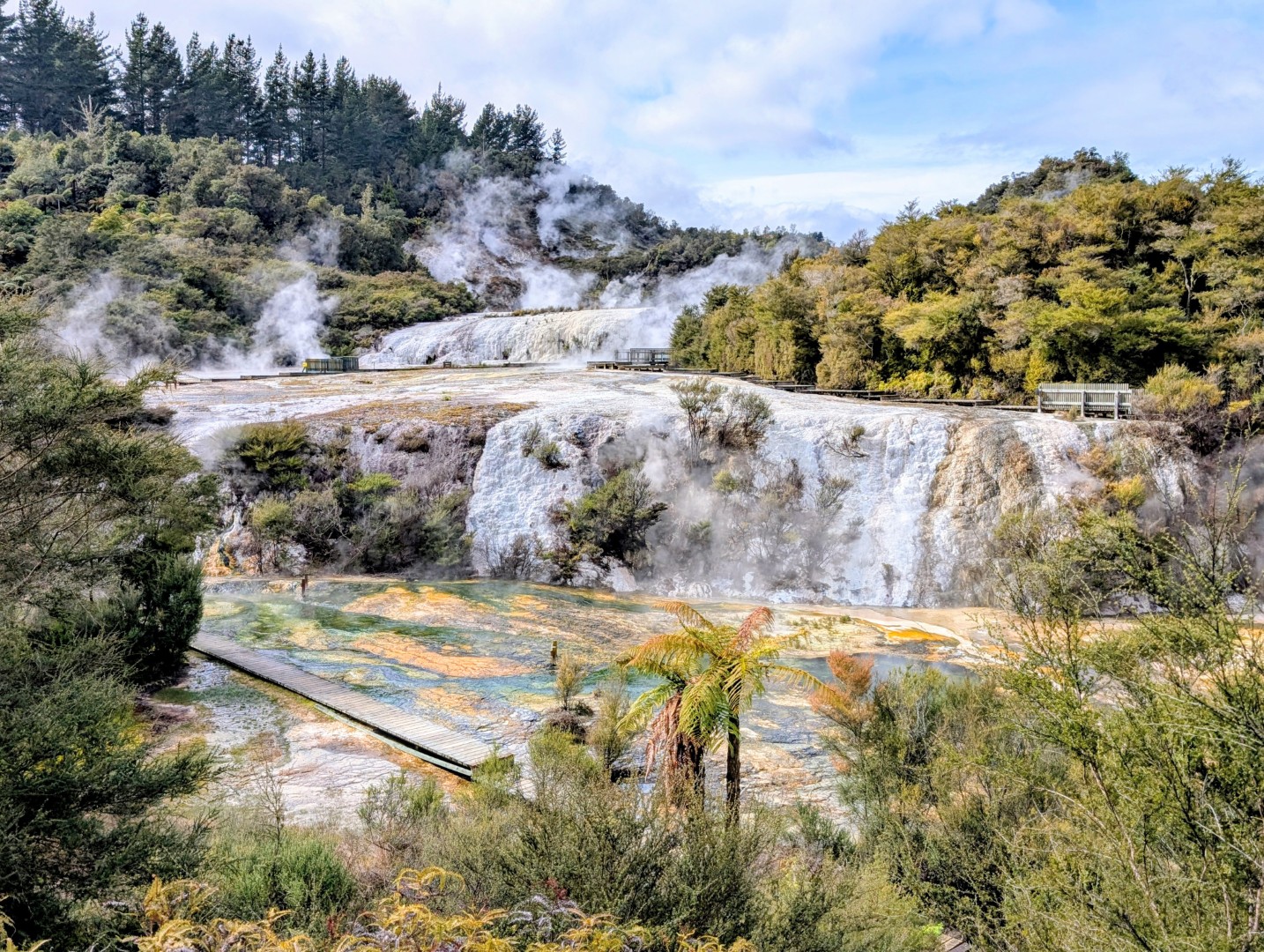
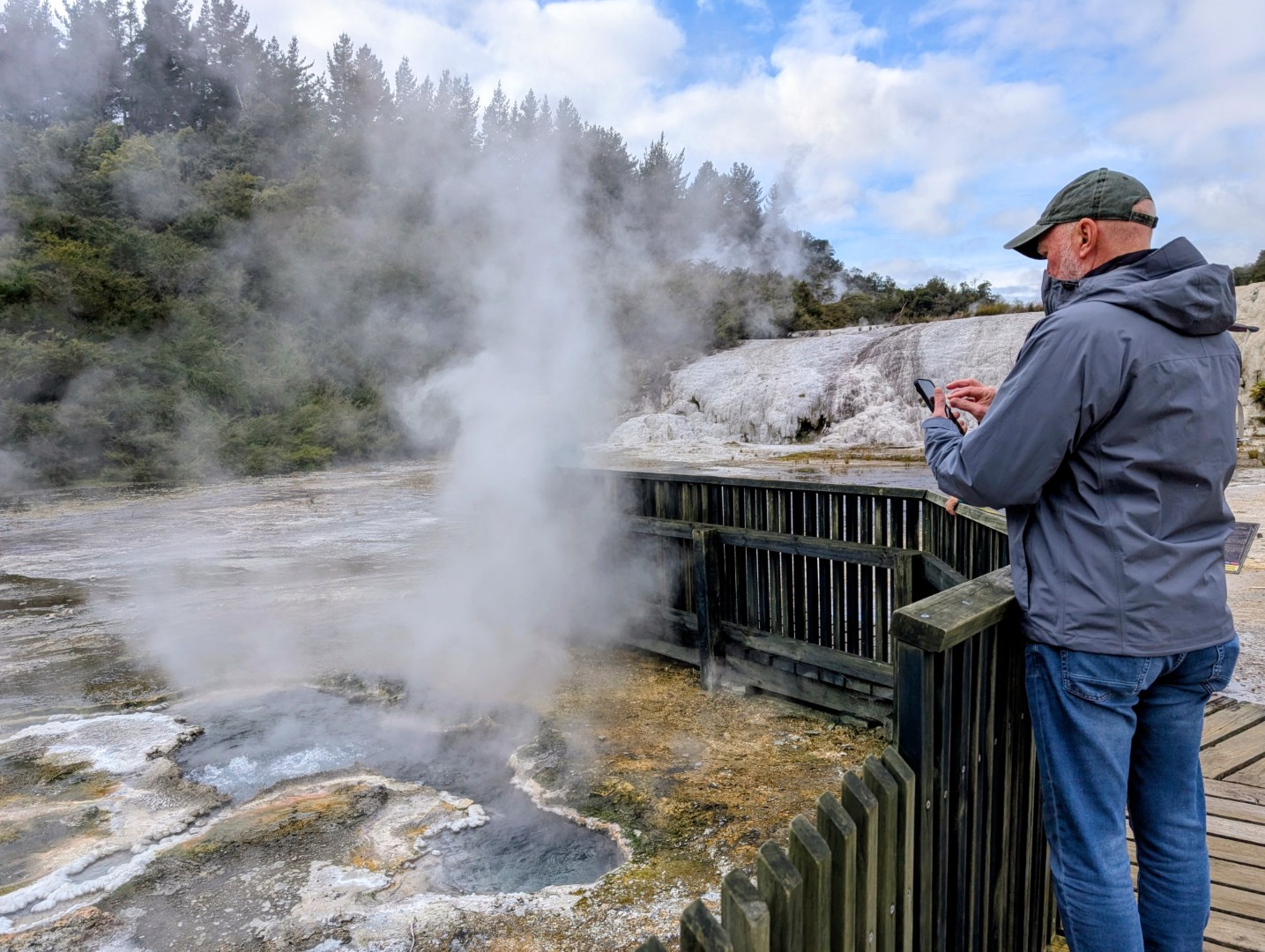
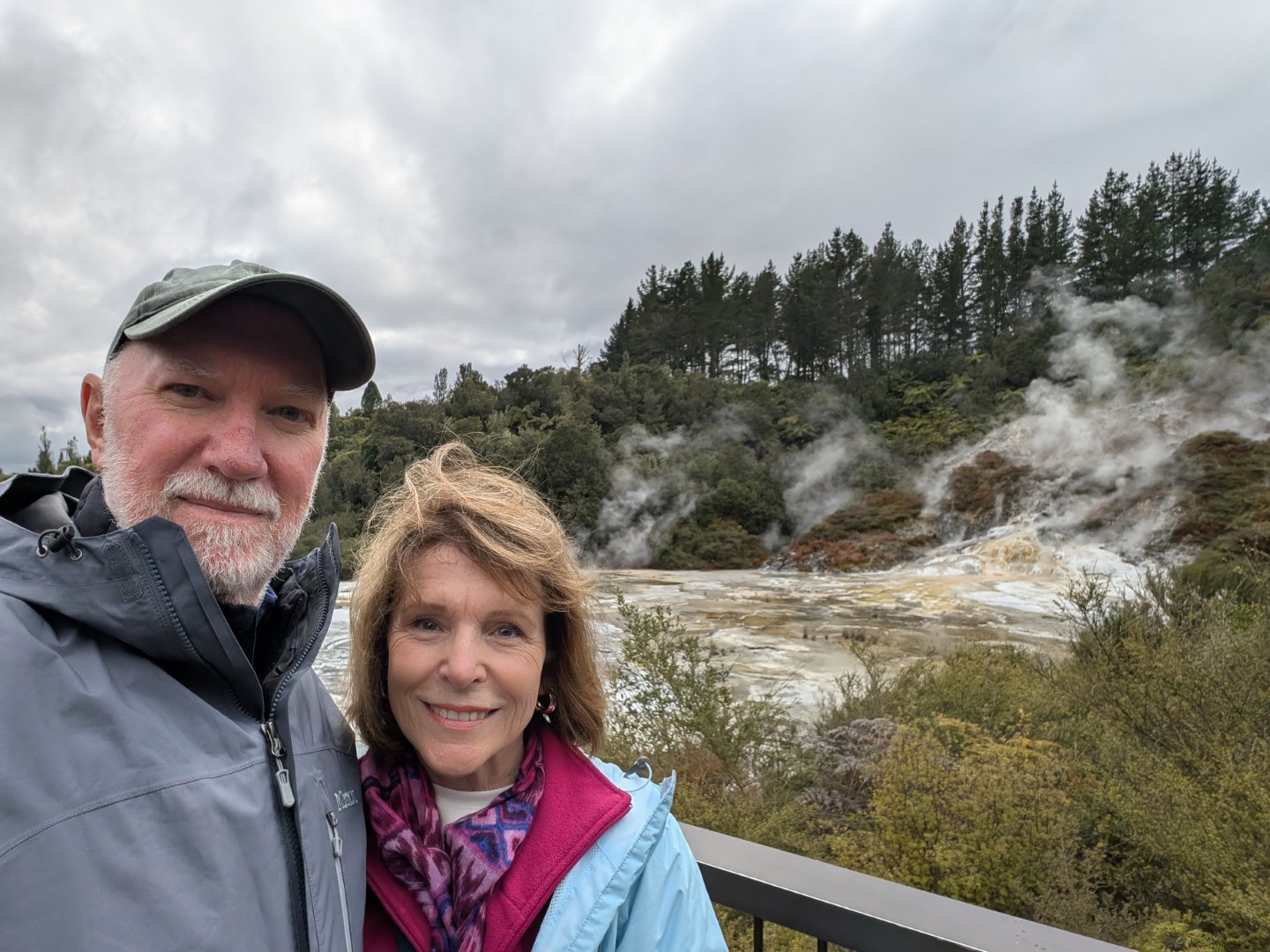
At the top of the park you are directed down a series of steps to see the small cave in the park. You can only view the entrance with the bright blue pool at the bottom, and the steam roiling out of a vent at the side and drifting up out the top of the cave overhang.
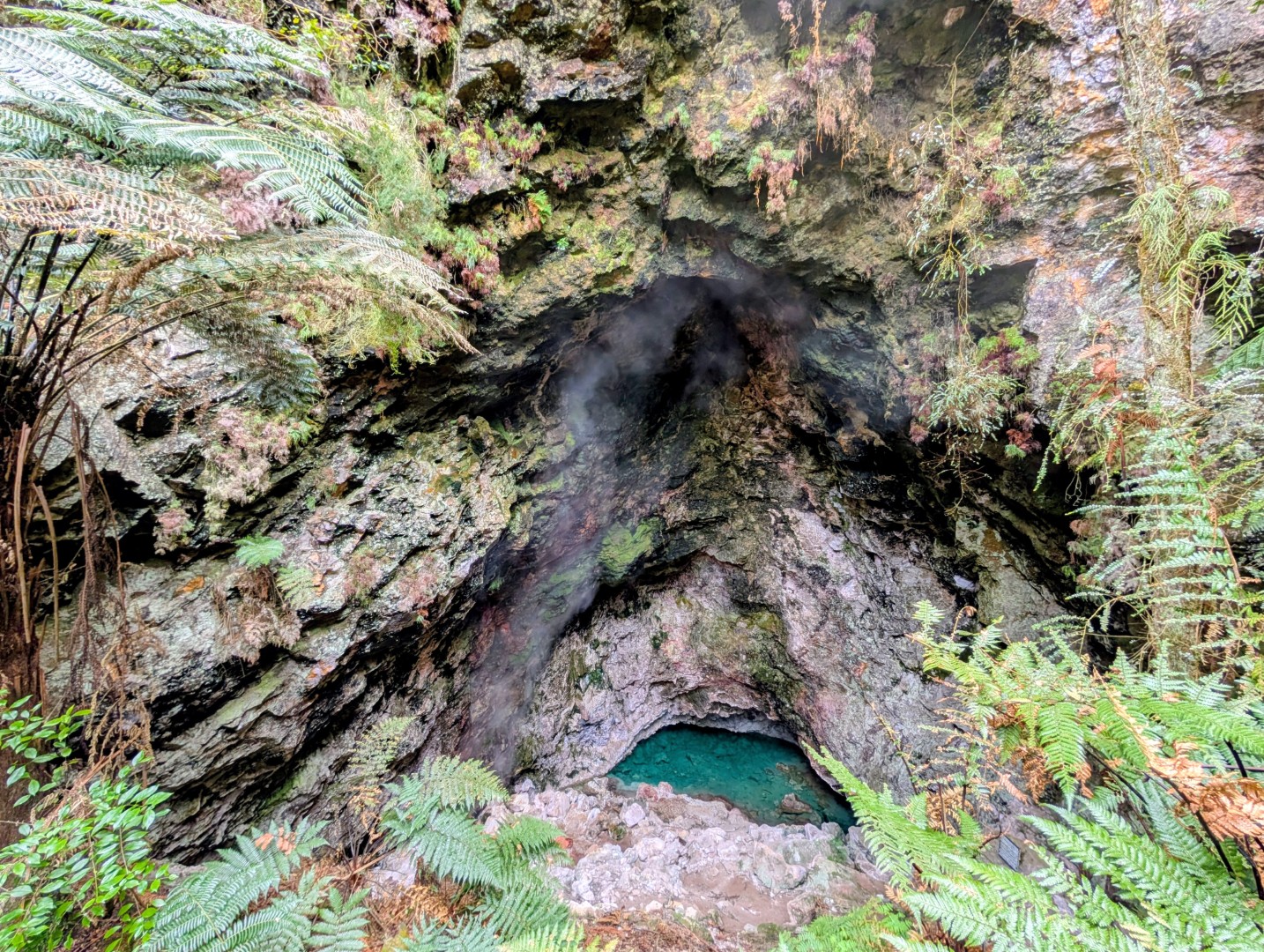
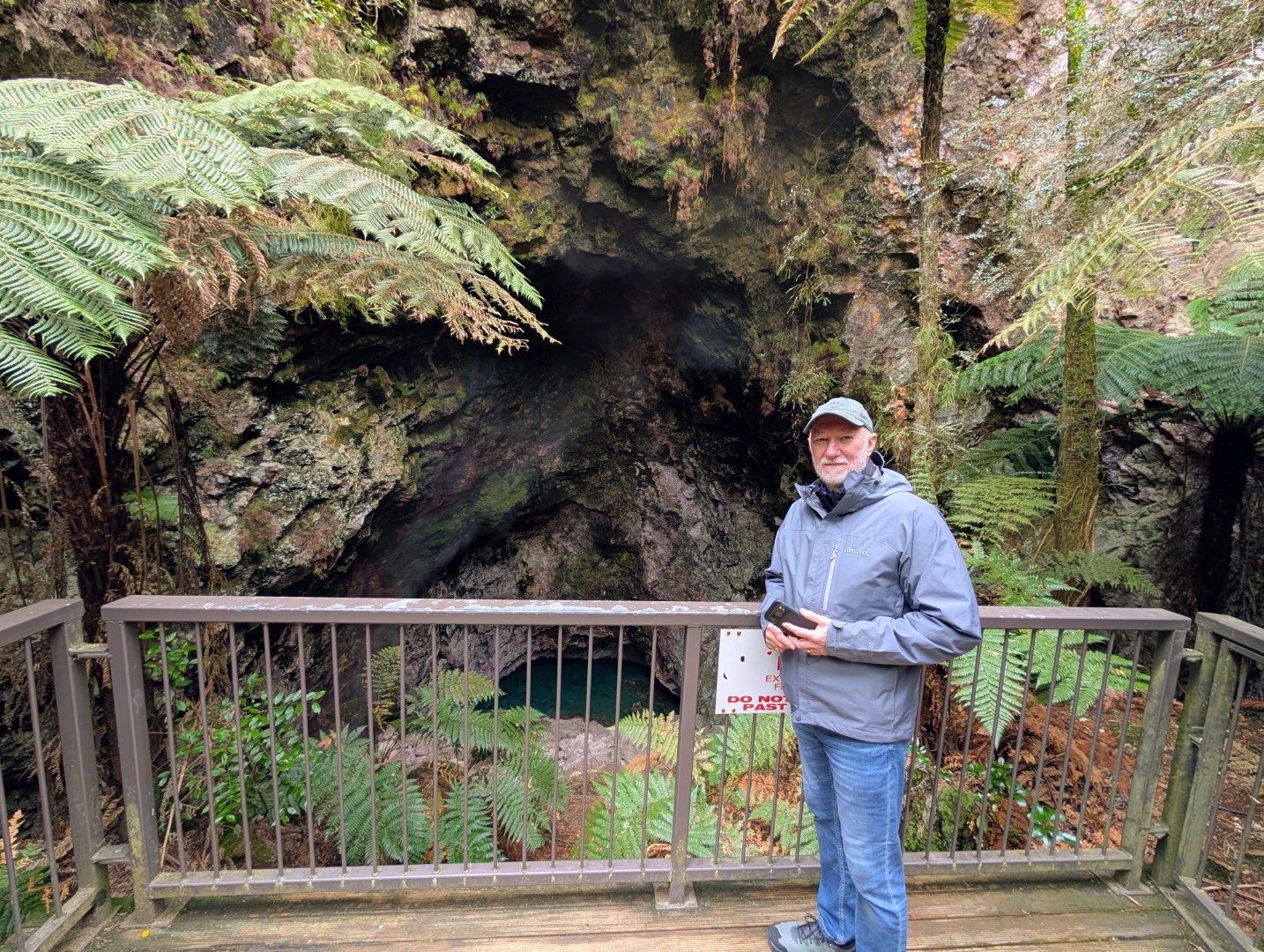
After tha cave the path leads down steep stairs to the mudpools. These are formed where the minieral waters dissolve the surrounding rocks to mud. The mudpool activity varies throughout the year, tending to be at it’s most active in the wetter, winter months. They were bubbling merrily for us!
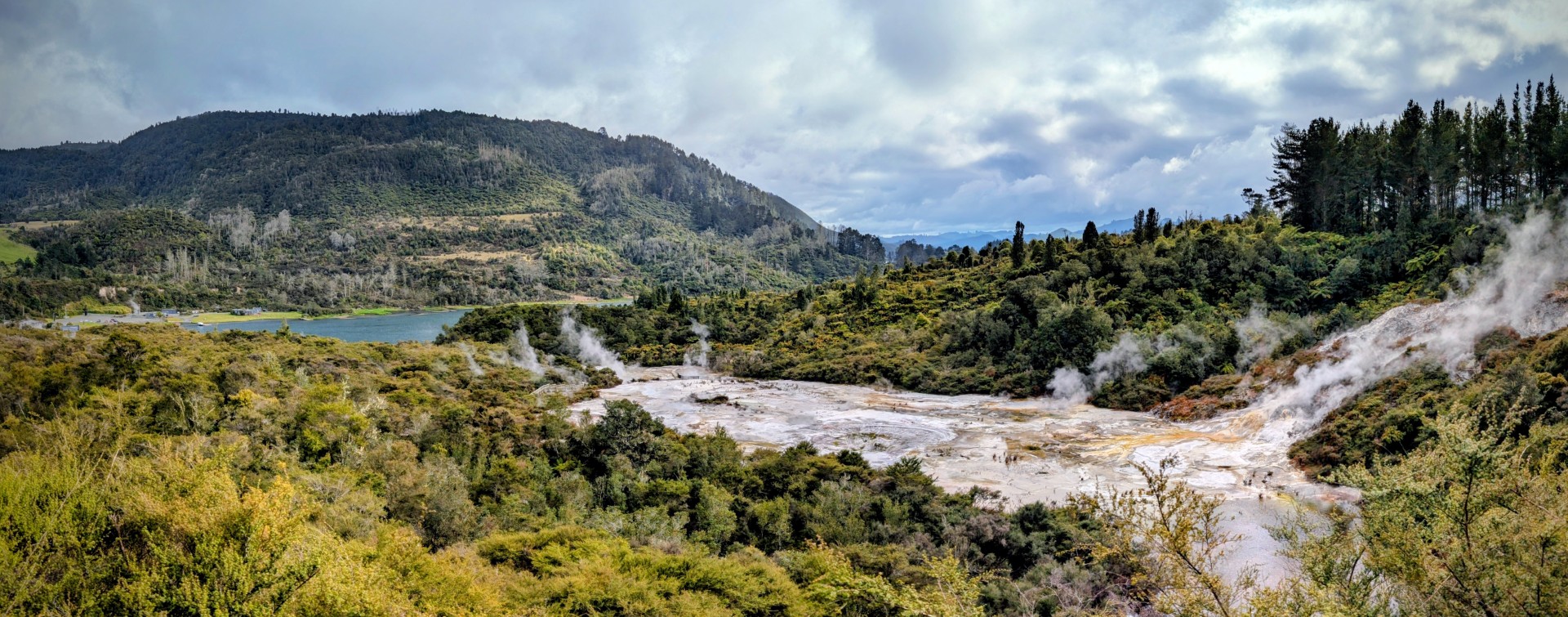
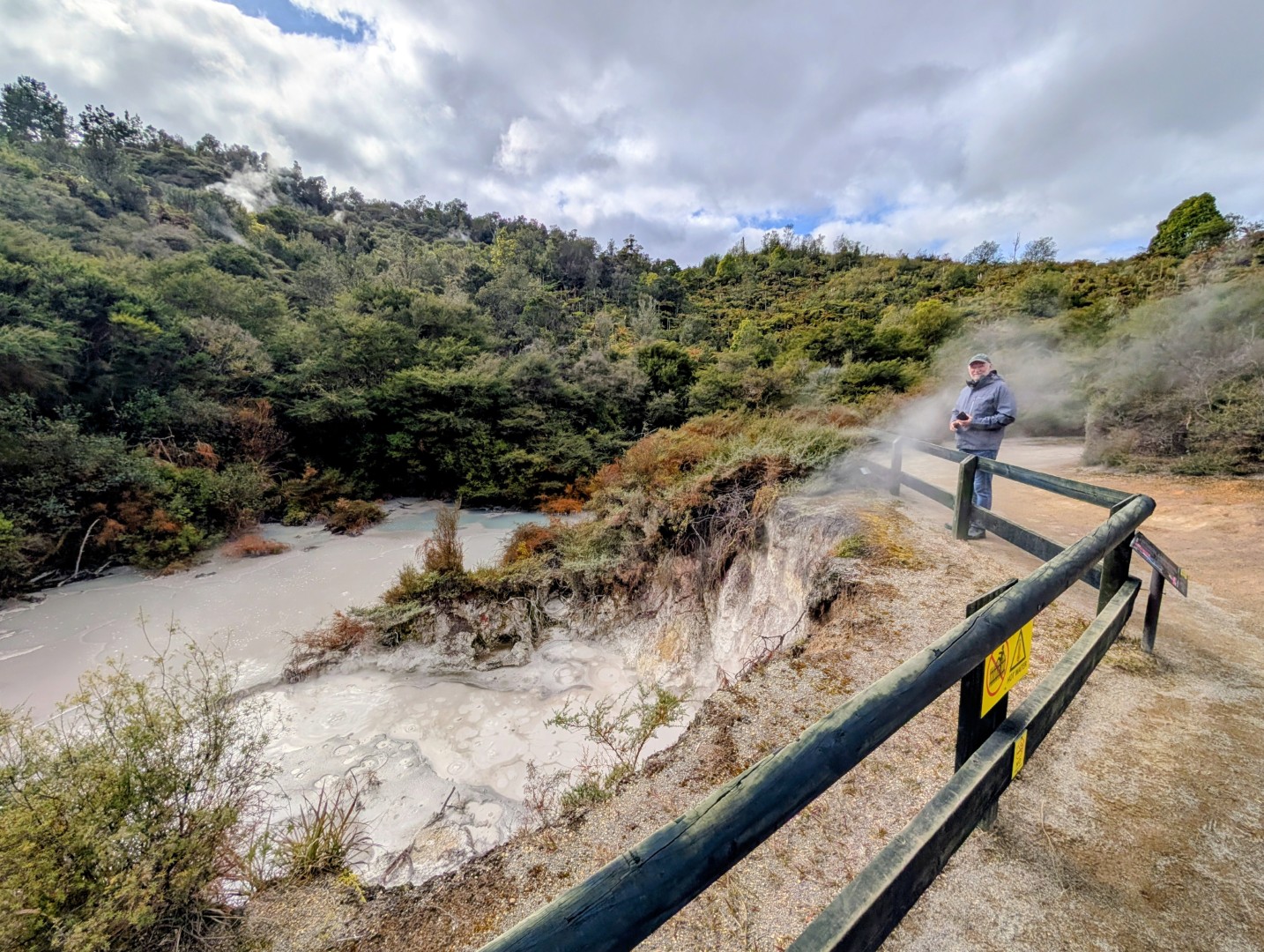
Finally we followed the last part of the trail past the bright yellow streams back to the little boat. The pilot had seen us coming so arrived at the dock just as we got there and whisked us back to the other side. We grabbed a coffee before heading on our way.
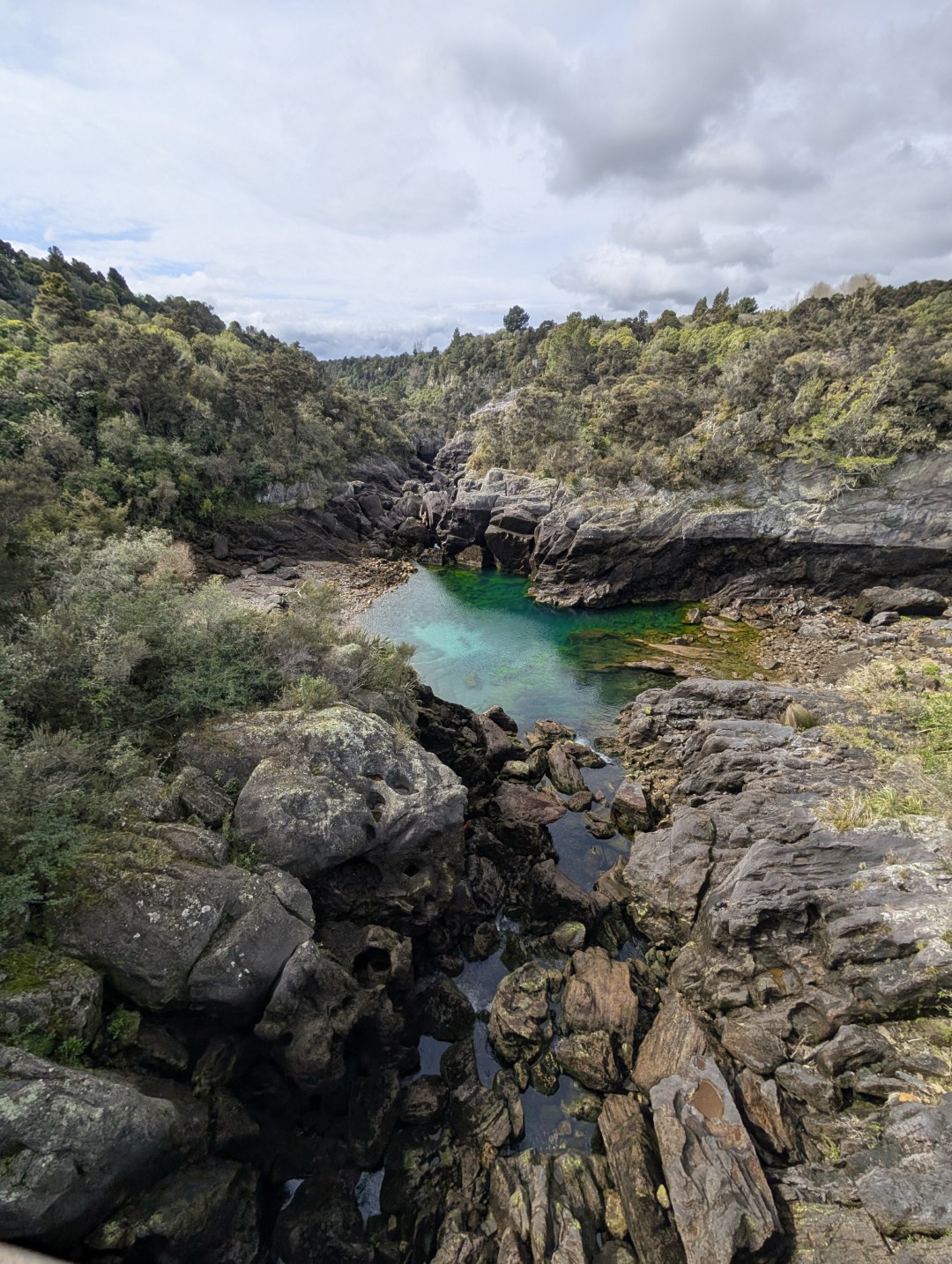
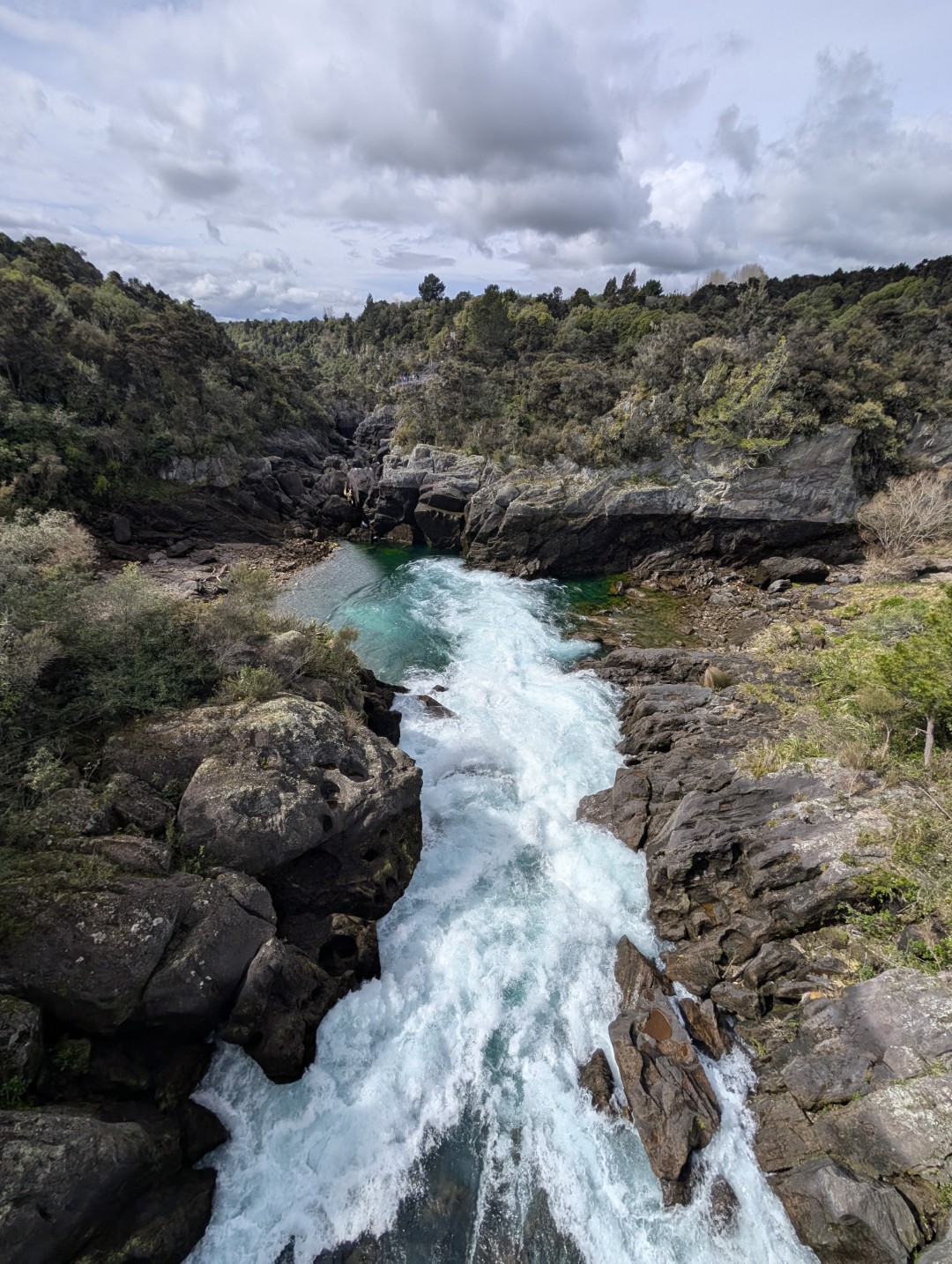
We were watching the clock for the next part of the drive as we had a midday appointment with the Aratiatia Rapids. Lake Aratiatia is formed by a dam on the Waikato River a few kilometers upstream from Lake Taupo. Three times a day thousands of litres of water are released from the Aratiatia Dam creating a spectacular flow of water through a narrow gorge into the river. We had a bit of a traffic holdup on our way but fortunately arrived at the dam just as the ten minute warning siren sounded. There were two more sirens that blared at 11.55 and 11.59, before the dam gates lifted ( just a little!) and let the flood run out. We sttod on the bridge just beyond the gate and were really rather mesmerised by the flood of water gushing into the rocky pool below us. Eventually that pool filled up and the overflow gushed down the rocky gorge beyond. It was a fantastic sight!
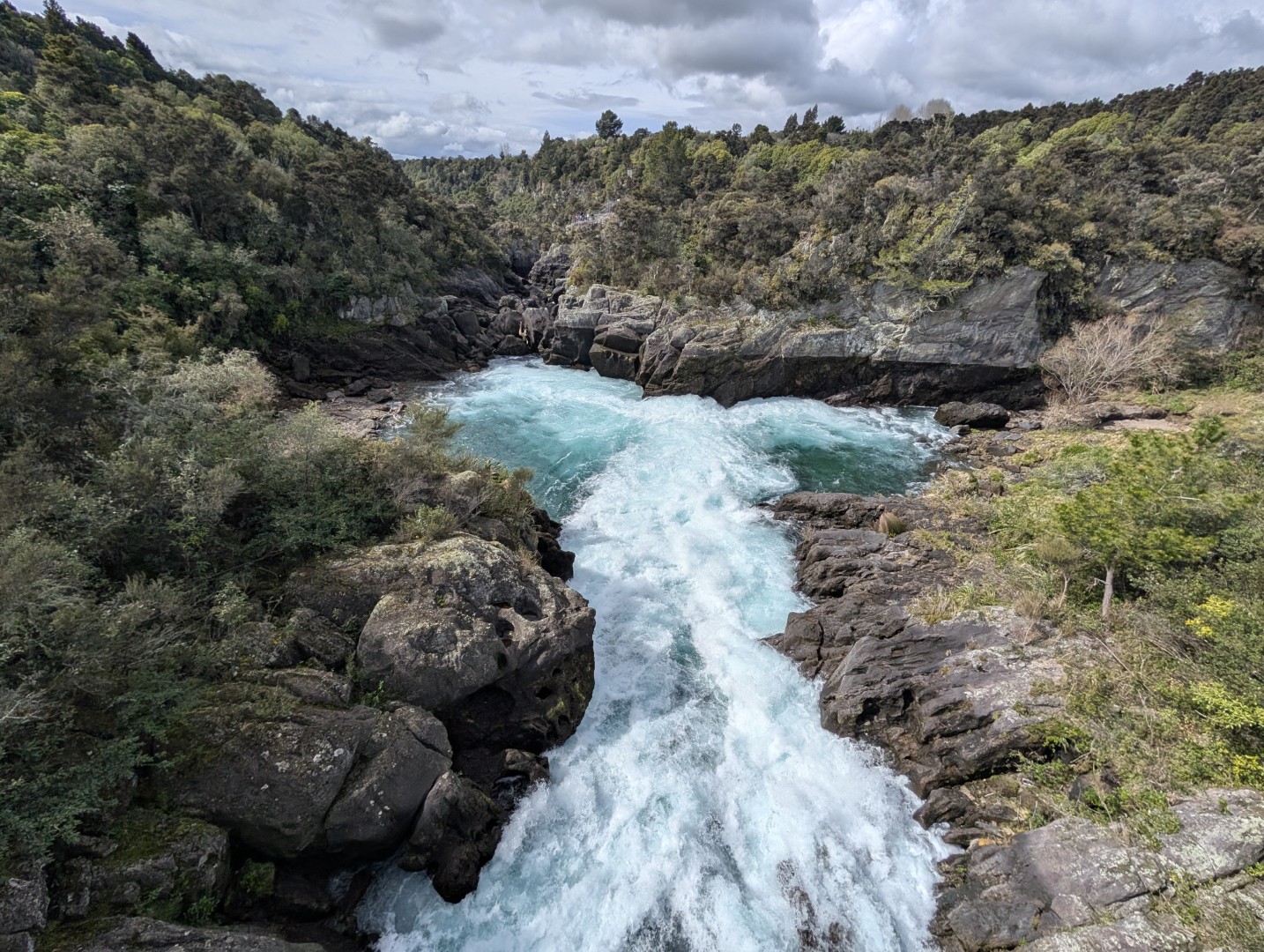
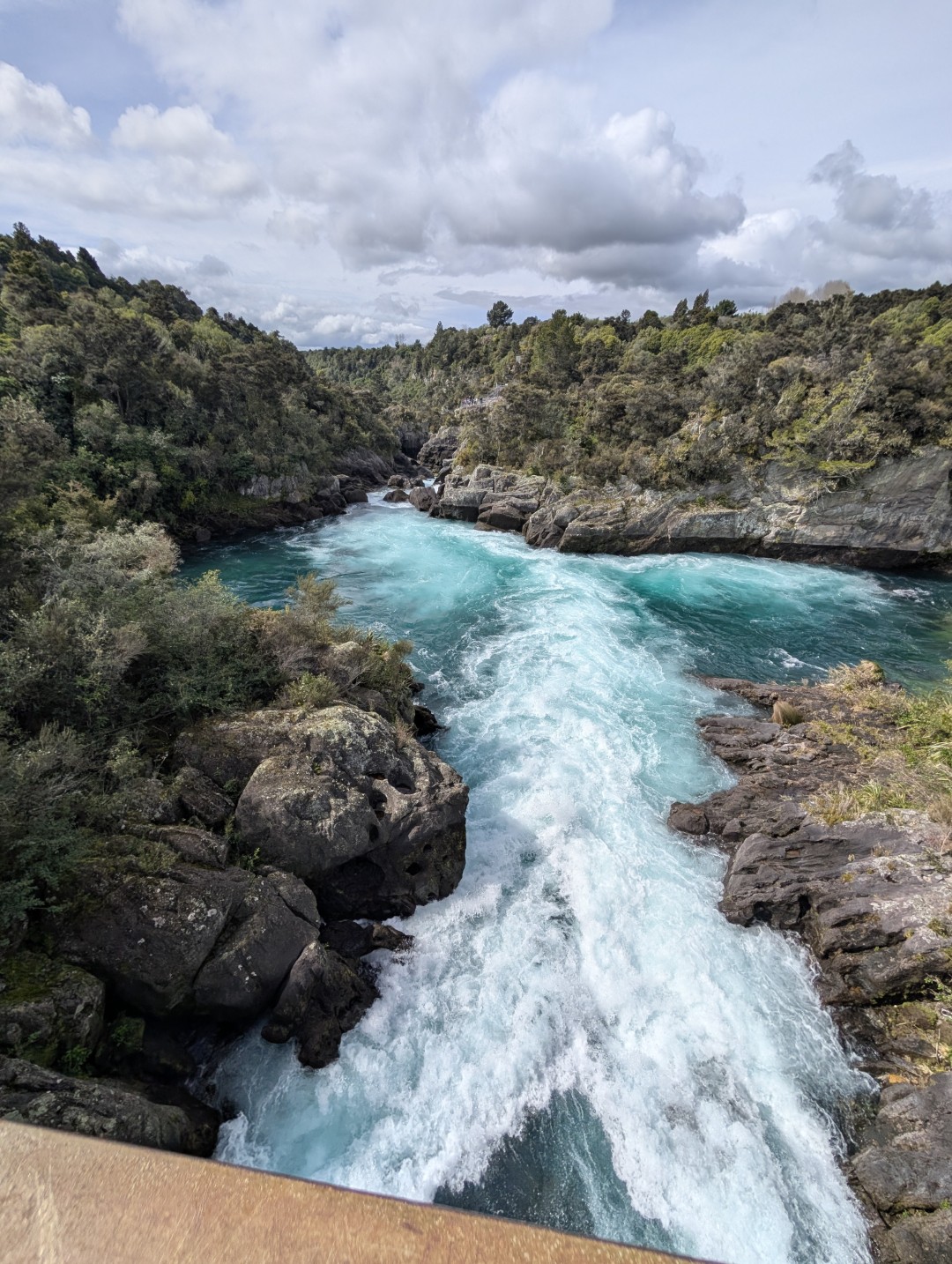
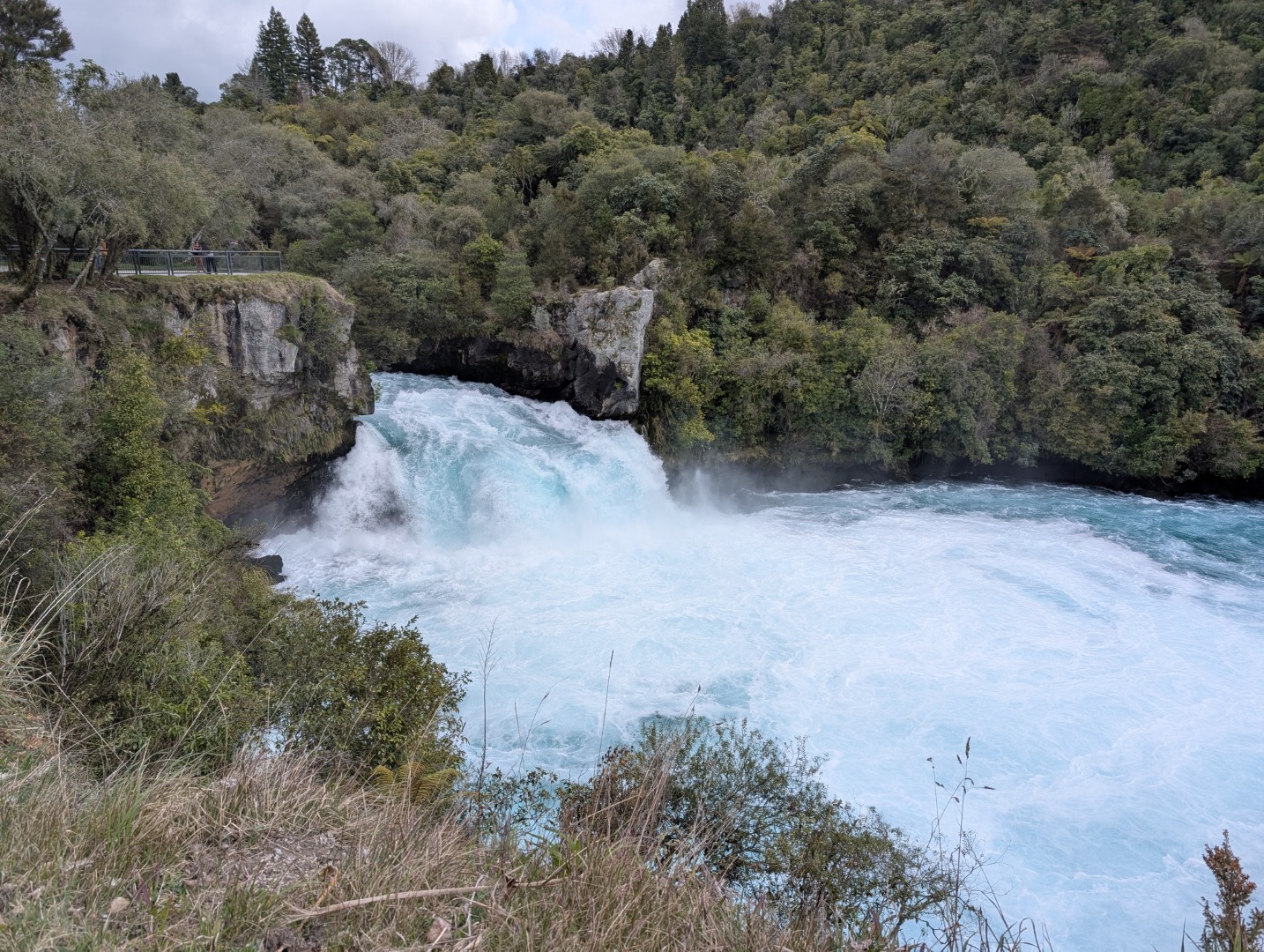
The rushing water theme continued at our next stop, the famed Huka Falls which were only a ten minute drive away, a little closer the Taupo. Here, the Waikato River, New Zealand’s longest river, narrows dramatically, generating enough power to fill an Olympic-sized swimming pool in just 11 seconds. The effect is mesmerising but loud, and we heard the falls well before we saw them!
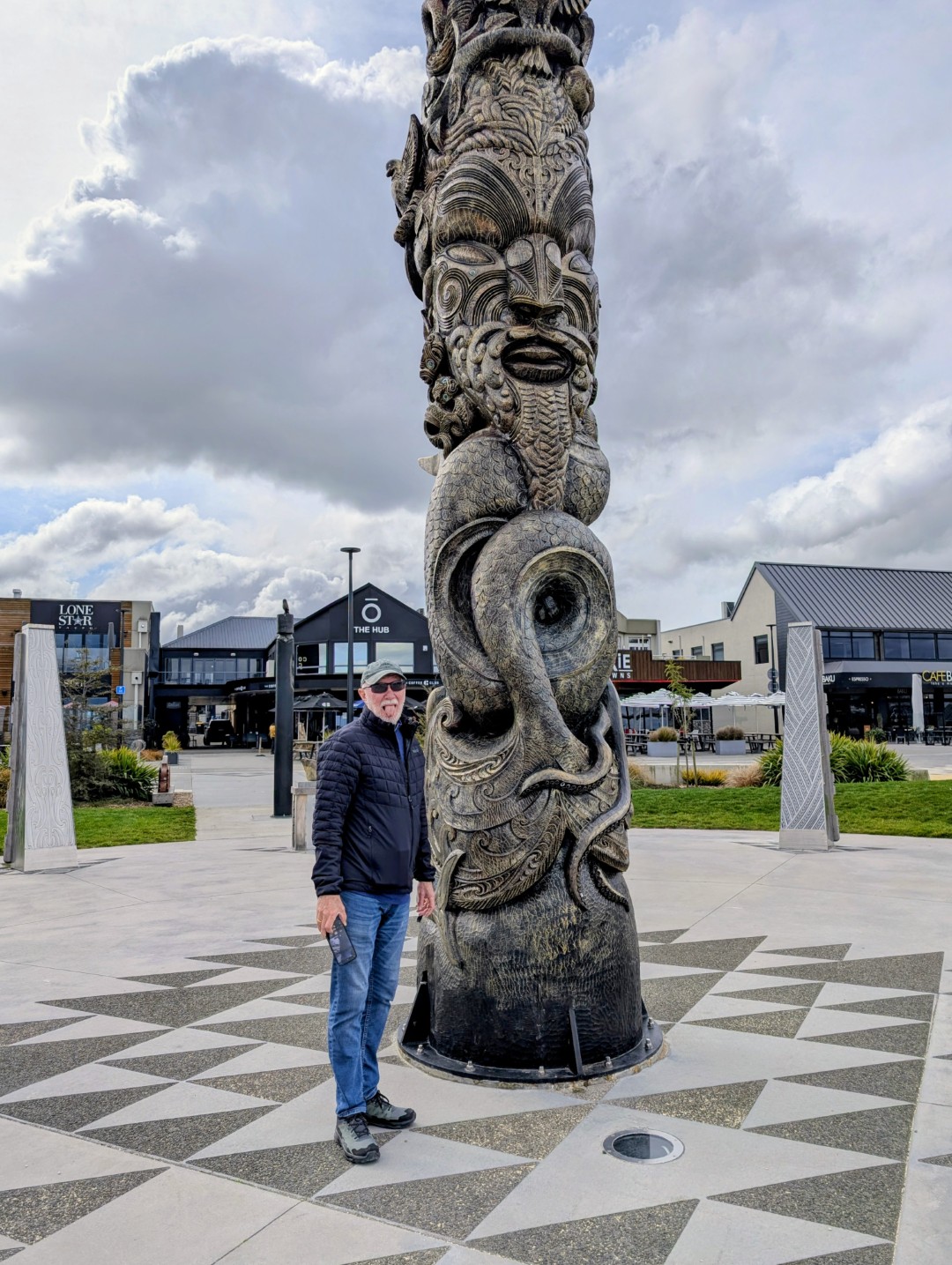
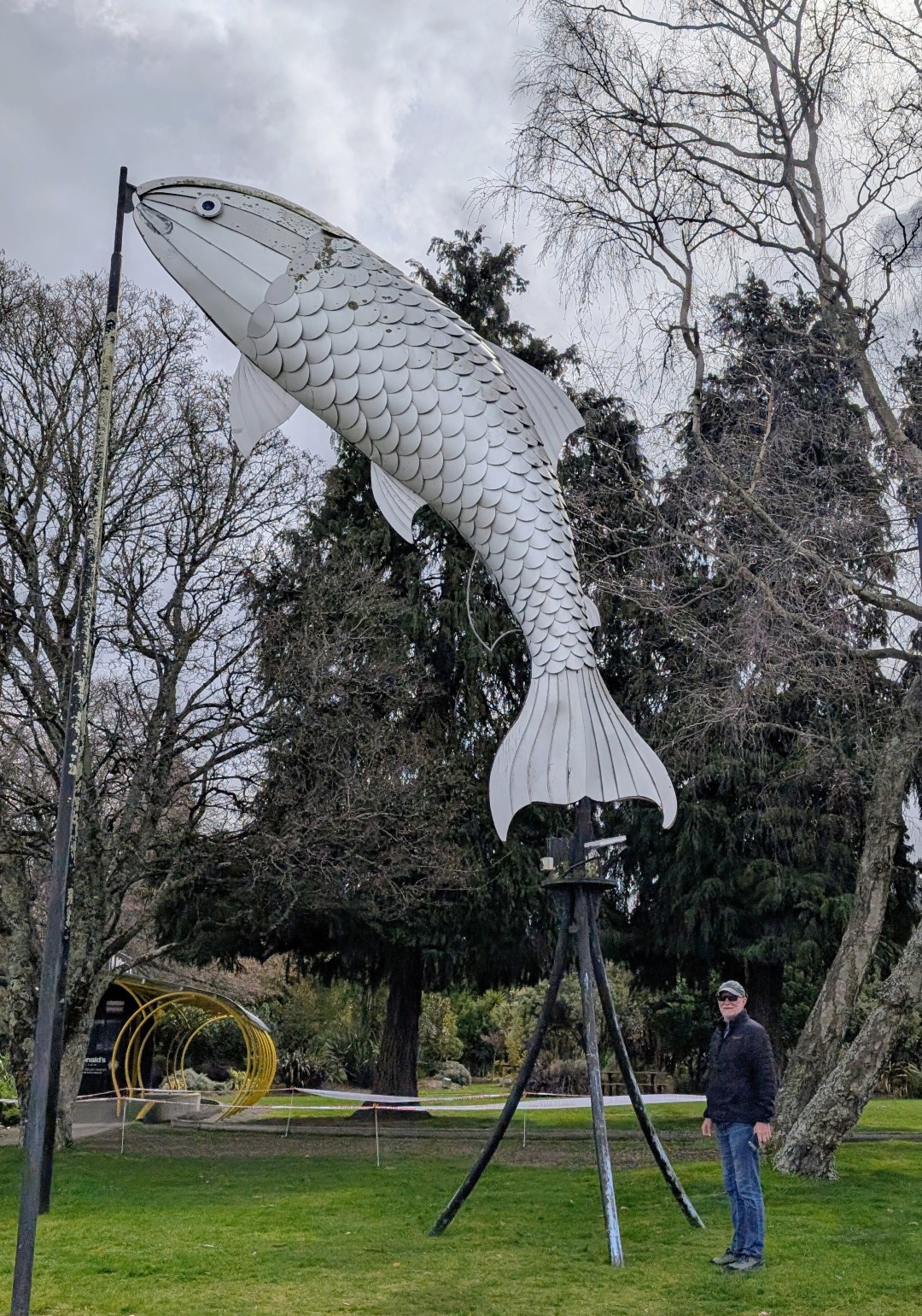
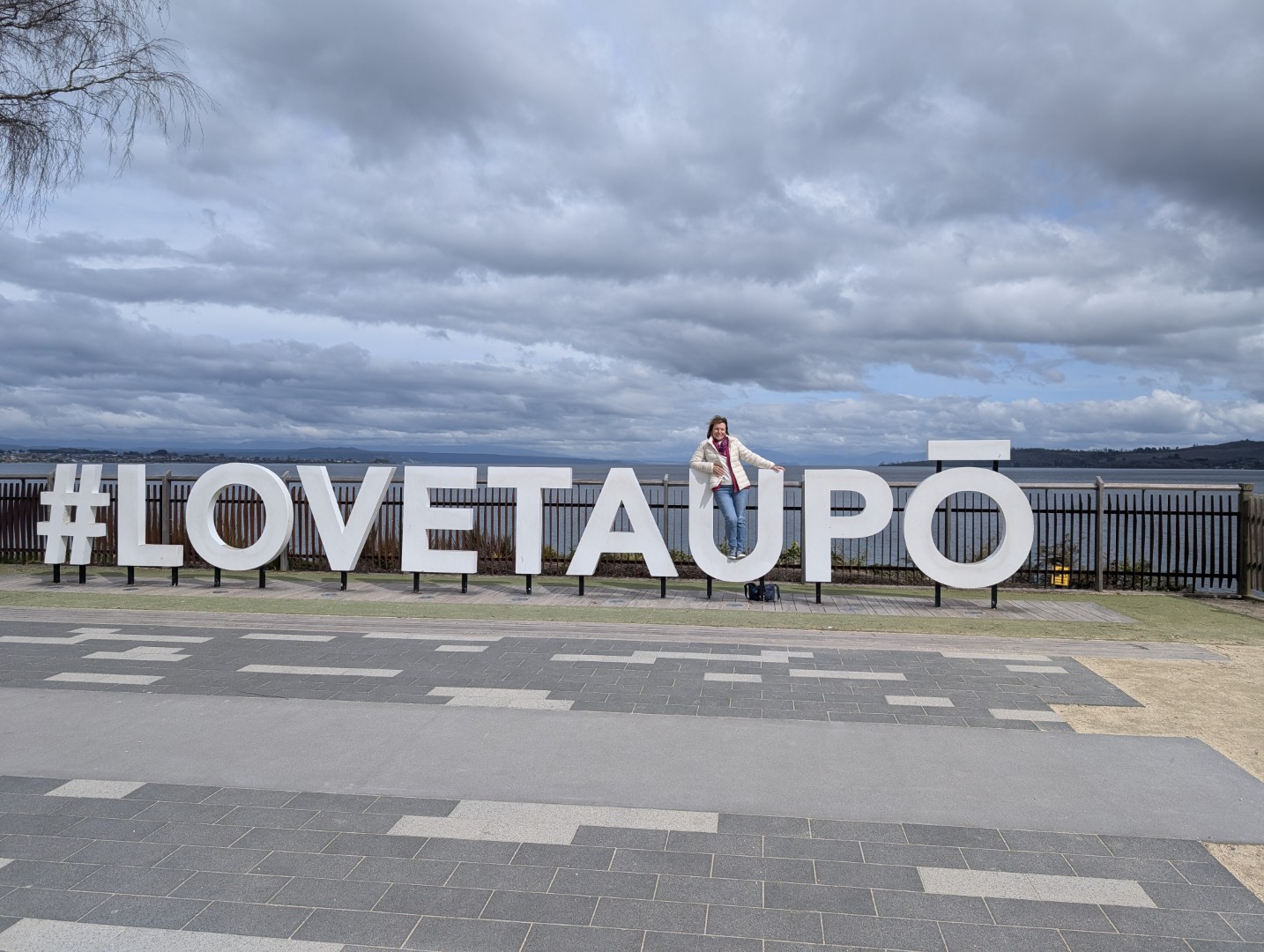
From here it was only a short drive down to the waterfront at Lake Taupo. Lake Taupo is the largest freshwater lake in Australasia, and a premier tourist destination in New Zealand. The lake is within a vast caldera formed by a supervolcanic eruption centuries ago and these days you can indulge in every kind of water sport there as well as trout fishing. It’s also not far from Mt Tongariro with it’s very popular treks. The downtown area was absolutely FULL of pubs, cafes, restaurants and bars, as well as a mix of outdoor adventure gear stores. We went for a walk along the lakefront, to see the #LoveTaupo sign, a stunning Maori artwork installation called Ta Anea and a “Big Trout”. The most striking part of of Te Ātea is the giant centrepiece – the pou (a pillar/spear) and ancestor of Kani – carved from a 2,000-year-old Totara tree by master carver Delani Brown.
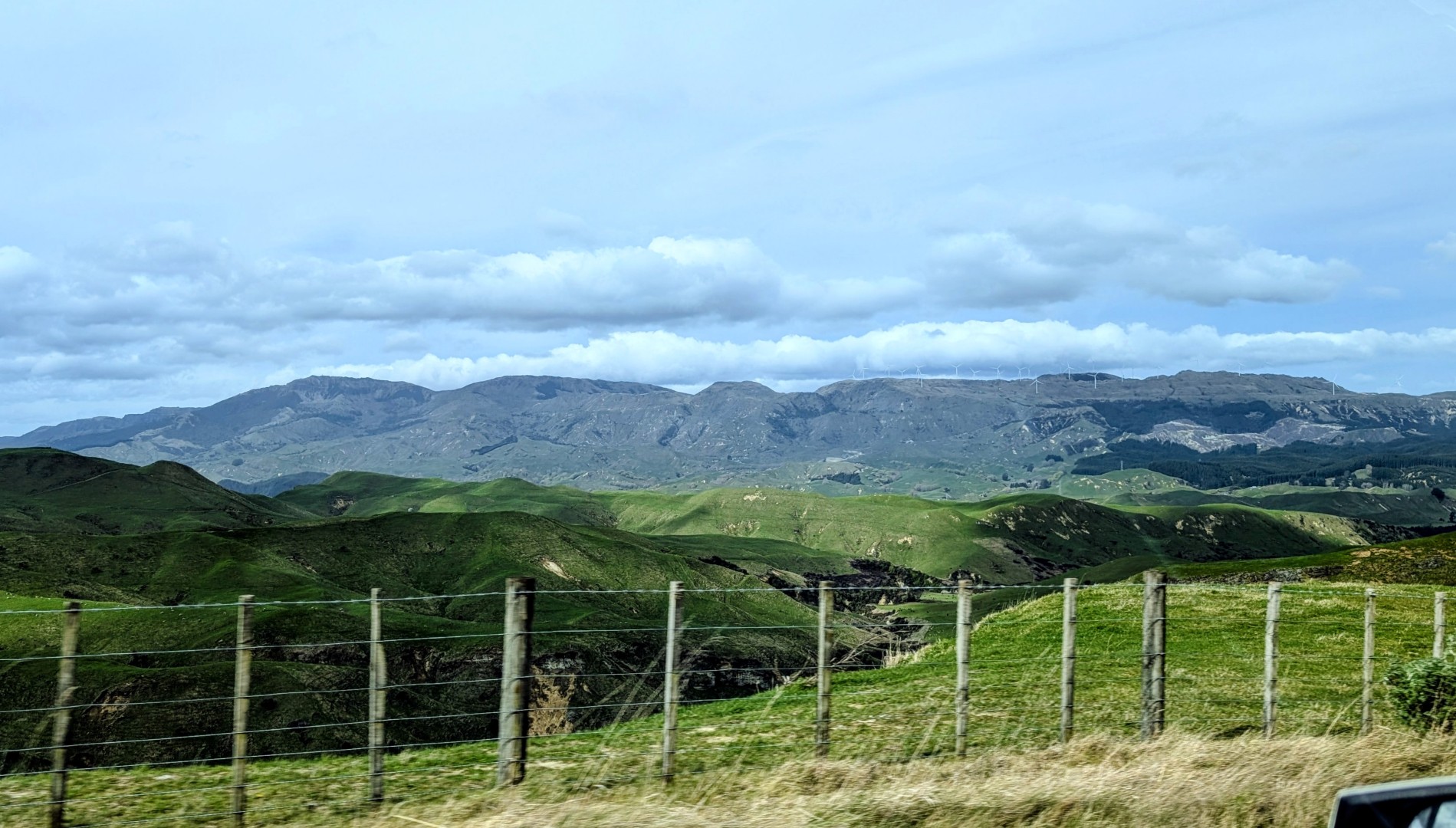
The drive from Taupo to Napier was a real eye-opener. I had expected it to be fairly ordinary farming country but that was not at all the case. There was a very long section where we wound through deep gullies with high peaks on either side covered with pine tree plantations. The forest went on for miles and miles and the whole landscape reminded us of western Canadian forest or the north woods of Washington state. I was intrigued by the forests and did a bit of Googling to learn that one of the plantations here, Kaingaroa Forest, is one of the largest planted forests in the world!! It was a major project of the 1920s and 1930s and was planted on land that was not suitable for agriculture, much of it consisting of infertile volcanic pumice soils from the Taupō eruption.
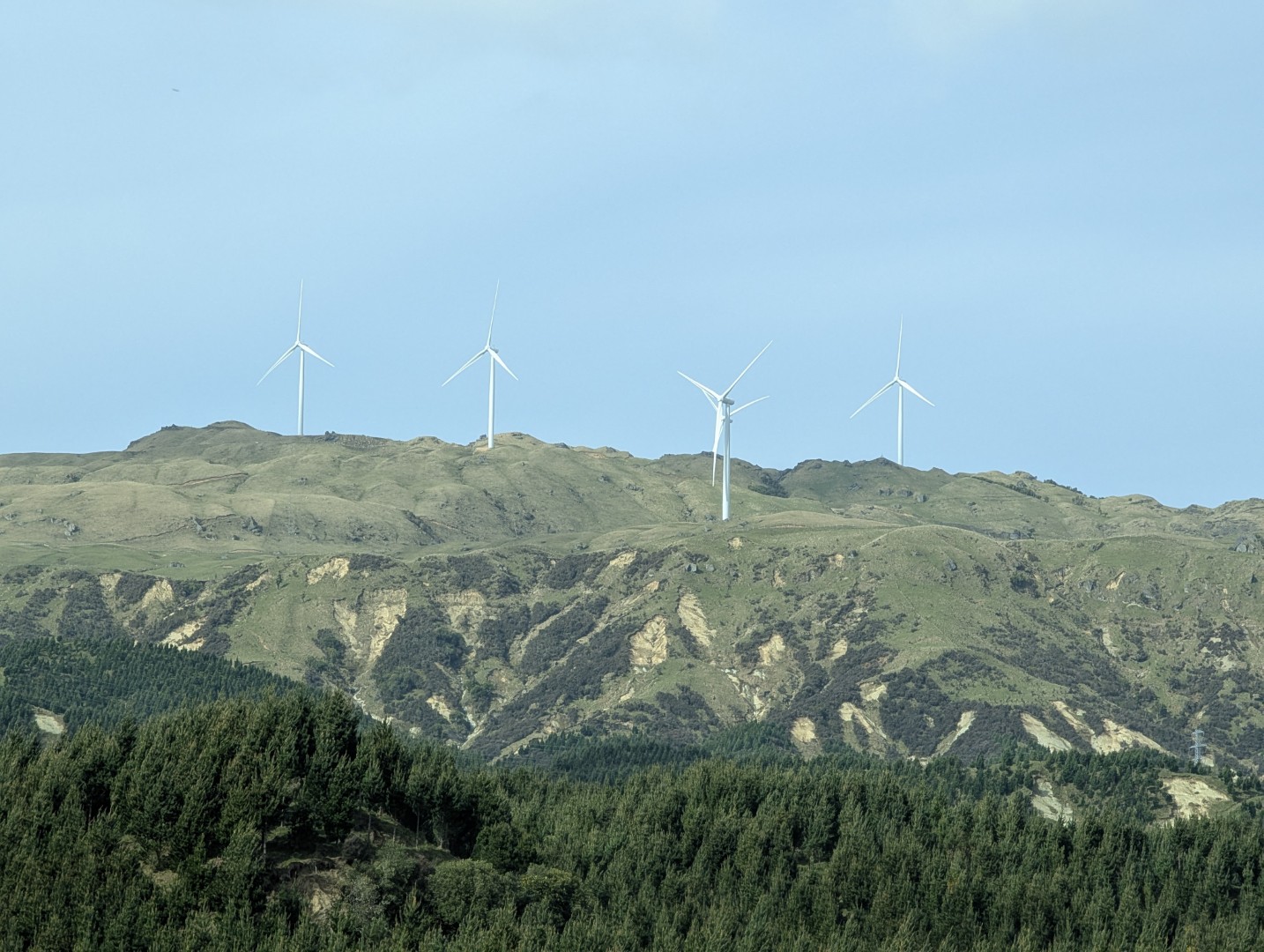
Eventually we came through the main part of the forest, past a large wind farm and then gradullay started dwon the long slopes to Hawkes Bay and the city of Napier.
We checked in to the hotel and went for a short stroll around the town. Napier was largely destroyed by a severe earhquake in 1931 and was rapidly rebuilt within two years, in the style that was so popular at the time – Art Deco. As a result the city is like a living artwork of beautiful Art Deco architecture.
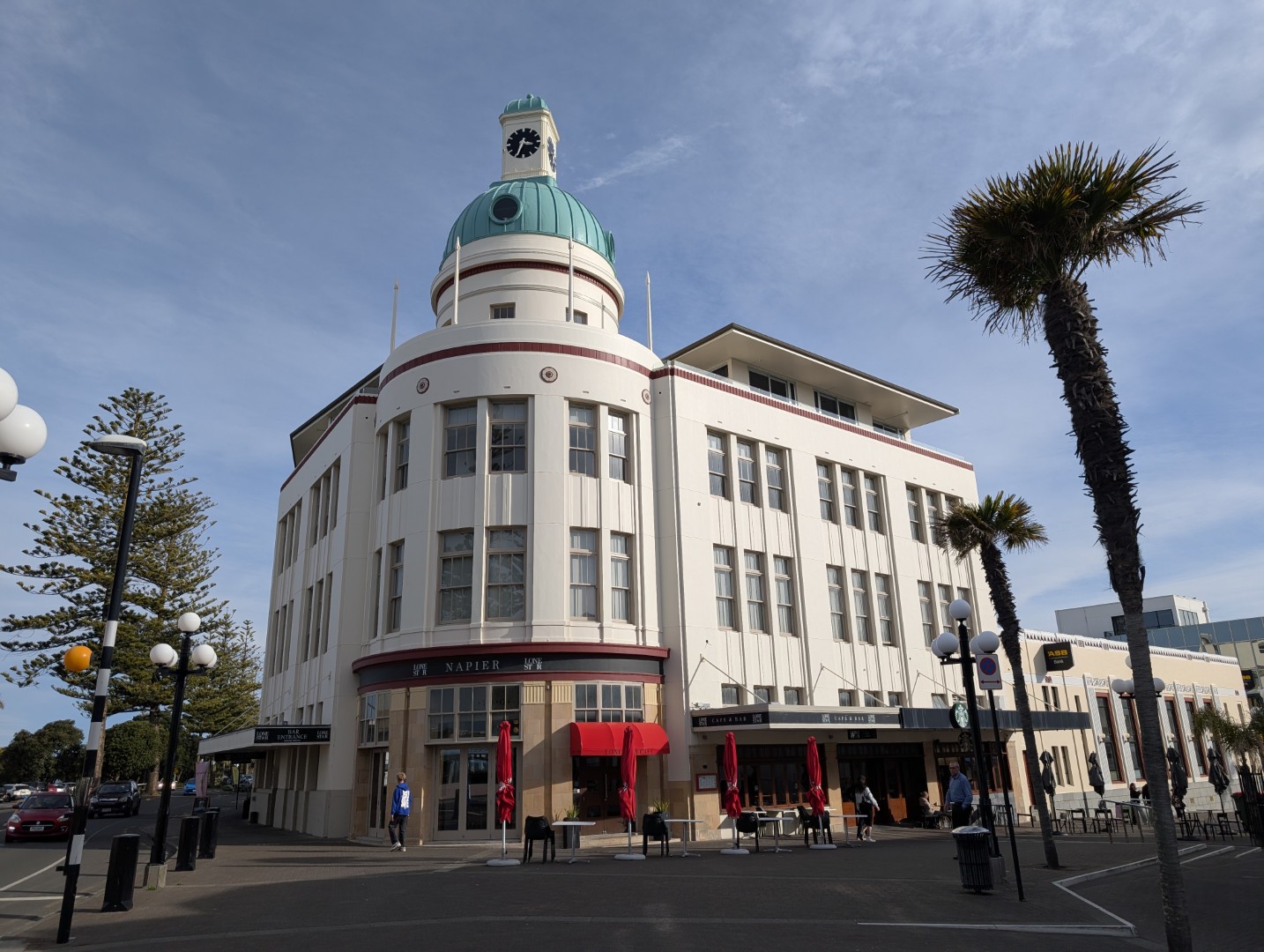
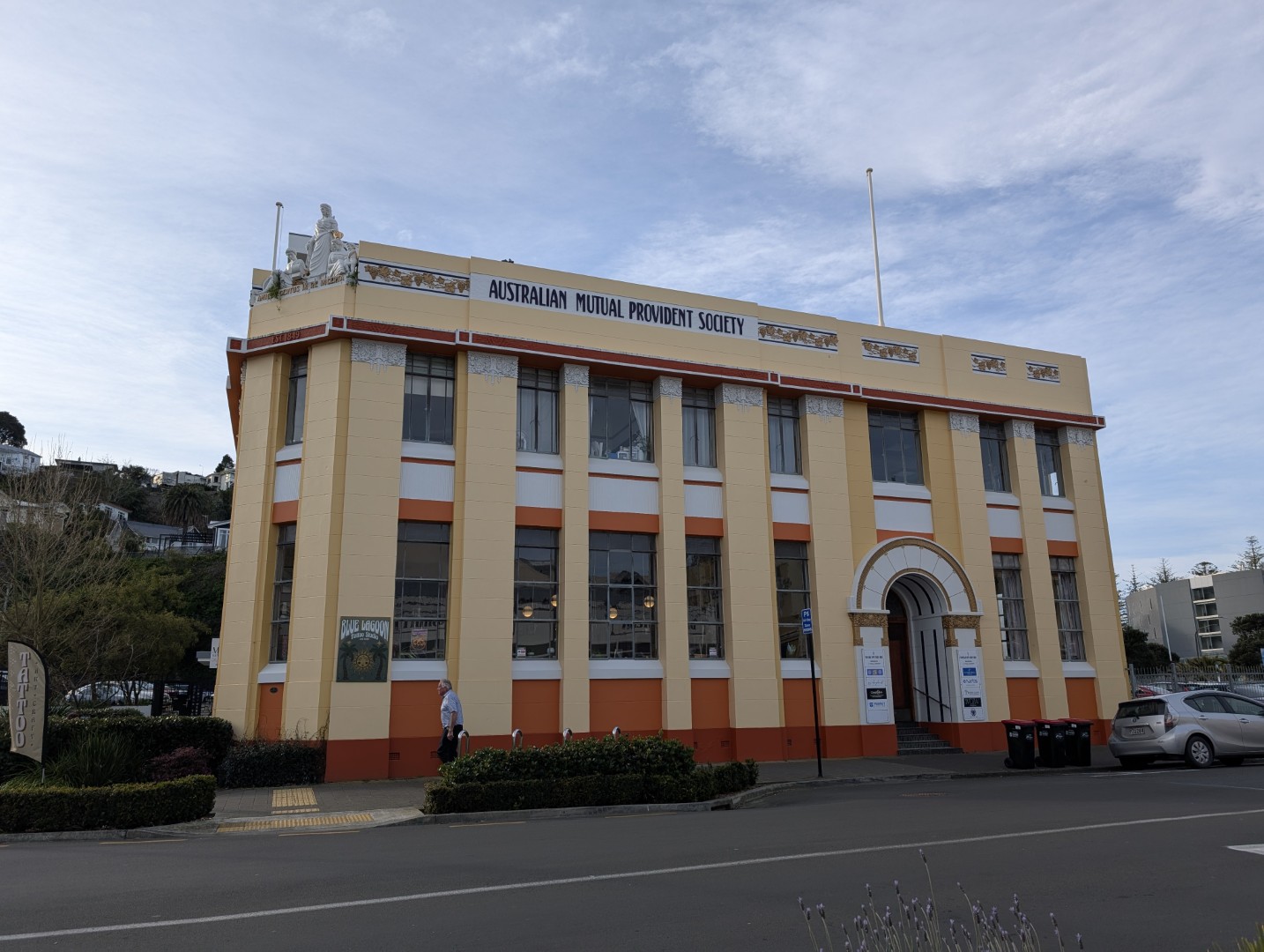
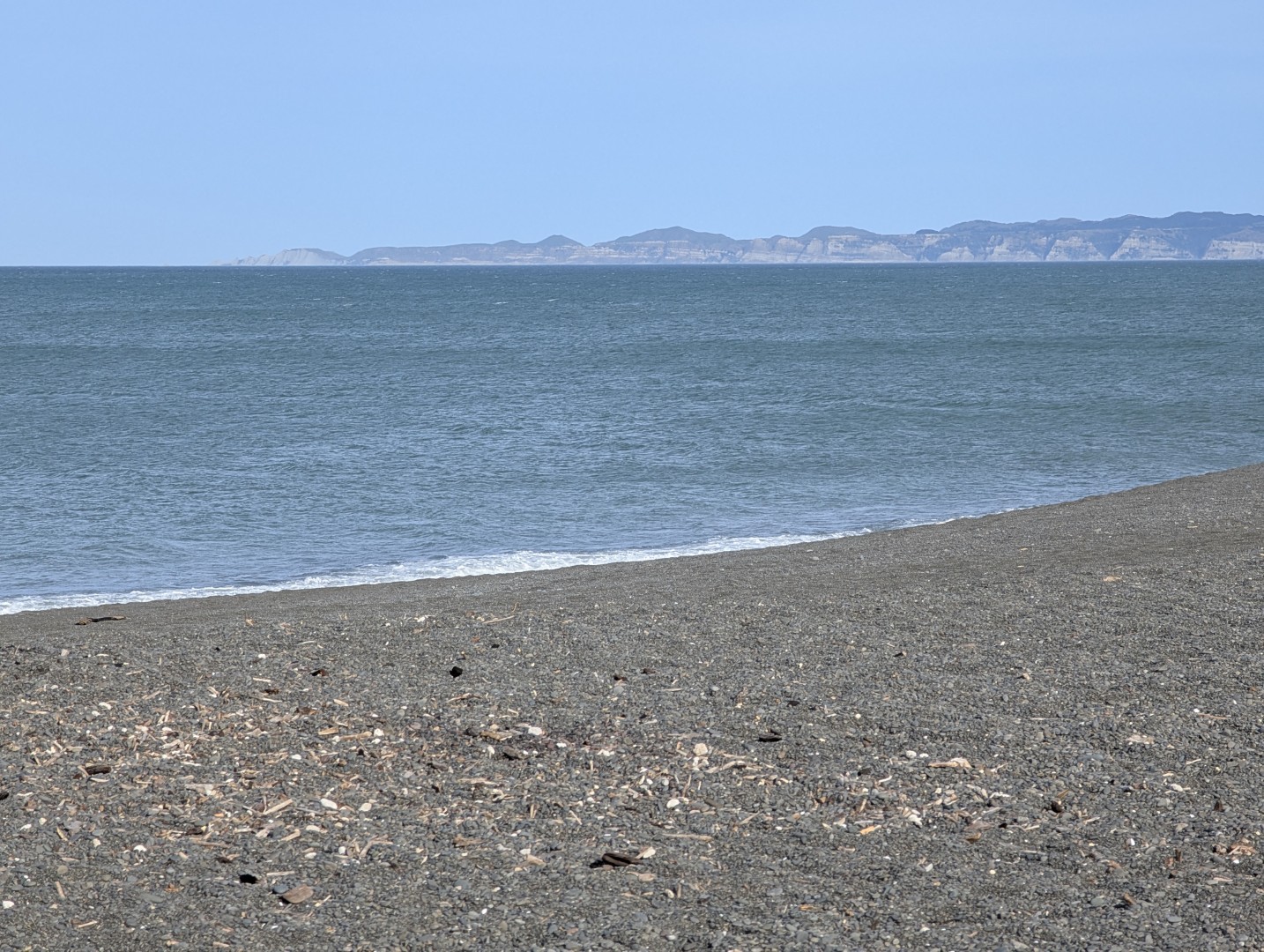
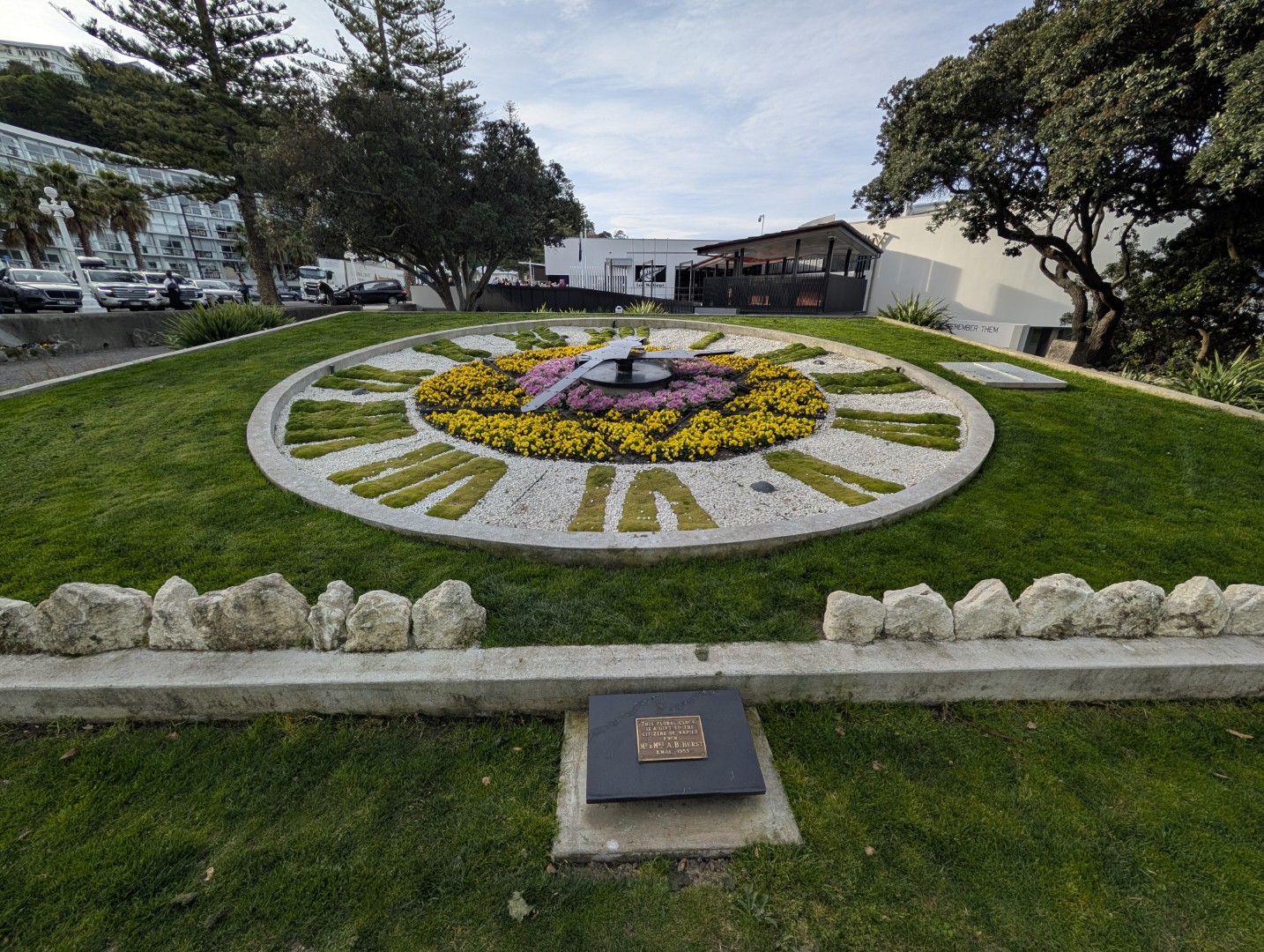
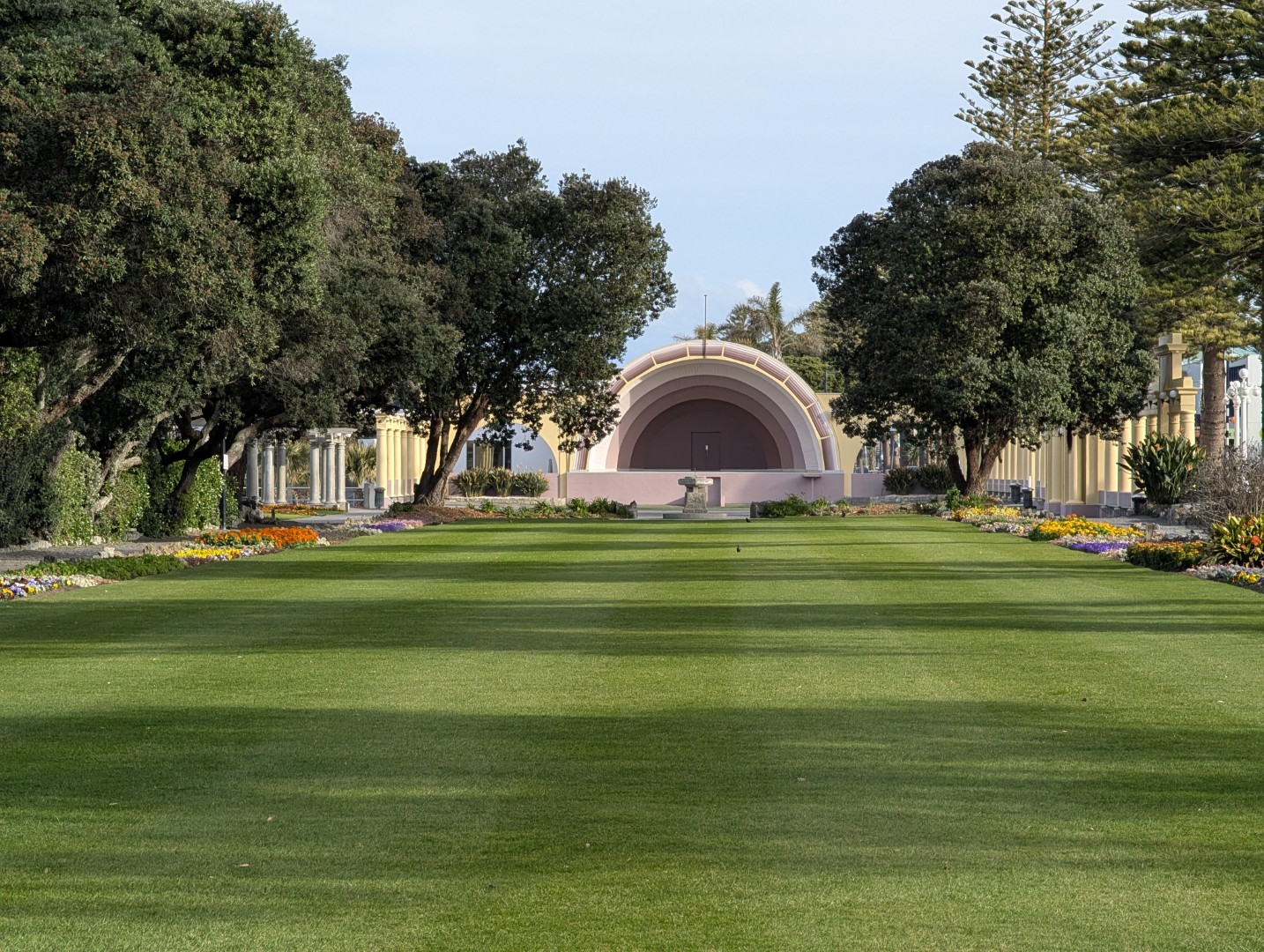
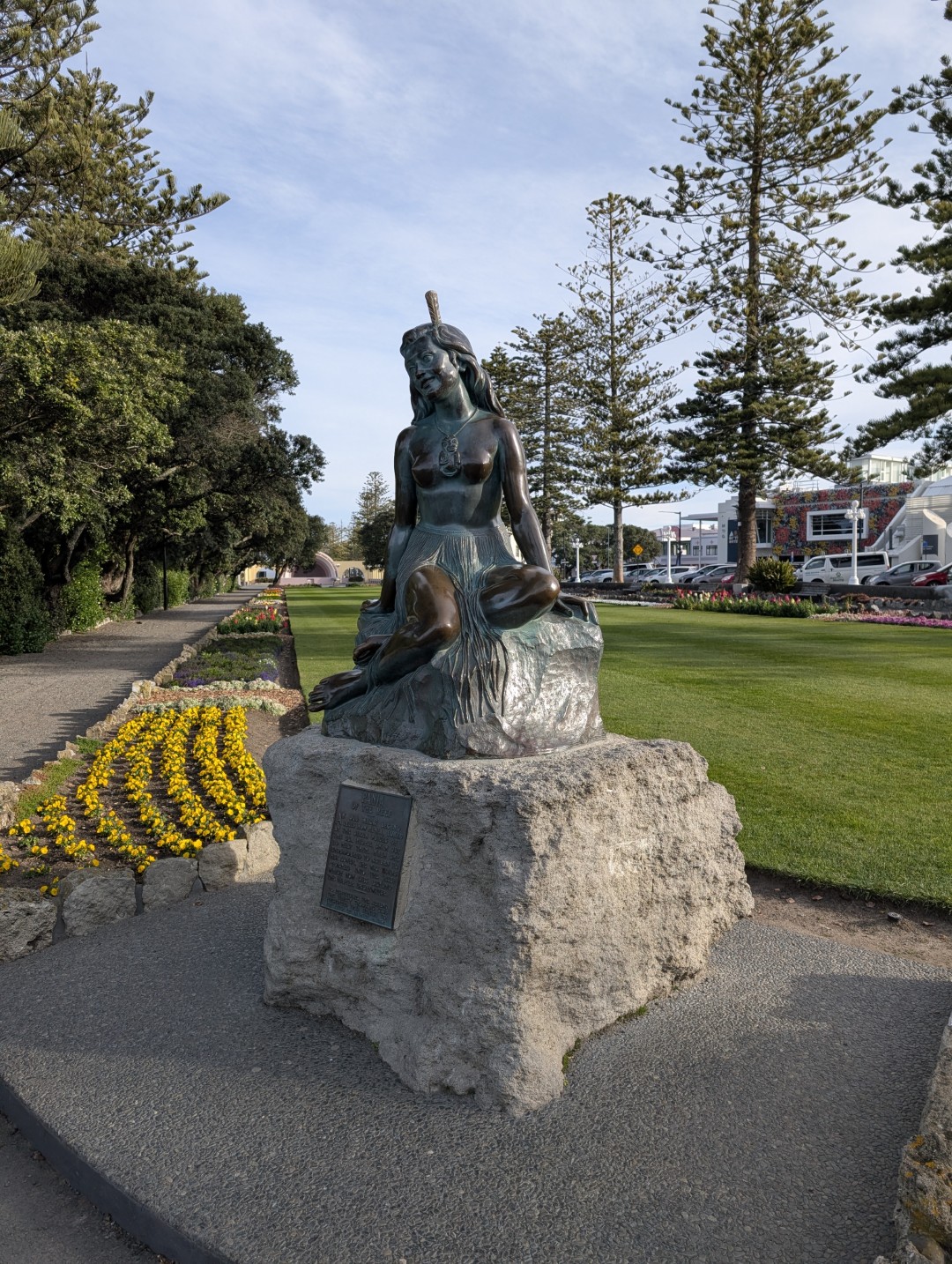
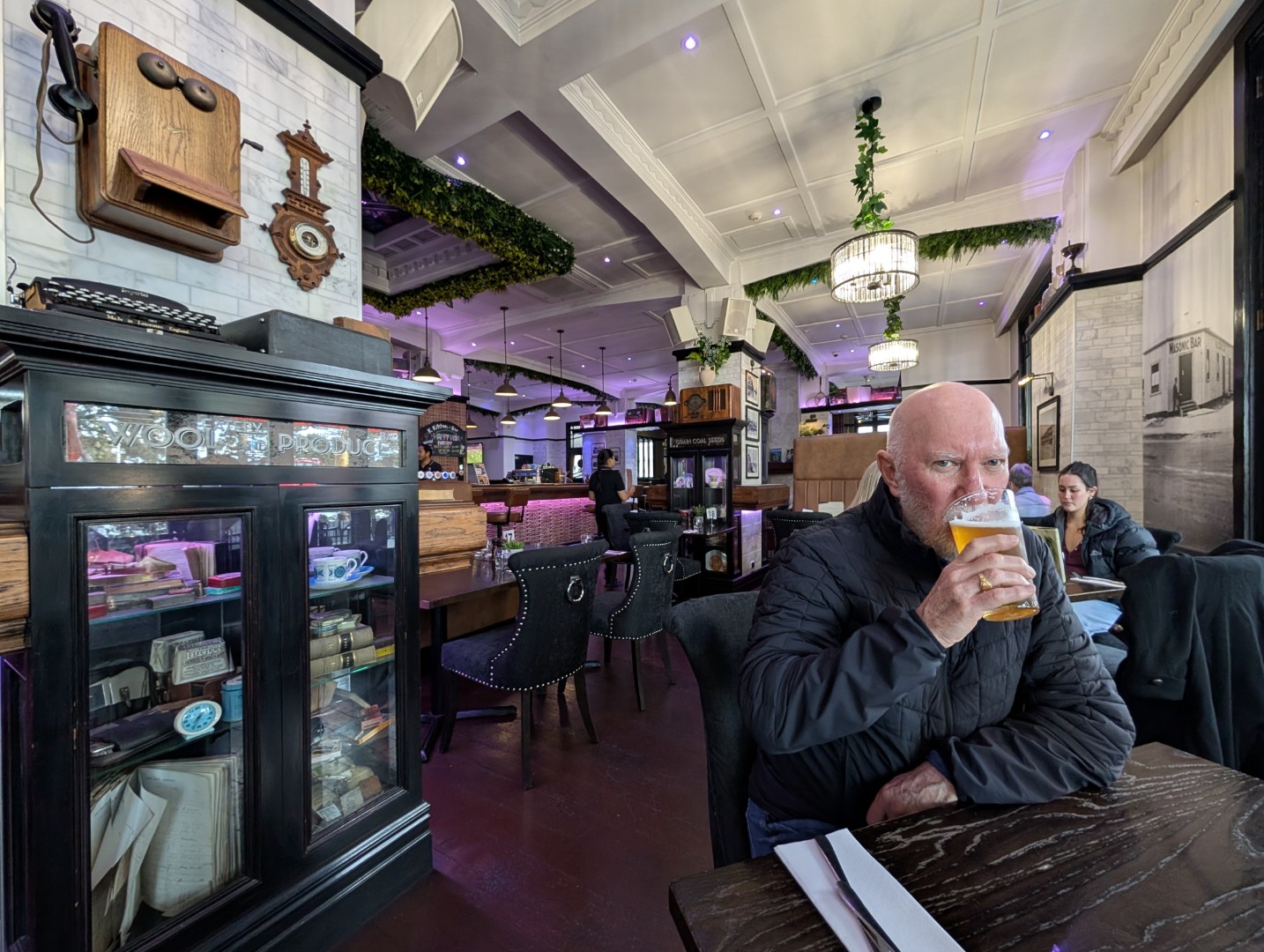
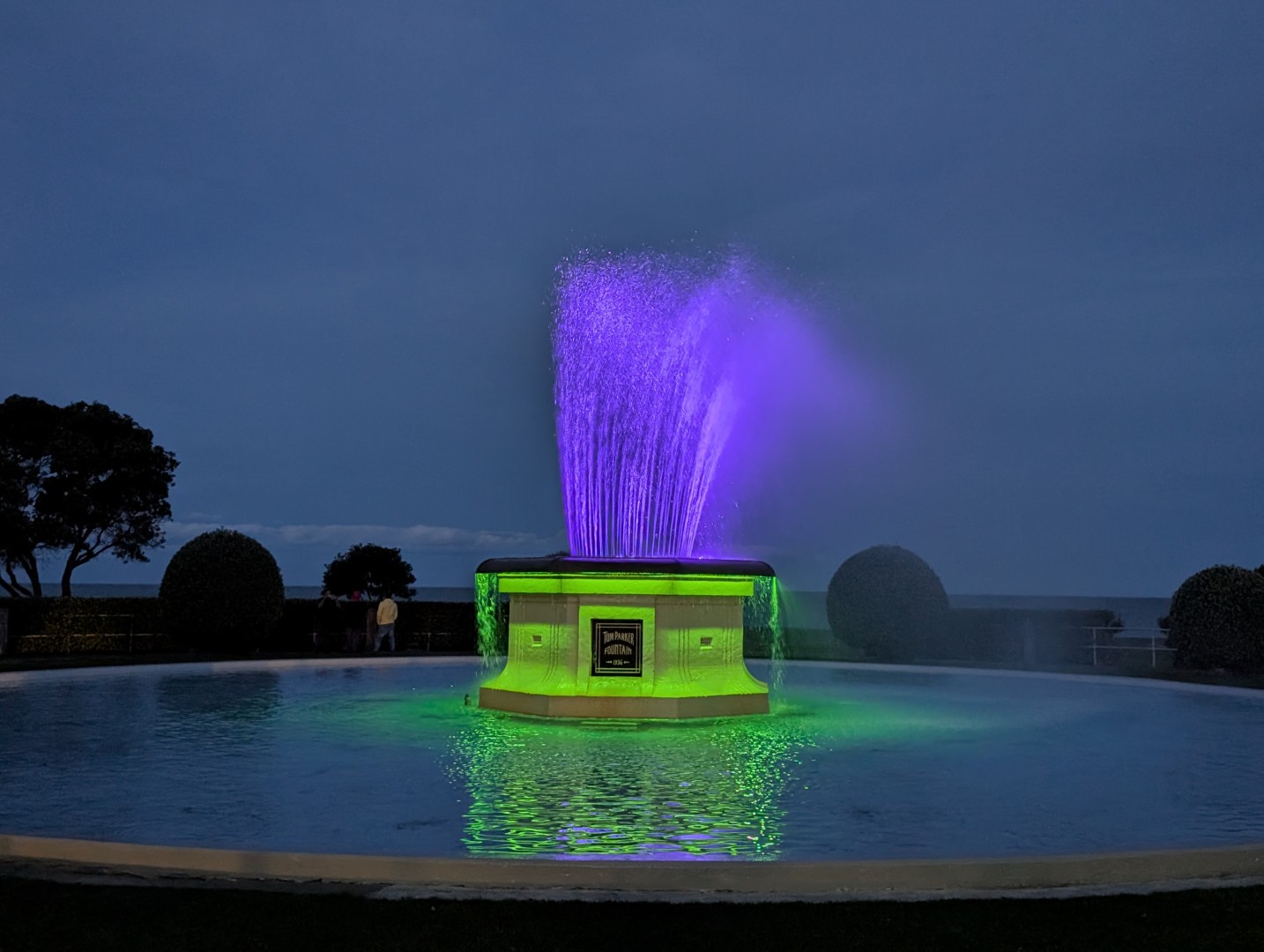
The beachfront is not very appealing, it’s all grey pebbles! However, there are some lovely gardens along Marine Parade, with statues,a floral clock and a lovely fountain that lights up at night. We enjoyed another tasty meal at the K Kitchen and Bar, which is within the Masonic Hotel, The Masonic has had a tough past; built in 1861 it was destroyed after a fire in 1896 , rebuilt, and then destryed again in the 1931 y earthquake!