


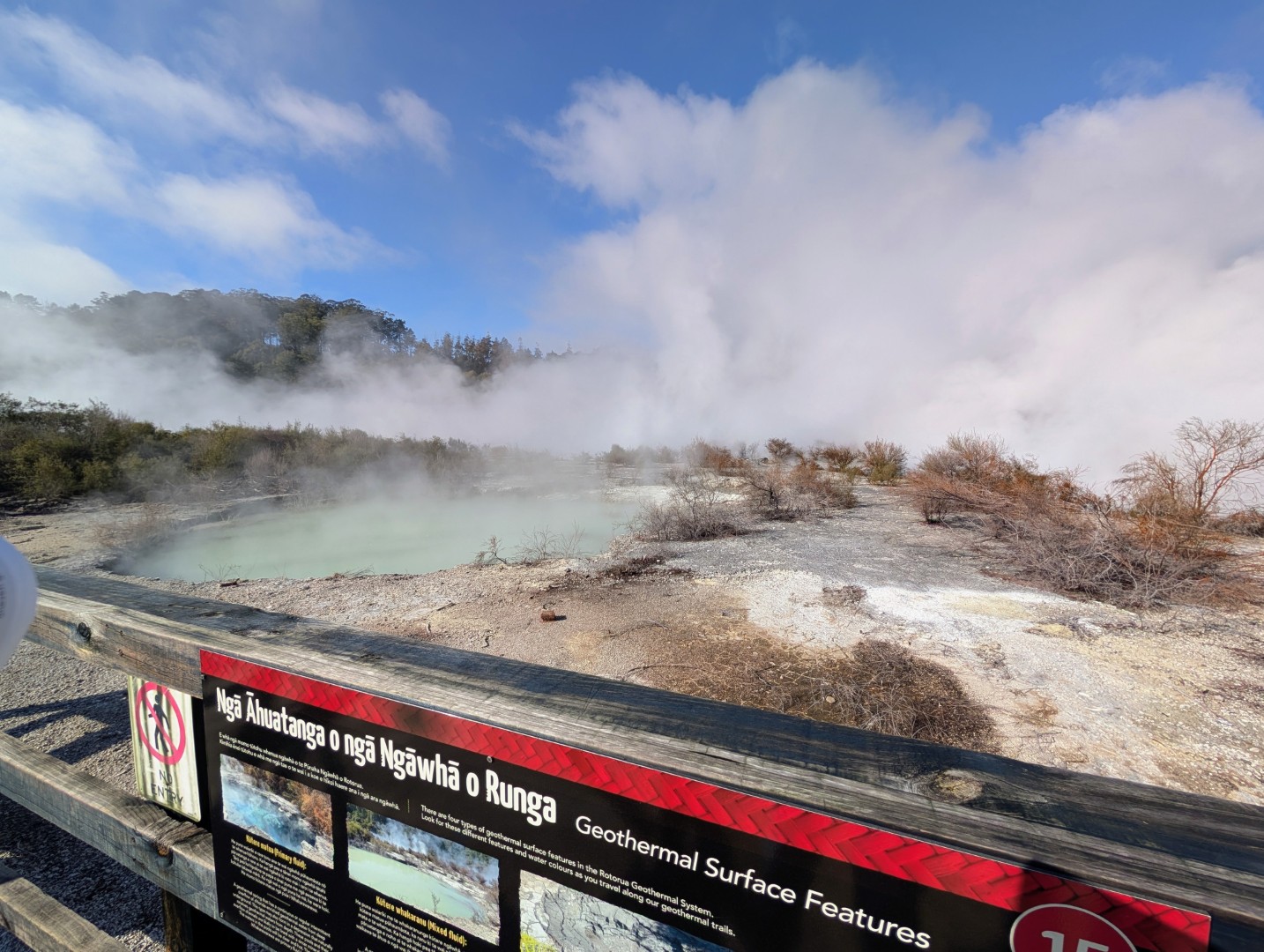
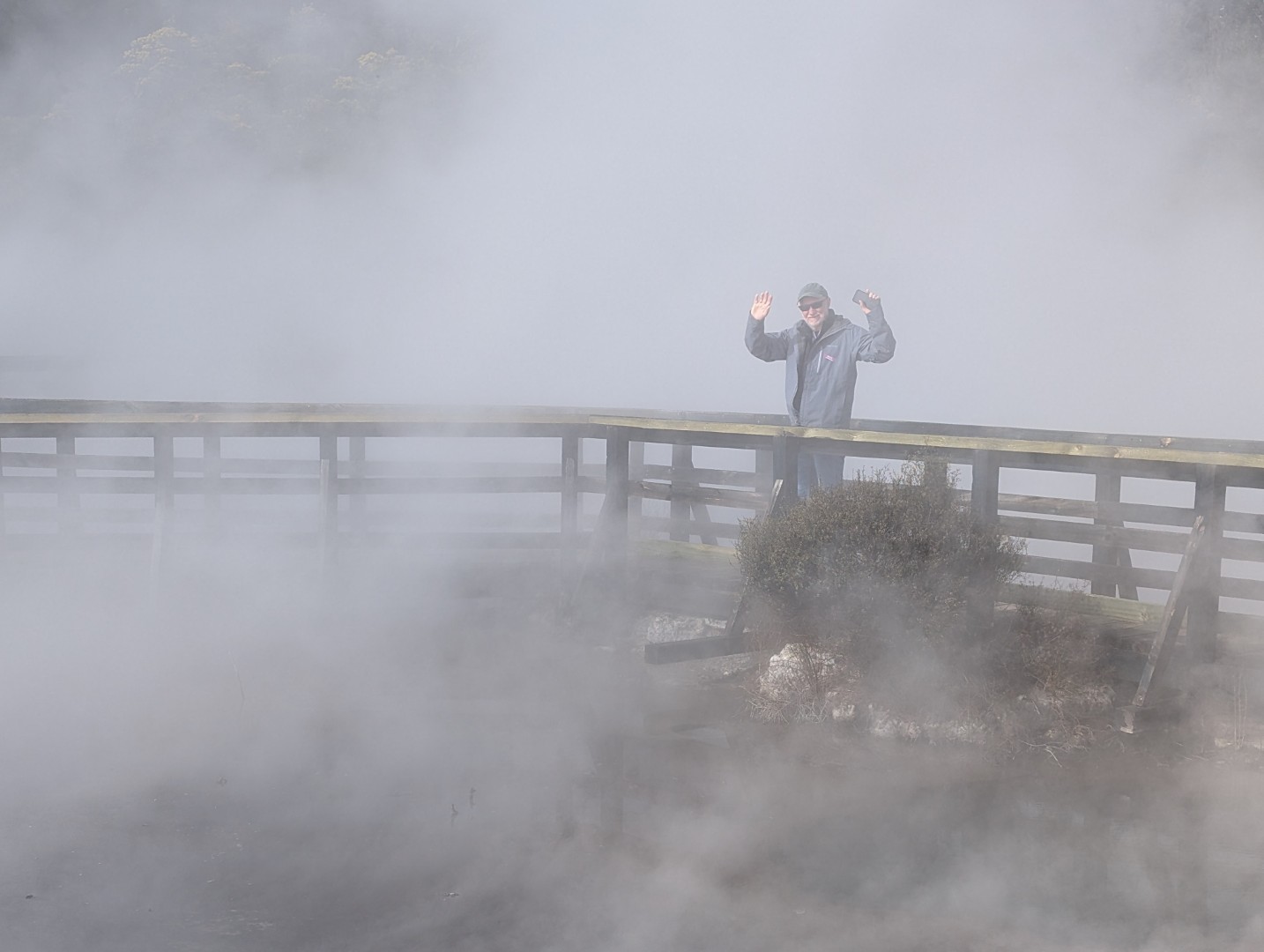
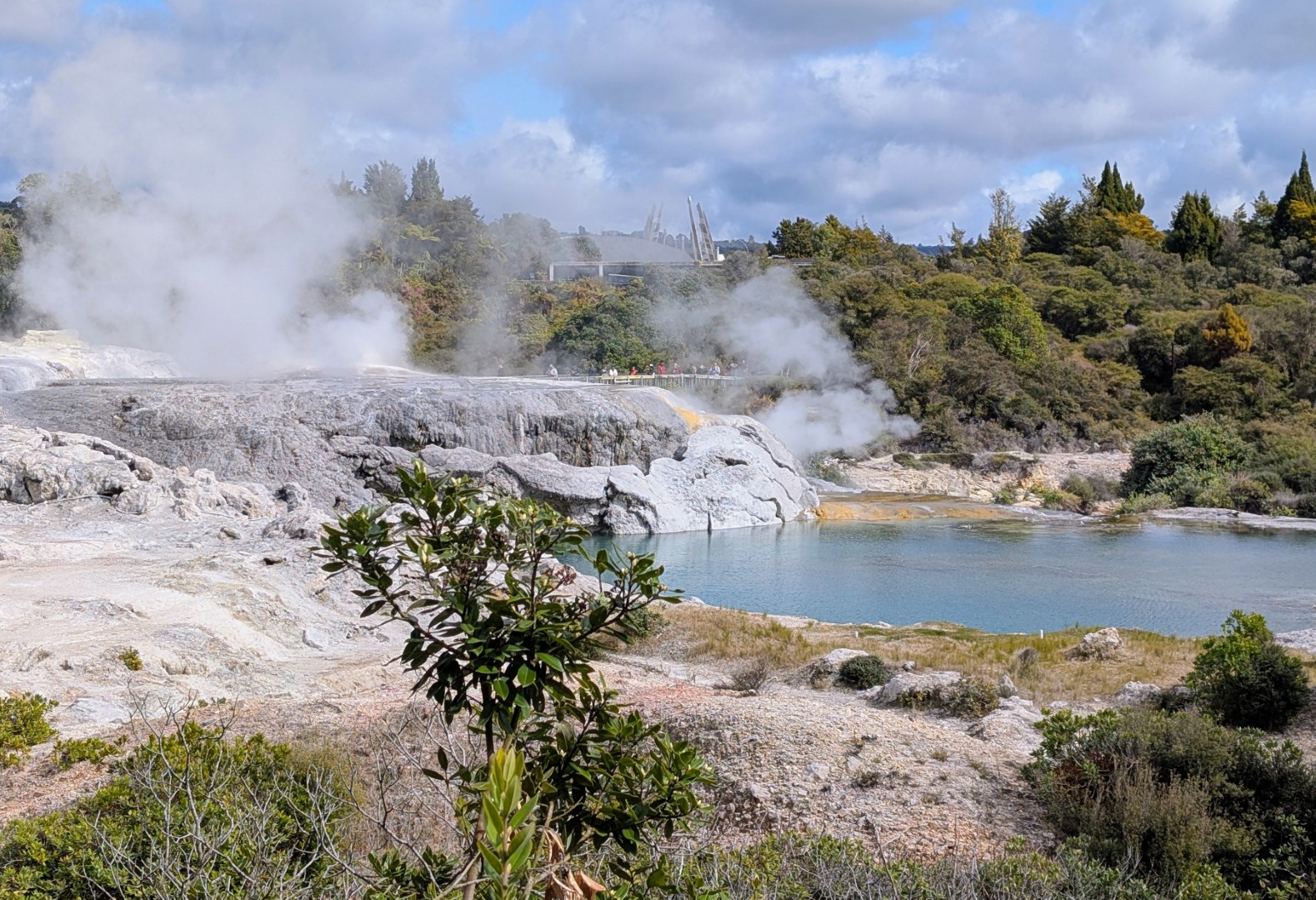
You can tell when a hotel is a little on the older side, the walls are thinner! After three very quiet nights we had some minor disturbances from neighbours last night… but luckily not excessive. Woke bright and early today to what seemed like a foggy sky over the lake, but in hindsight this was probably just the normal wintery morning steam in Rotorua! The breakfast buffet was just ok…. no mushrooms on the menu here at all!! We set out a little after 9am for the short drive to Whakerawerawera – The Living Maori Village. There are a few different places where you can explore the geothermal features of Rotorua, but I had chosen Whakerawerawera because it is the only one where you are invited to tour a village where Maori people live on a daily basis, using natural geothermal resources to cook, bathe and heat their homes as they have for centuries. We arrived and booked our tickets for the 10am tour, and used the time before the tour started to explore the lower part of the geothermal area. The steam here was abundant, at times I couldn’t even see Neil up ahead of me!
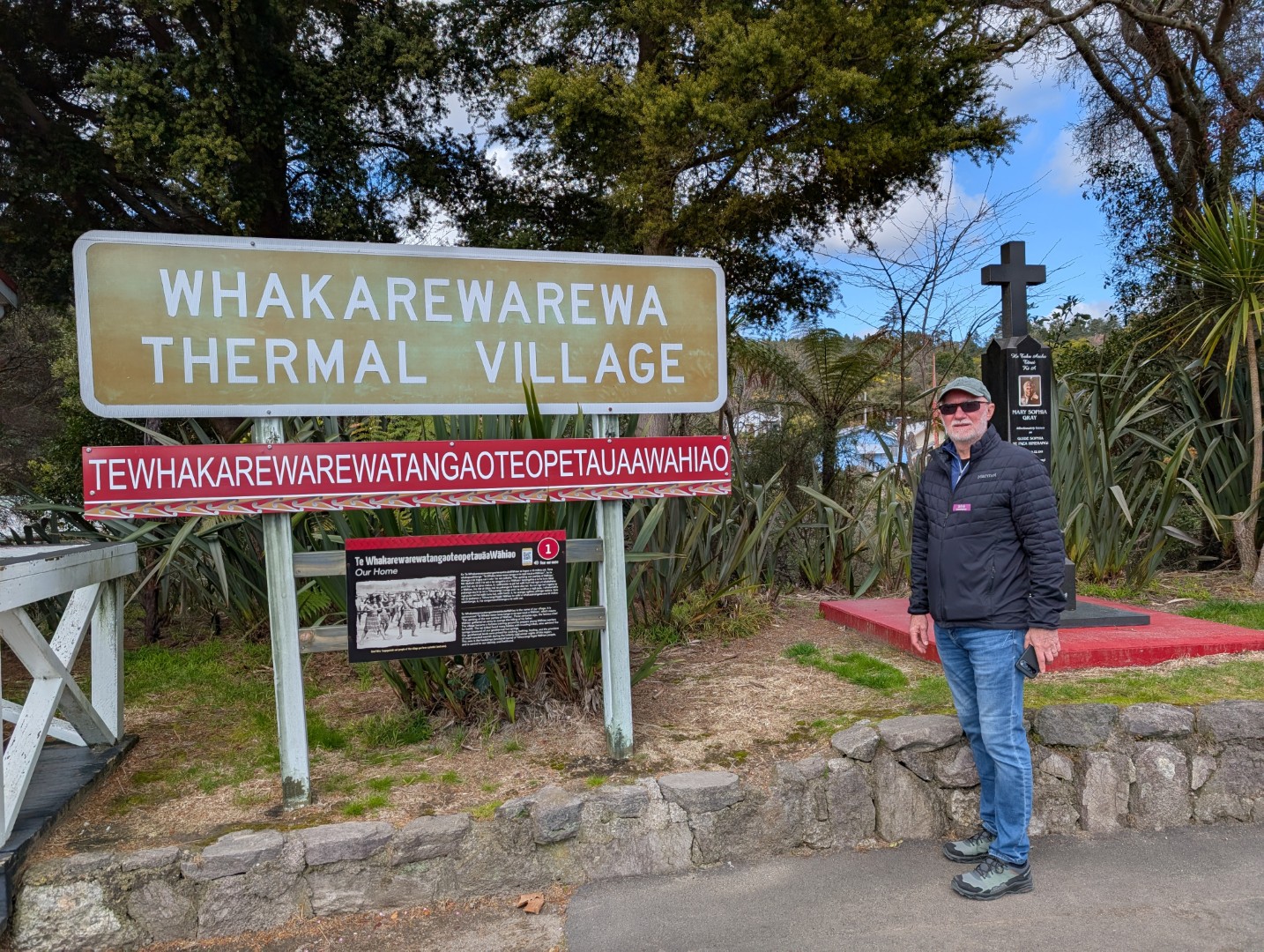
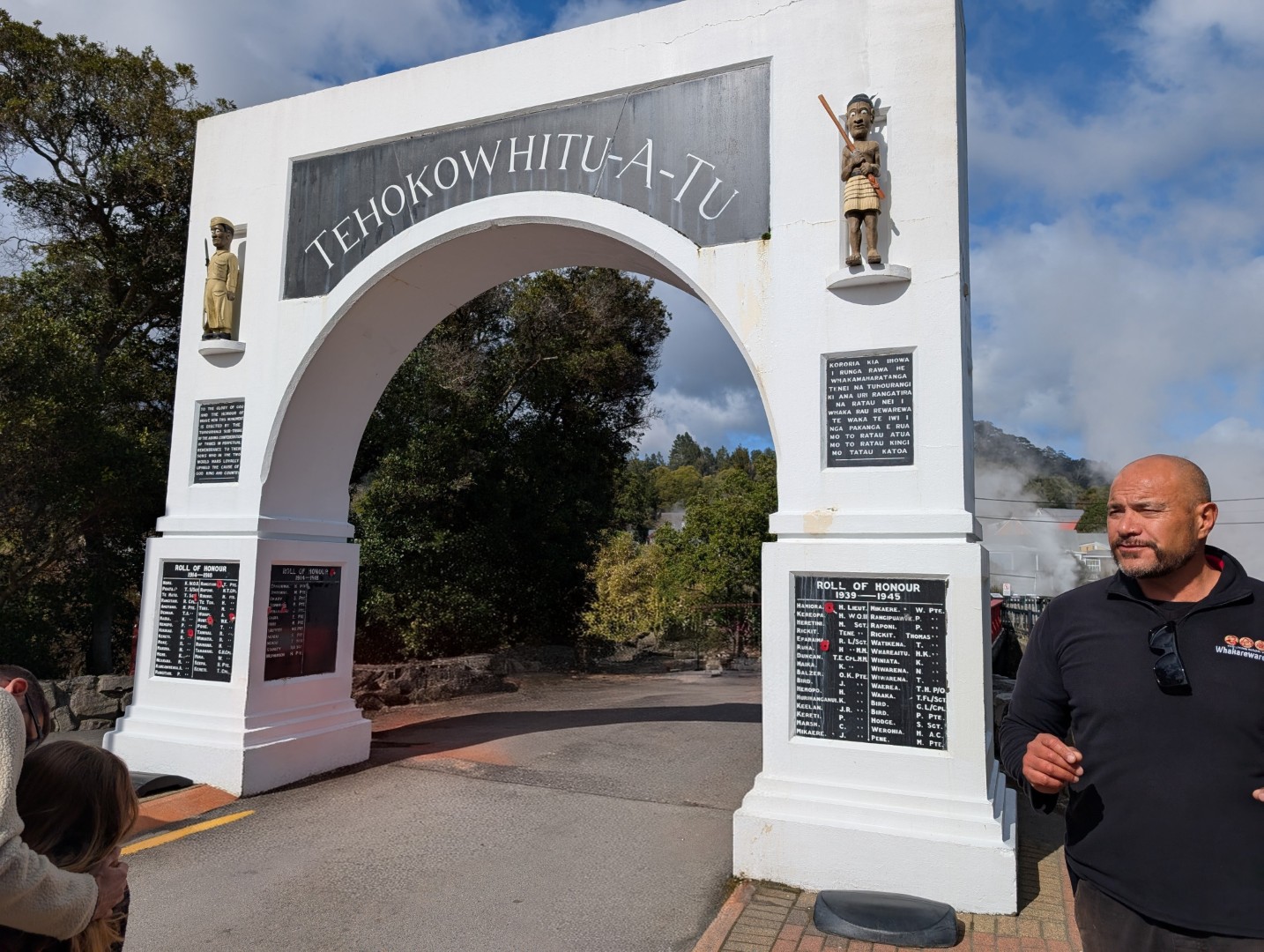
Promptly at 10am, our guide Daniel welcomed us very warmly to the village. He first talked about the start of tourism in New Zealand – which began in the early 1800s at the Pink and White Terraces in a village a short distance from New Zealand. Not long after that, the people of his village in Rotorua started guiding visitors around their village. He took us through the gate to the village, which is actually a war memorial and into the communal area where the families use the geothermal heat to cook their meals. They use covered hot boxes to cook meats and casseroles and to bake bread etc and they have a large boiling pool which they use to cook vegetables. To demonstrate he dragged a muslin cloth bag from the boiling pool and opened it to serve us all some very tasty and beautifully cooked sweet corn.
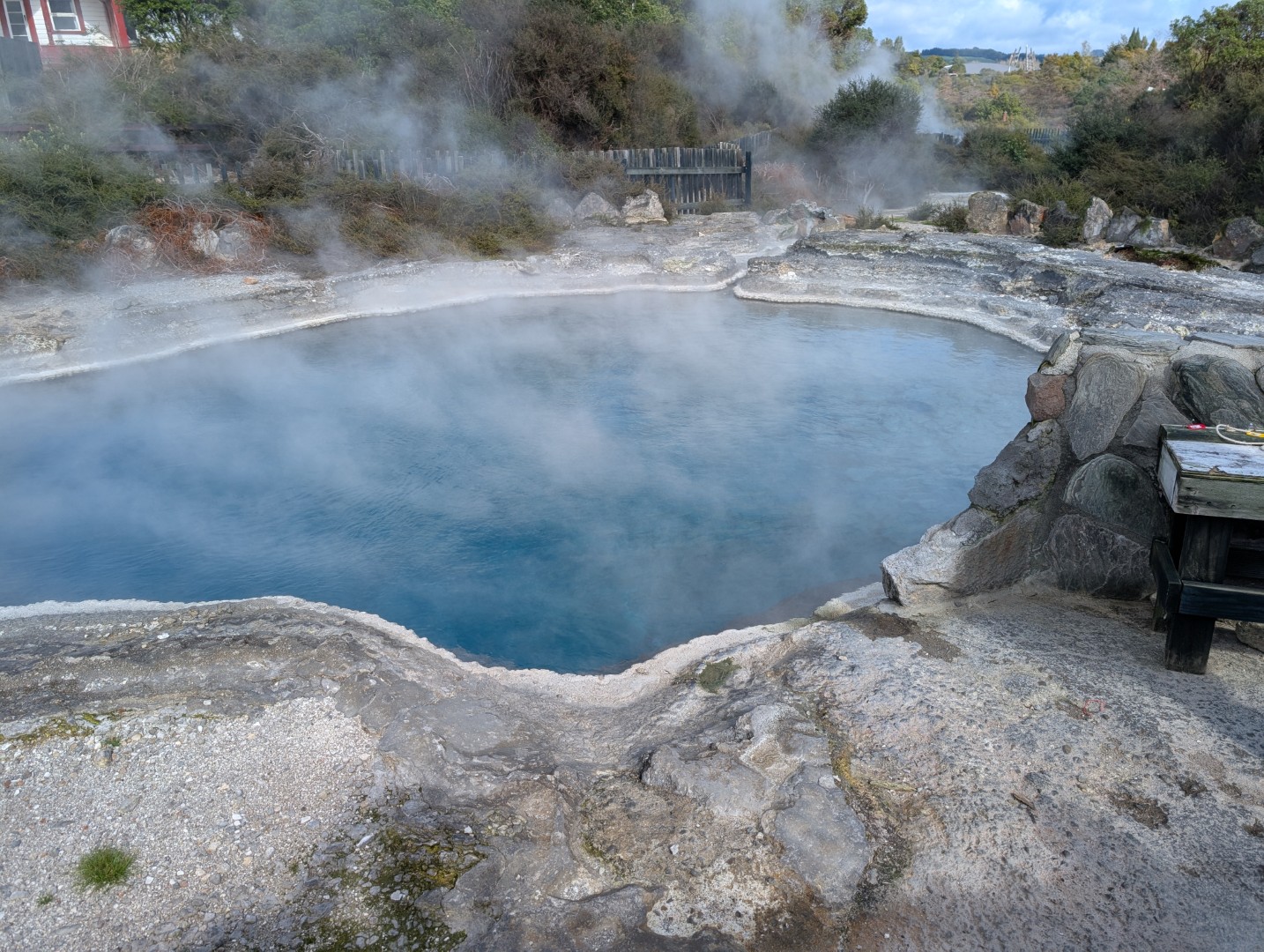
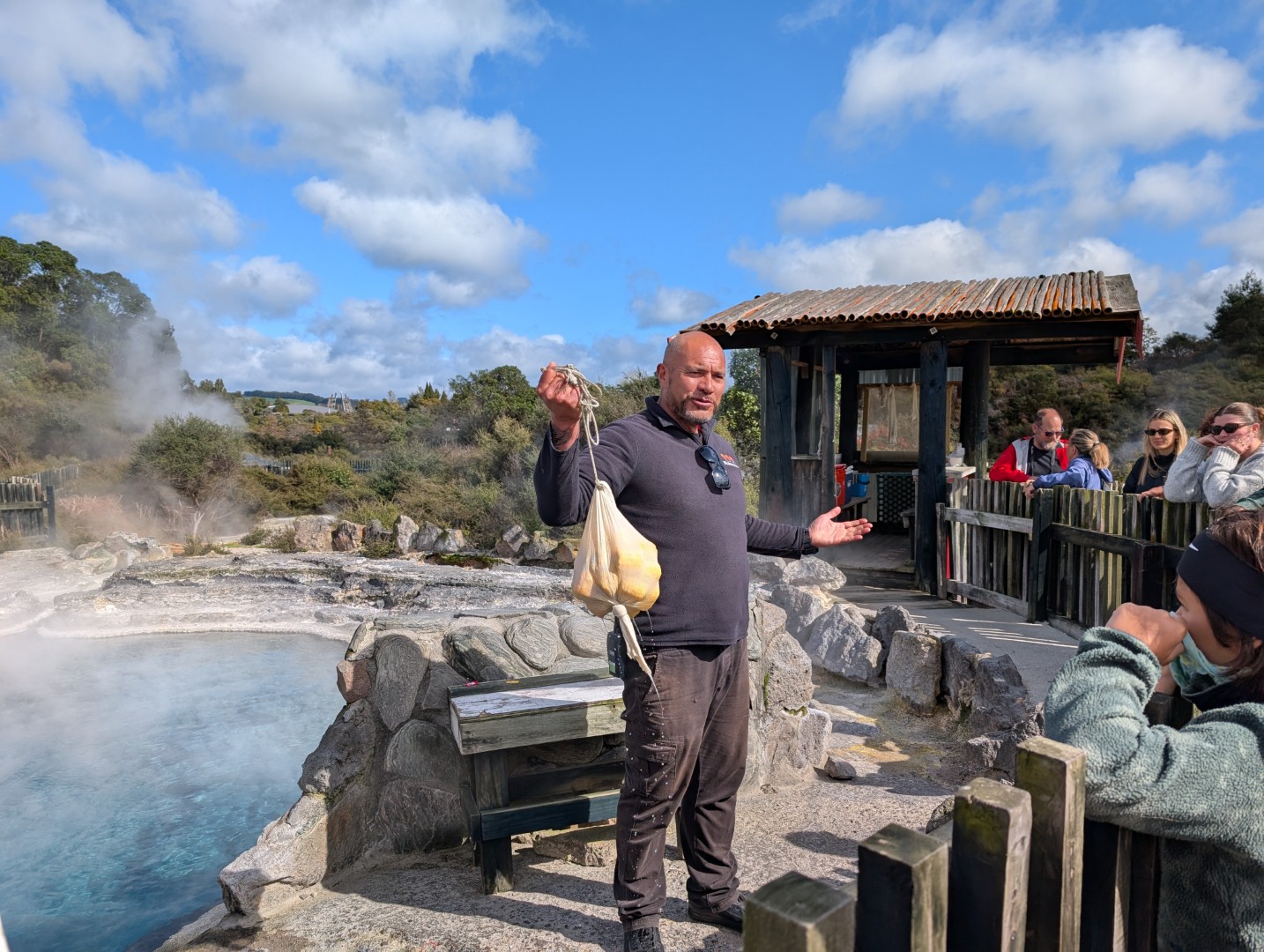
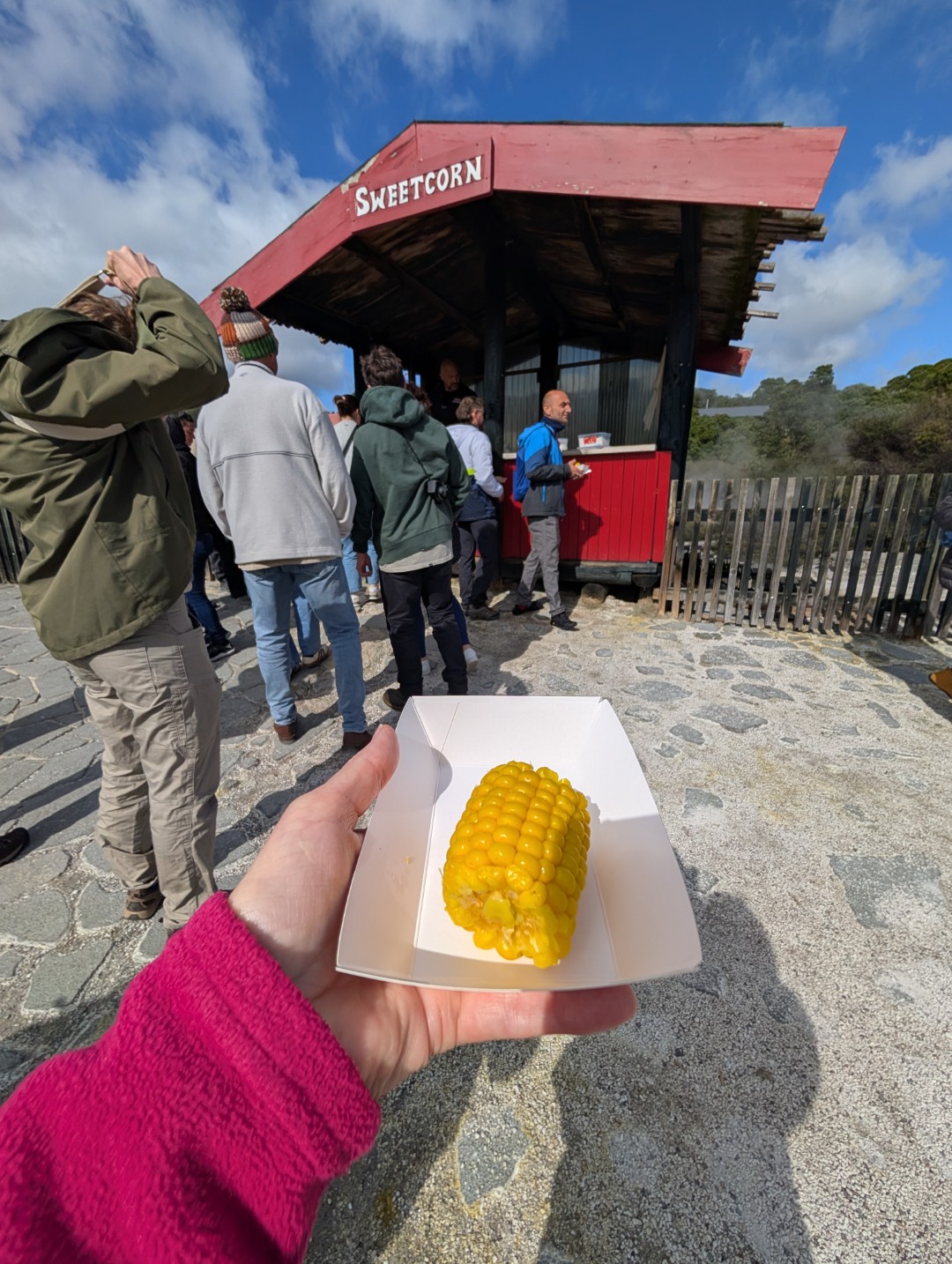
Next he took us to the area where the villagers regularly bathe. The original natural bathing pools became unsafe several years ago when the ground level dropped, so the villagers created a newer bathing area by channeling the hot water into a series of concrete pools built for the purpose.
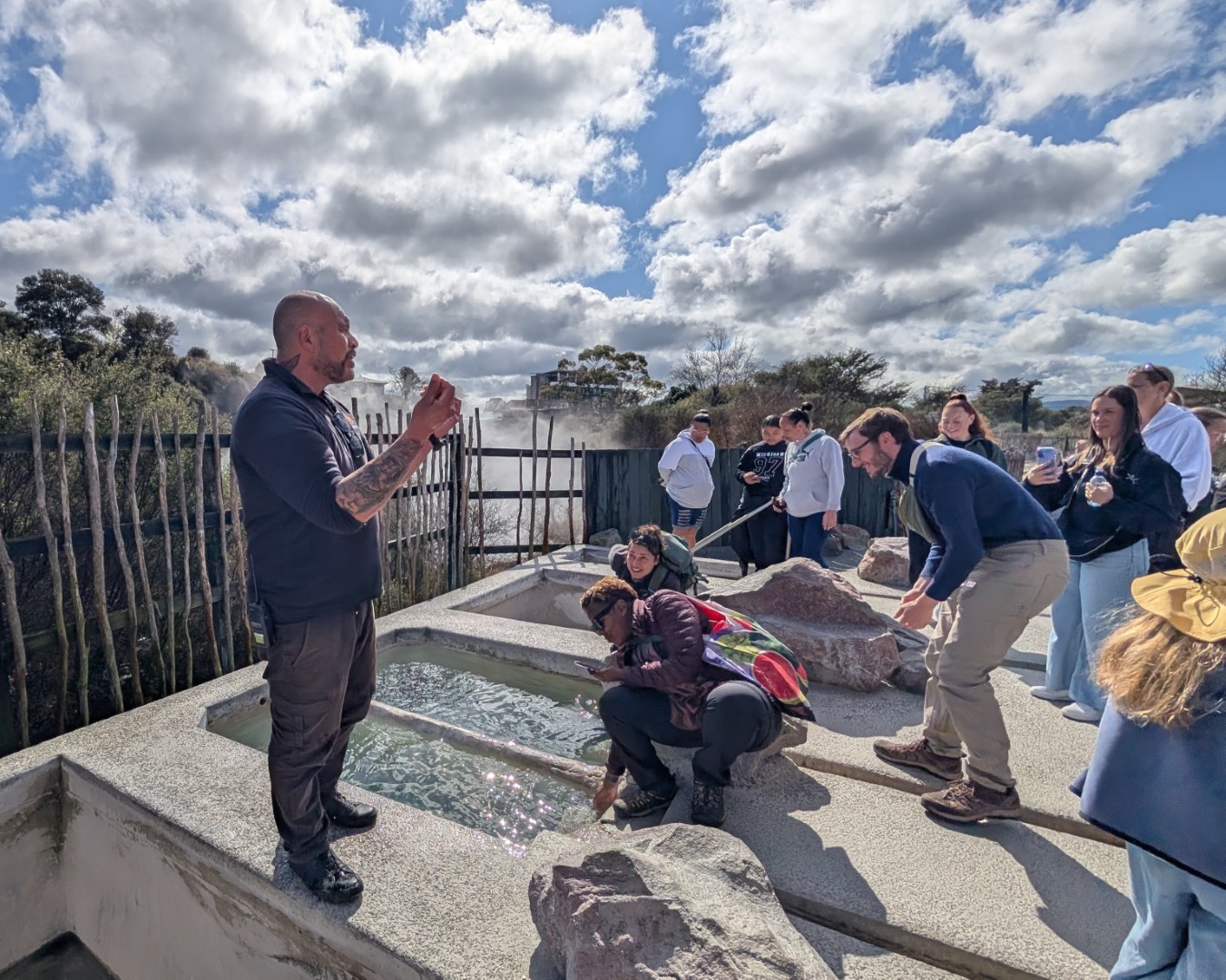
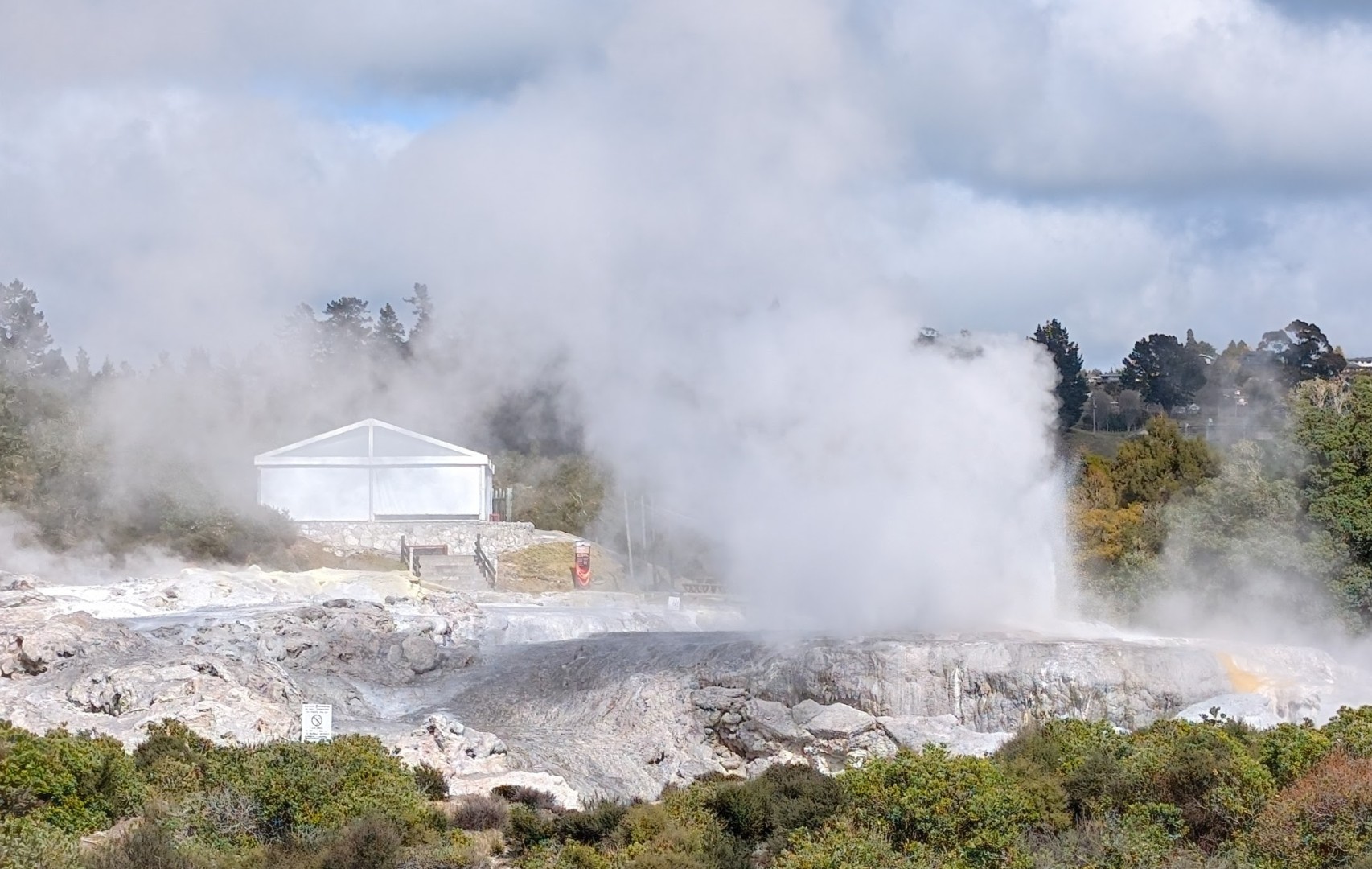
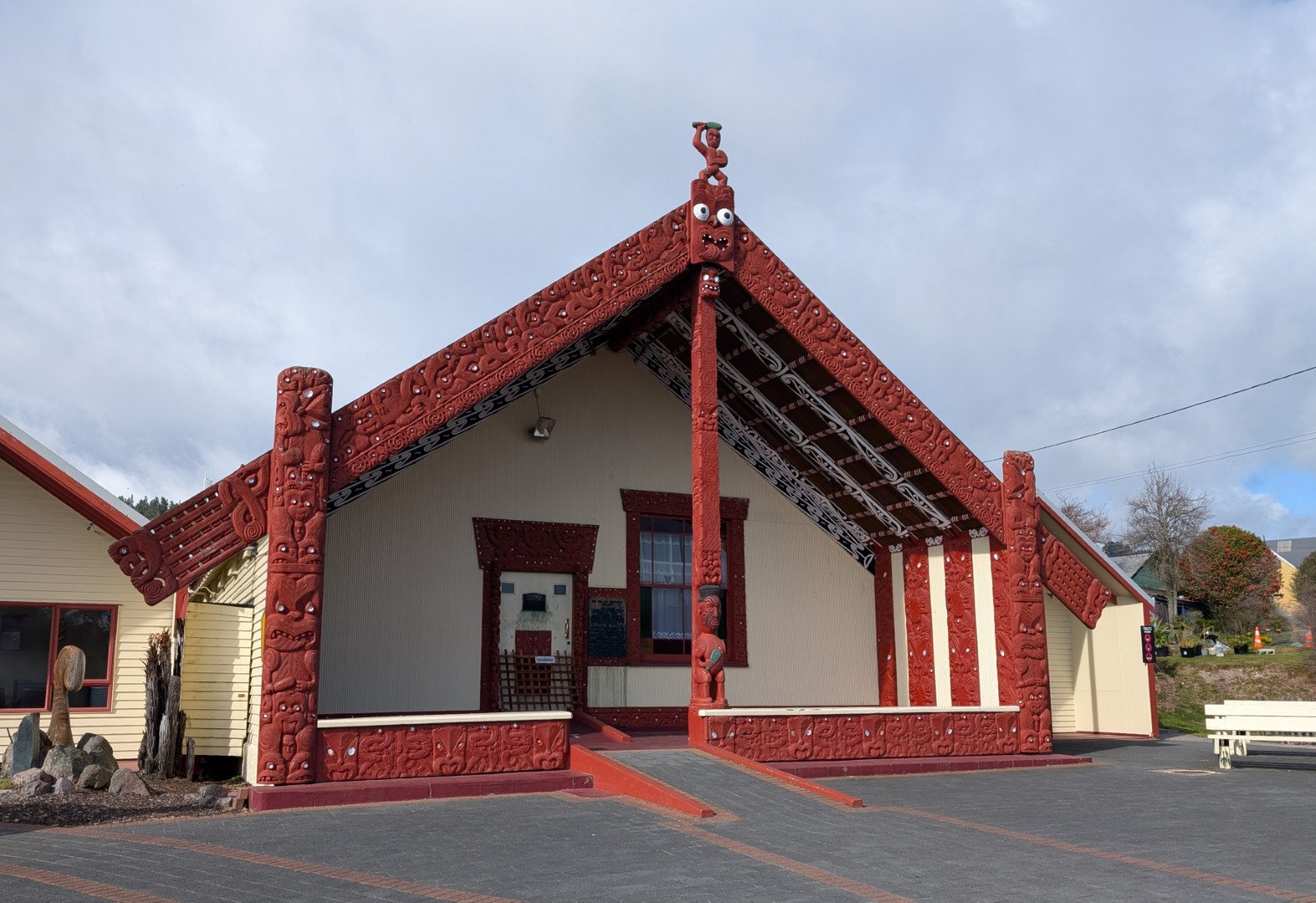
From here we walked up to where we could look across the valley at the most famous Geyser in Rotorua, Pohutu. It erupts roughly every 45 minutes to an hour and at it’s highest is the most spectacular in the southern hemisphere, and the 4th tallest in the world. He finished the tour in front of the Village metting house, the Marai. He told us the story of the carvings on the Marai and sang us a song of good luck, and farewell. He really was an excellent guide, very passionate about sharing the Maori culture and made everyone in the group feel very welcome.
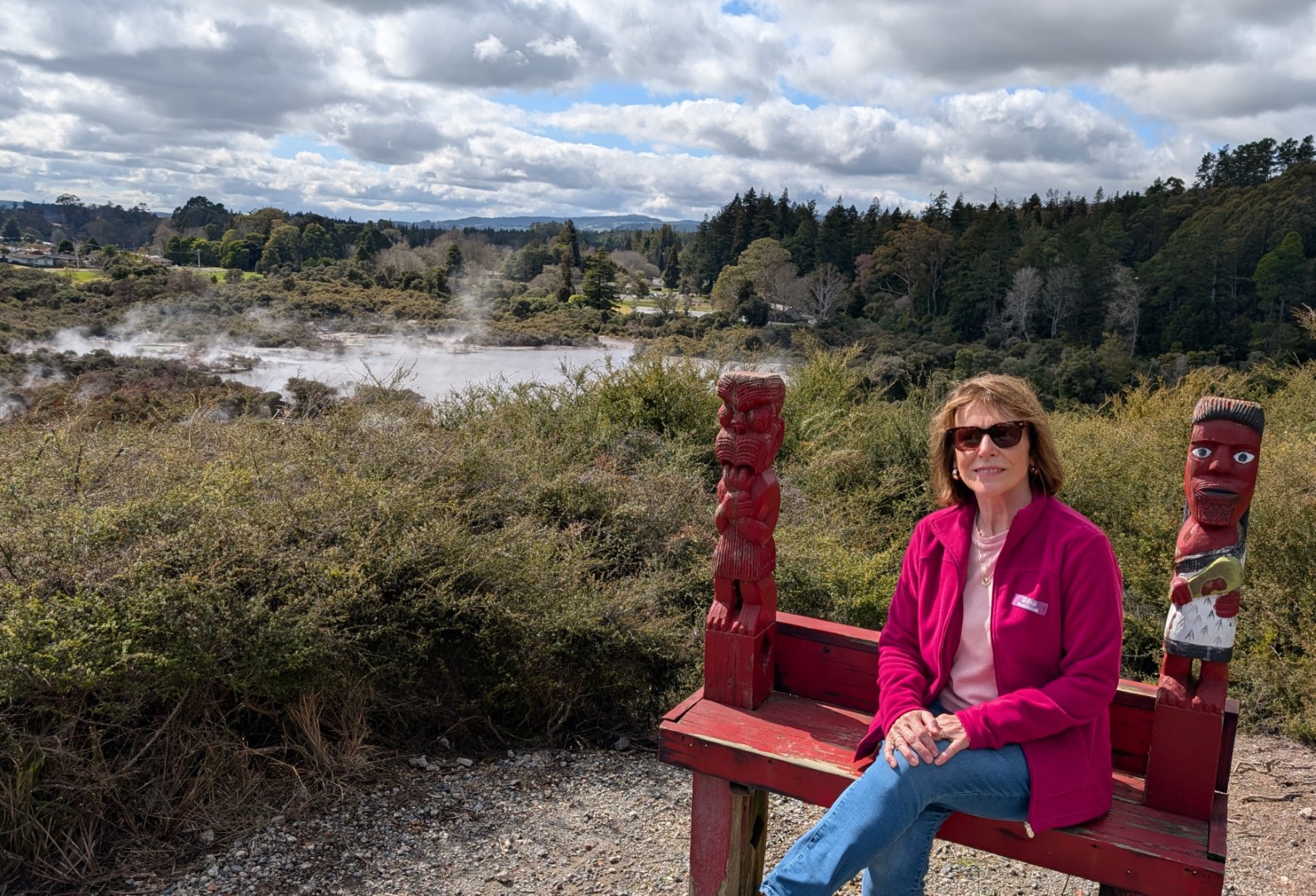
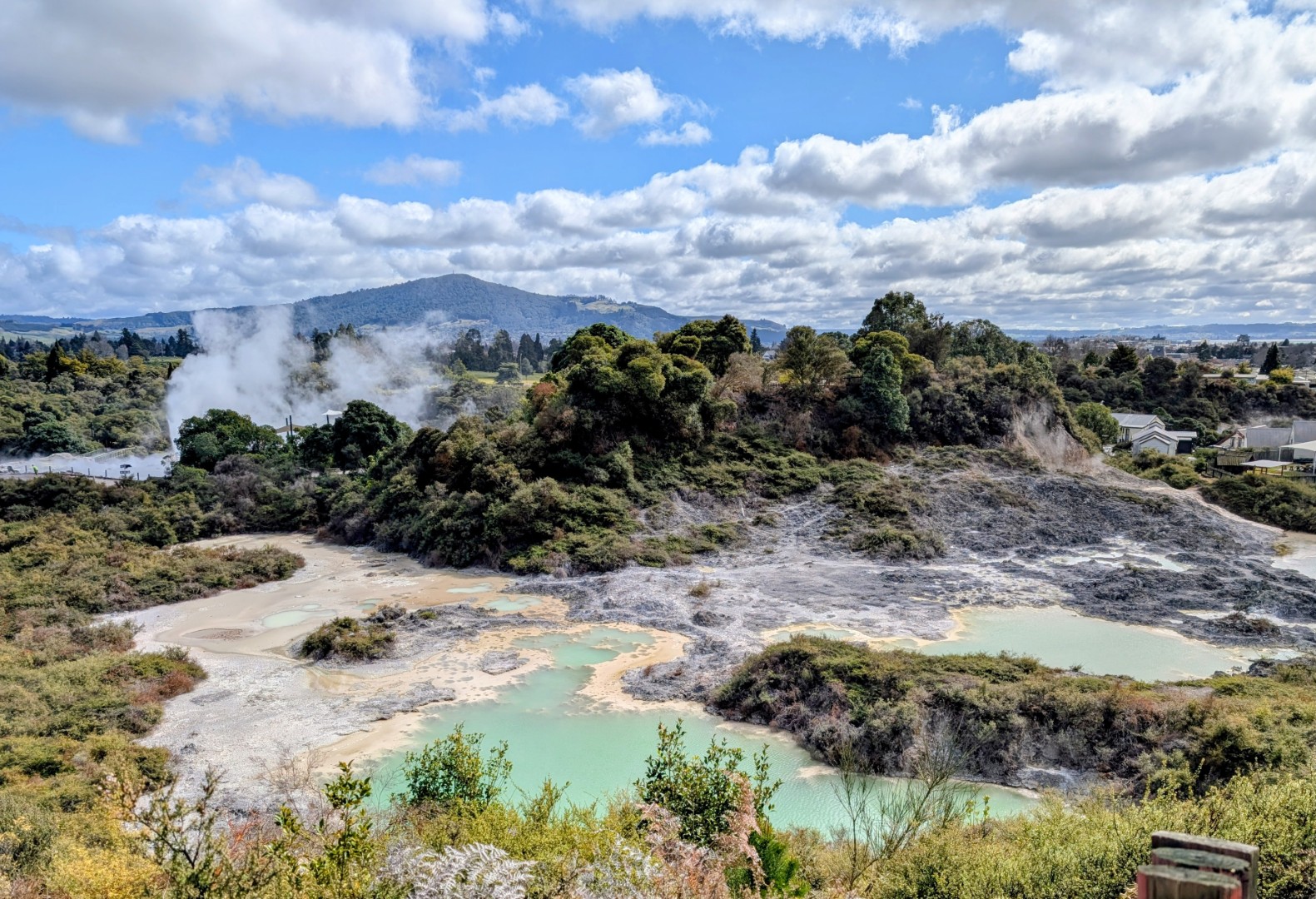
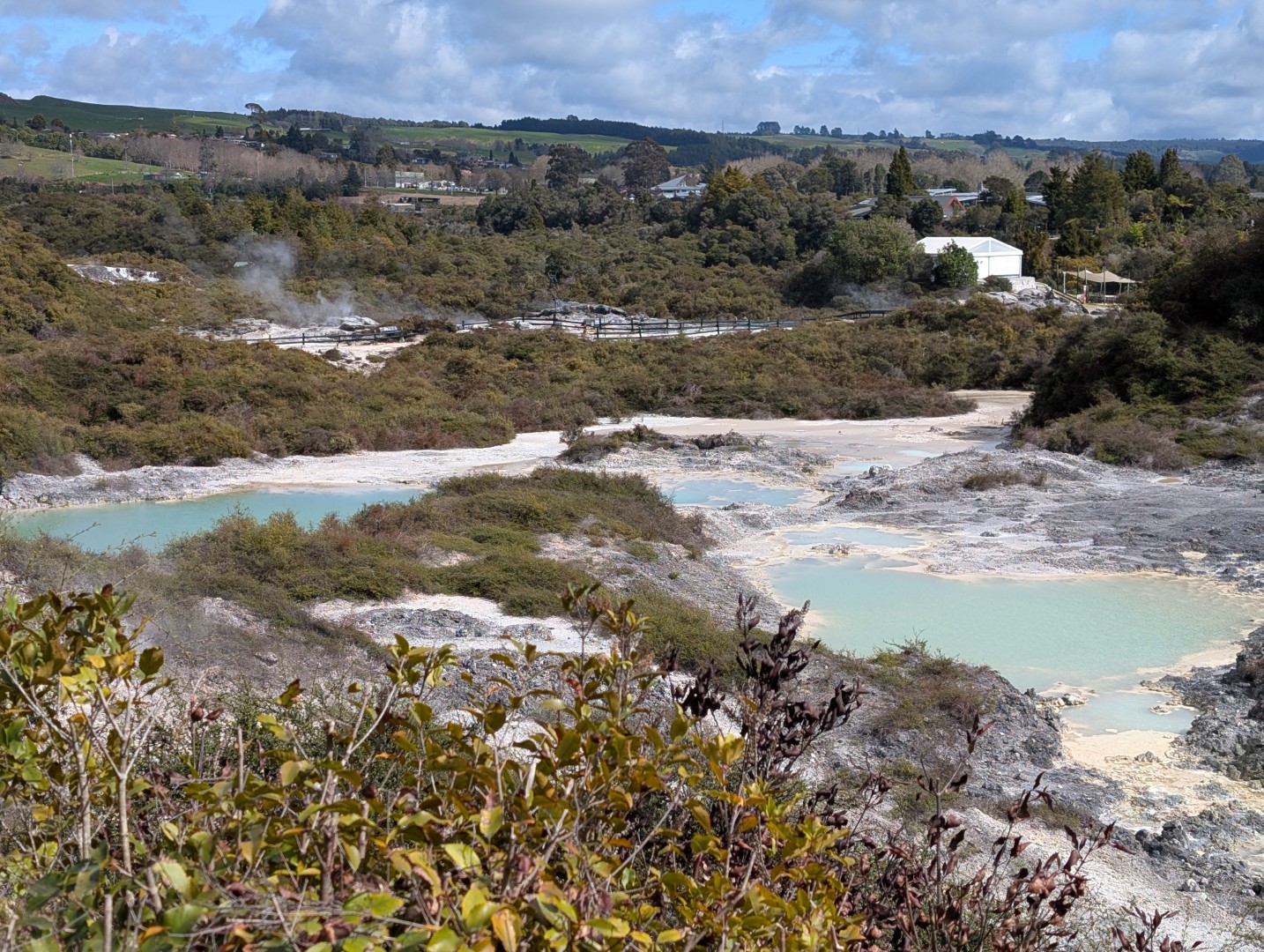
After the tour, Neil and I continued up the hill behind the village to see the last of the Geothermal areas, there were some great views up the top of the hill ,looking over the village to the lake.
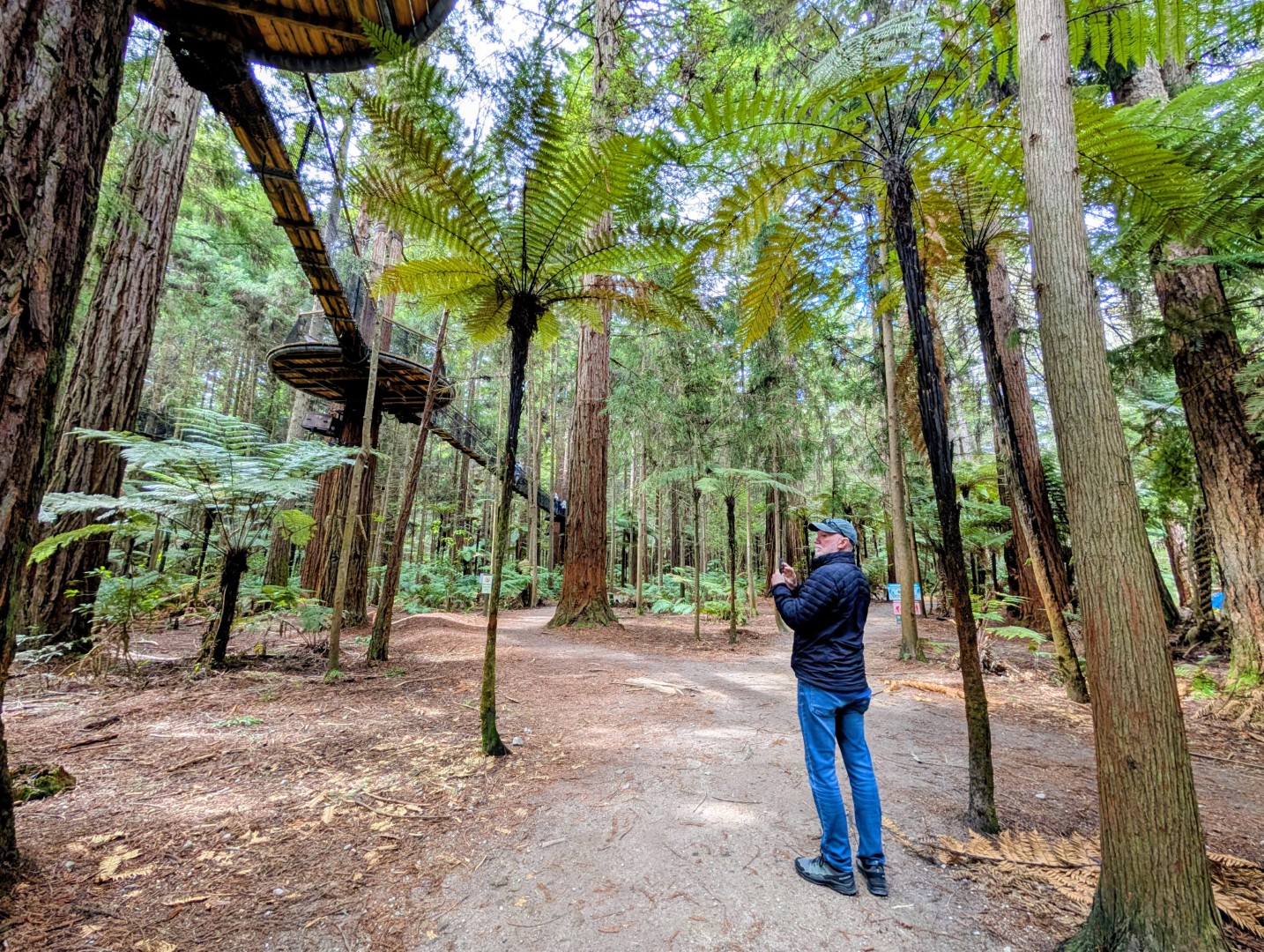
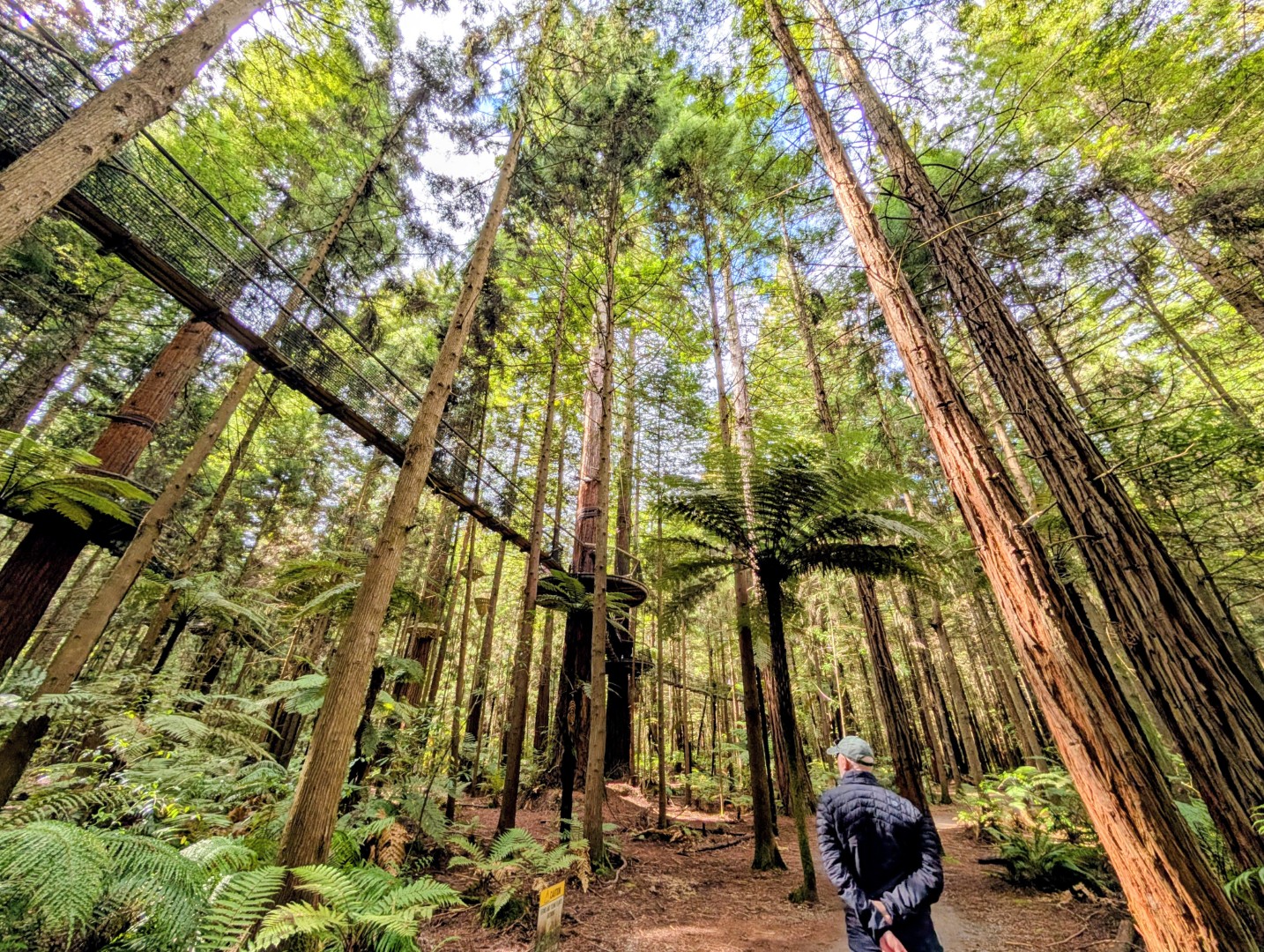
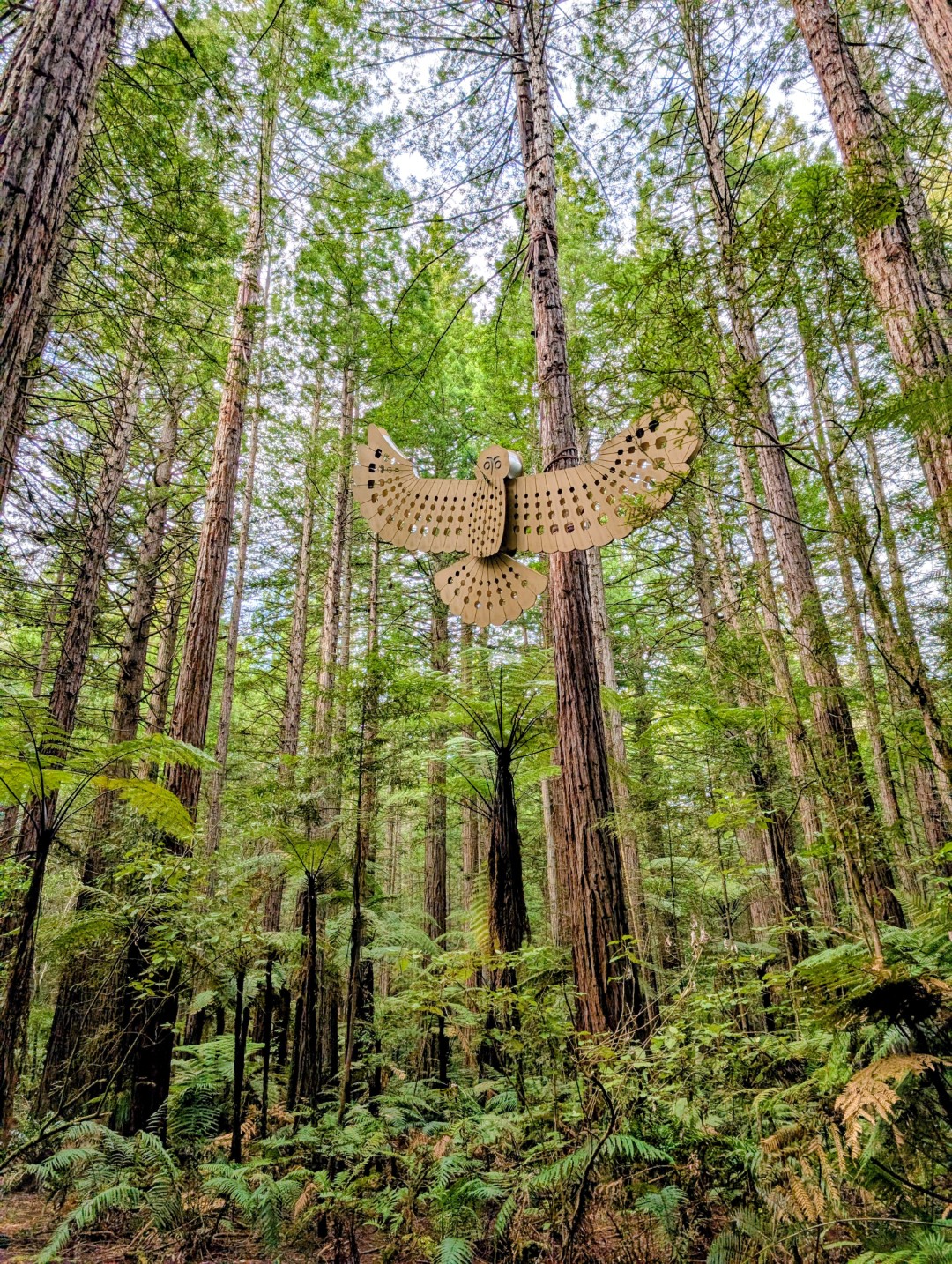
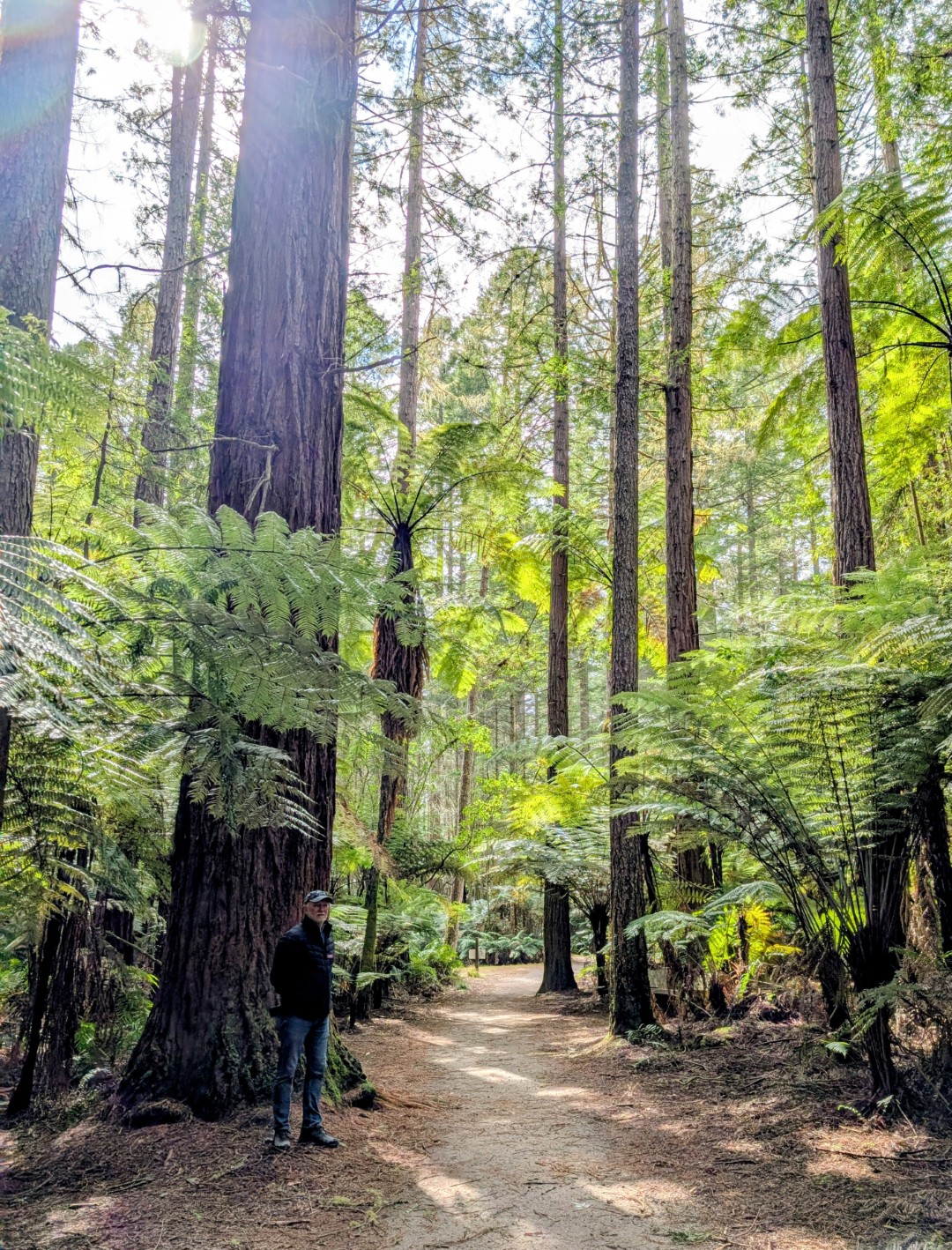
It was only a short drive from Whakerawerawera to the Redwood Memorial Grove that was our next item on the touring list for today. This huge forest of Californian Redwoods was planted in 1901, and they are now spectacularly tall with lovely undergrowth of native tree ferns and palms. The area is criss-crossed with walking trails and there is also a very popular “Treewalk” which is slung way up in the canopy. We were content to stay at ground level and really enjoyed a wander along one of the forest paths.
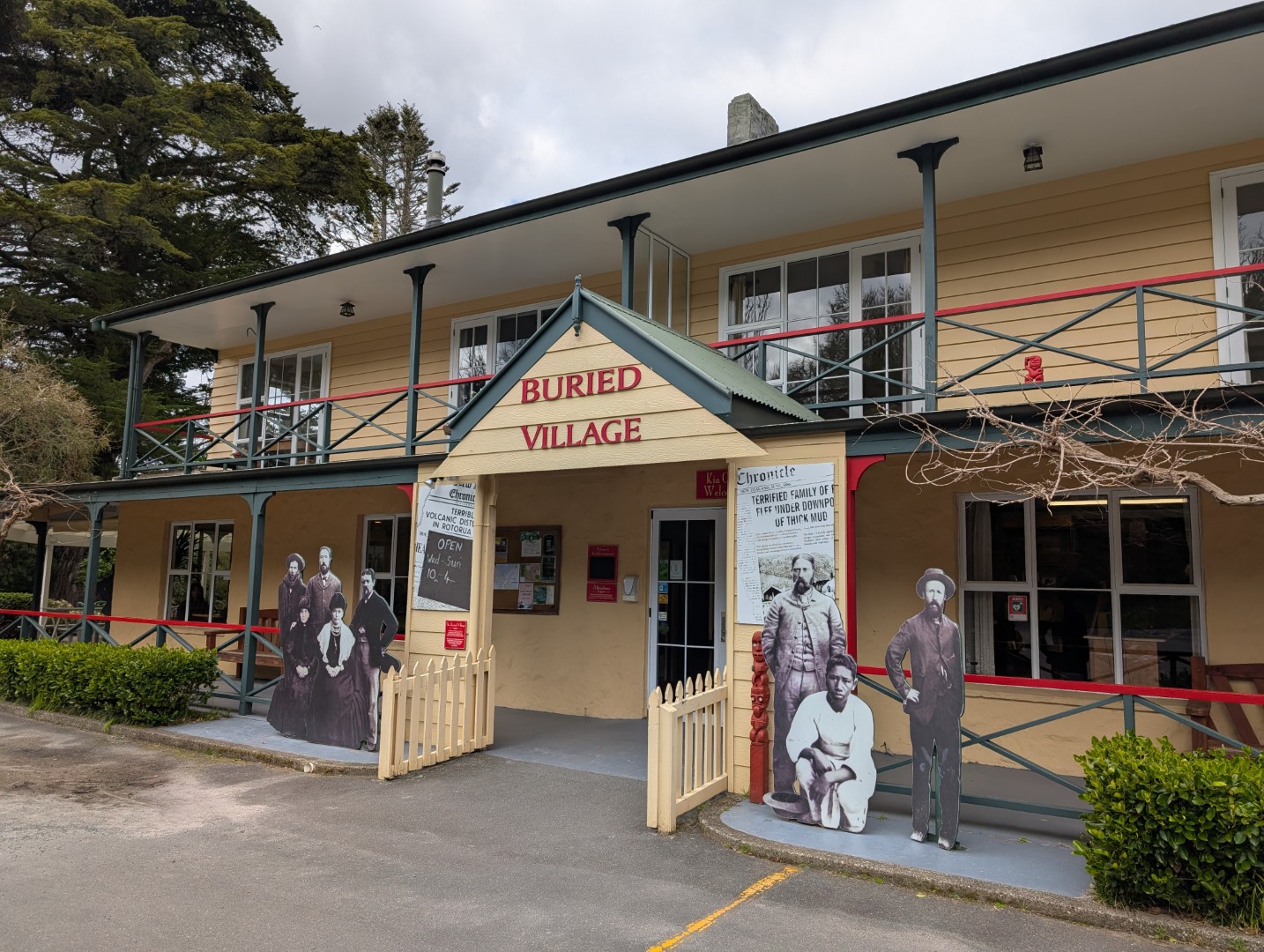
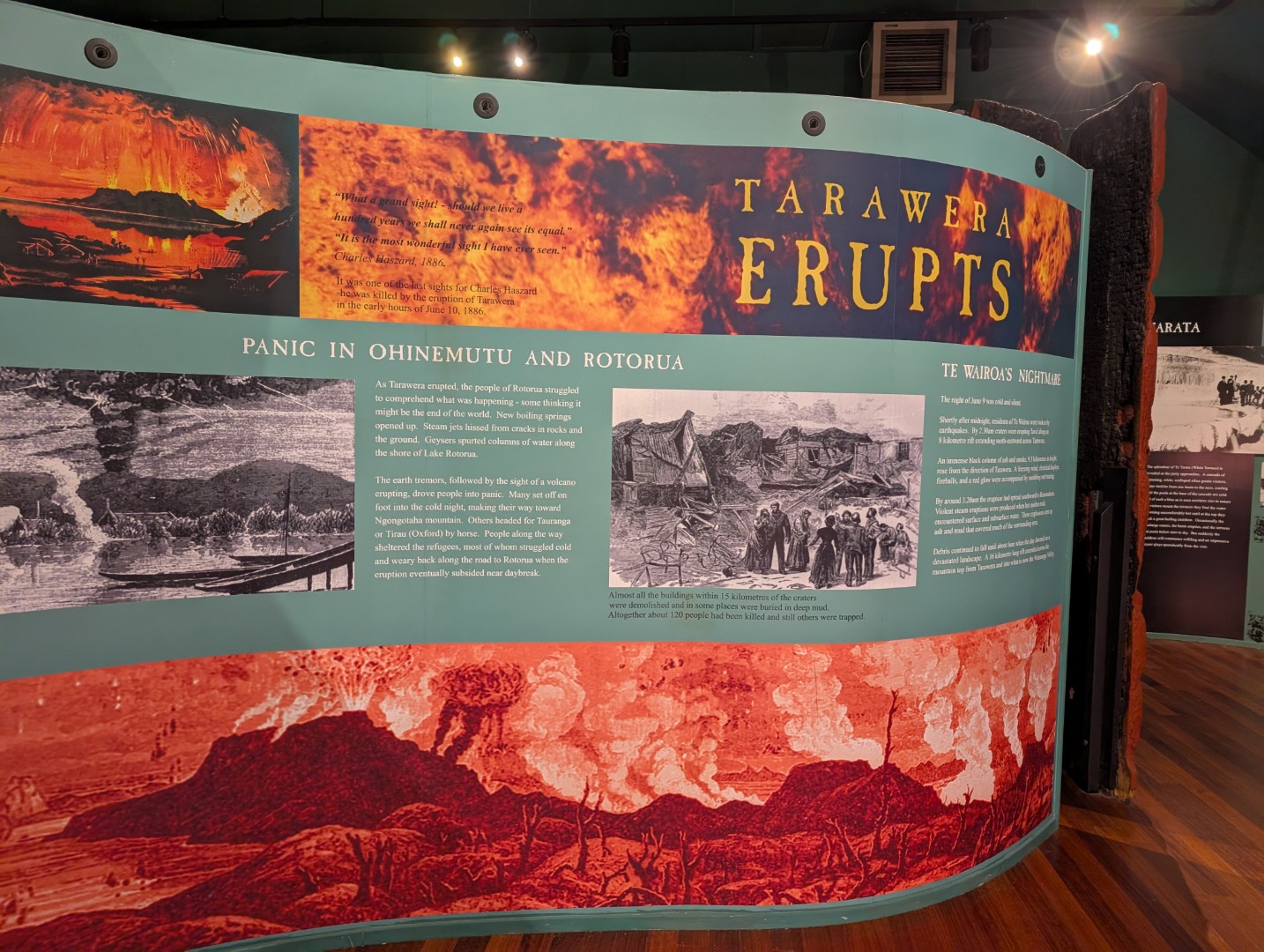
After our “forest bathing” we drove further out of the city for around 15km to reach the Buried Village of Te Wairoa, which was once the place from which people could be taken to see the Pink and White Terraces. These were a spectacular geological formation of silica and mineral deposits , considered by many to be the “eighth wonder of the world”. Formed over centuries by geothermal waters rich in silica, they cascaded down the landscape, creating tiered steps and pools that attracted tourists from around the globe. This natural wonder was tragically destroyed on June 10, 1886, when the Mount Tarawera eruption buried them under volcanic material. When the mountain erupted it also buried the little village of Te Wairoa in a layer of mud, destroying it completely, and killed 120 people. Later, mostly in the 1930’s , parts of the village were excavated by archeologists and there is now an excellent museum which tells the story of the eruption and the later discoveries by archeologists.
We had a light lunch in their cafe before exploring the museum and taking the walk around the site of the village. It was very well done, they’ve really been able to show in places how deep the mud was over the buildings.
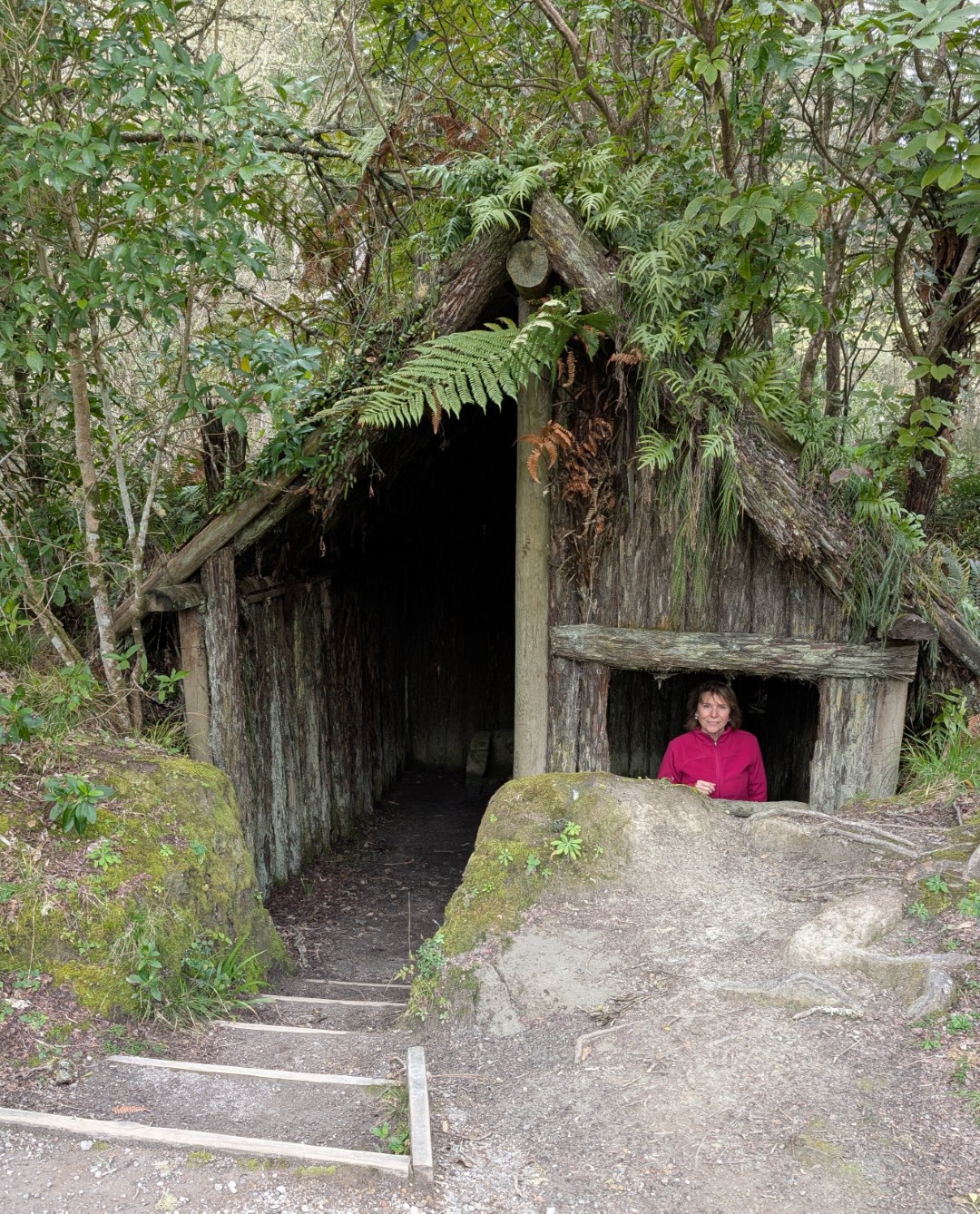
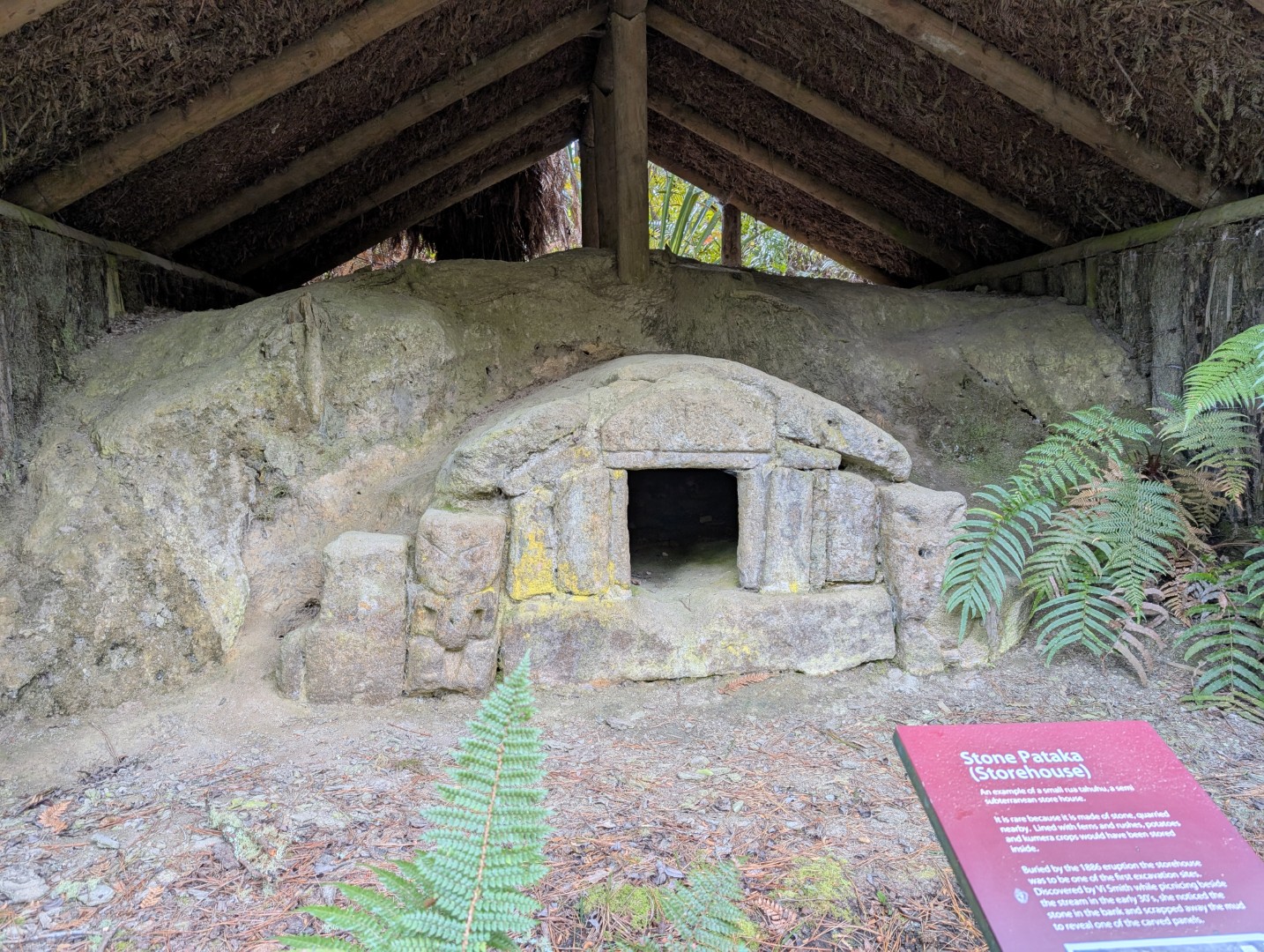
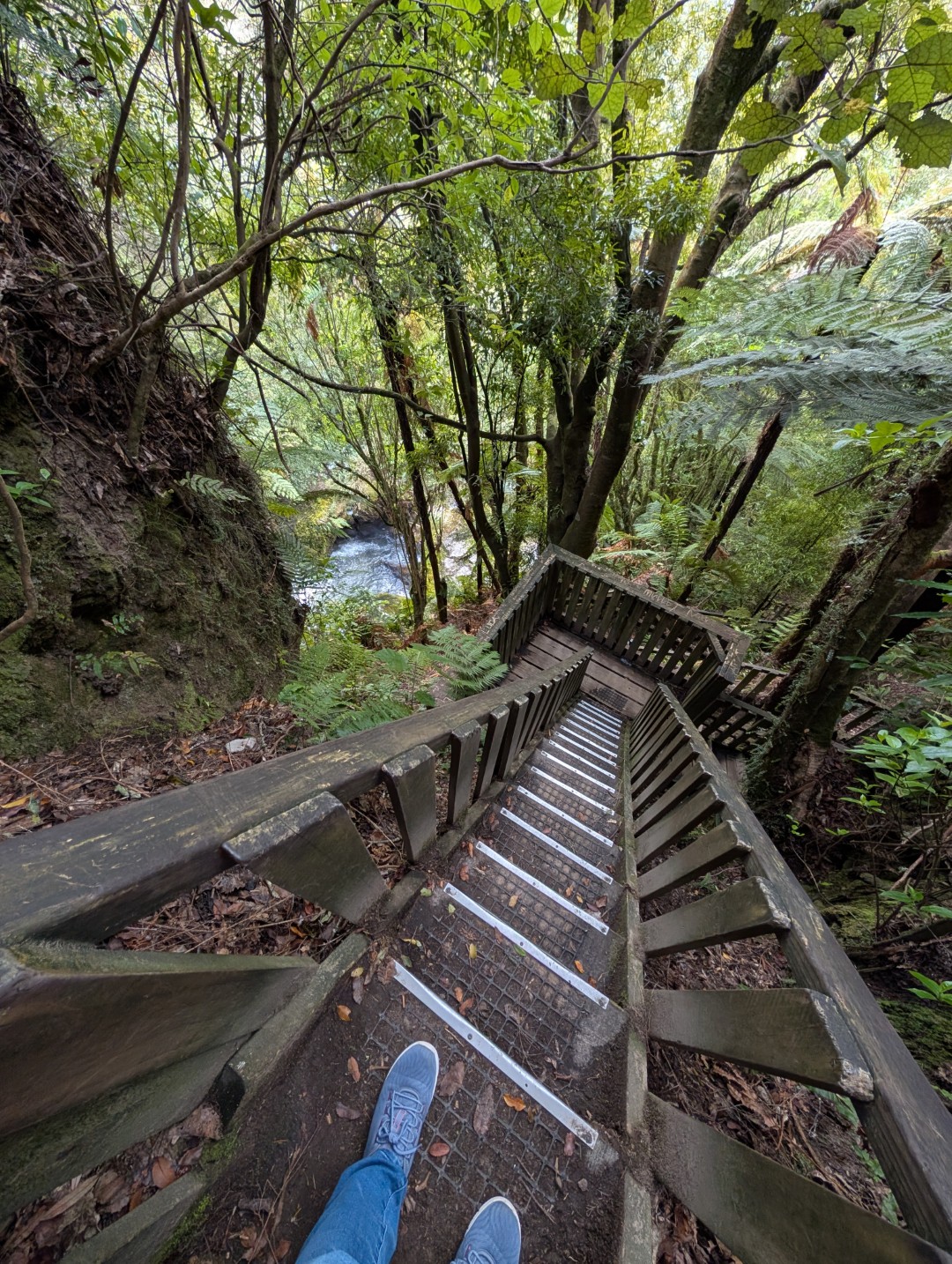
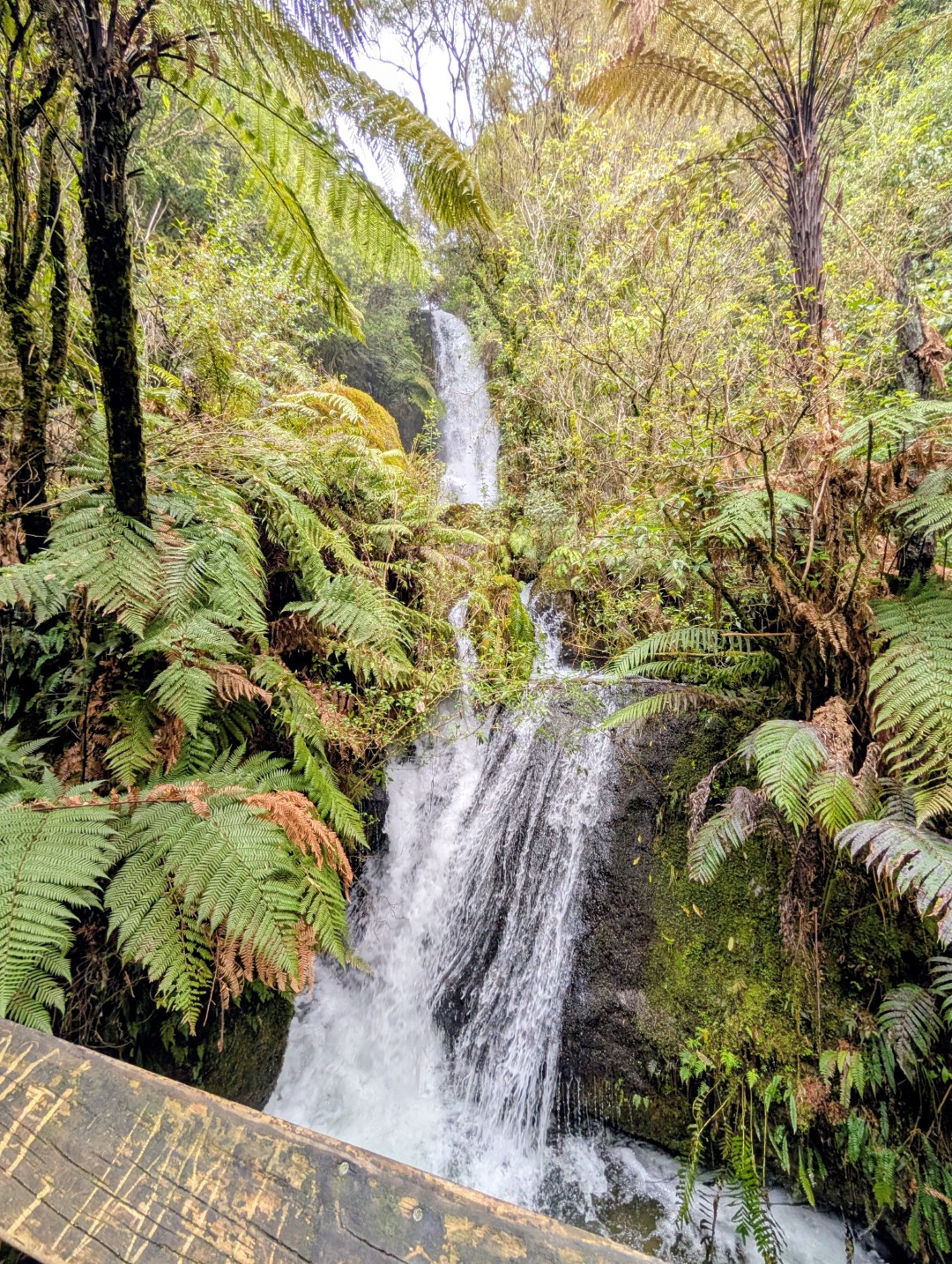
At the end of the walk we detoured down a steep hill to see where the little river gushed over a waterfall.
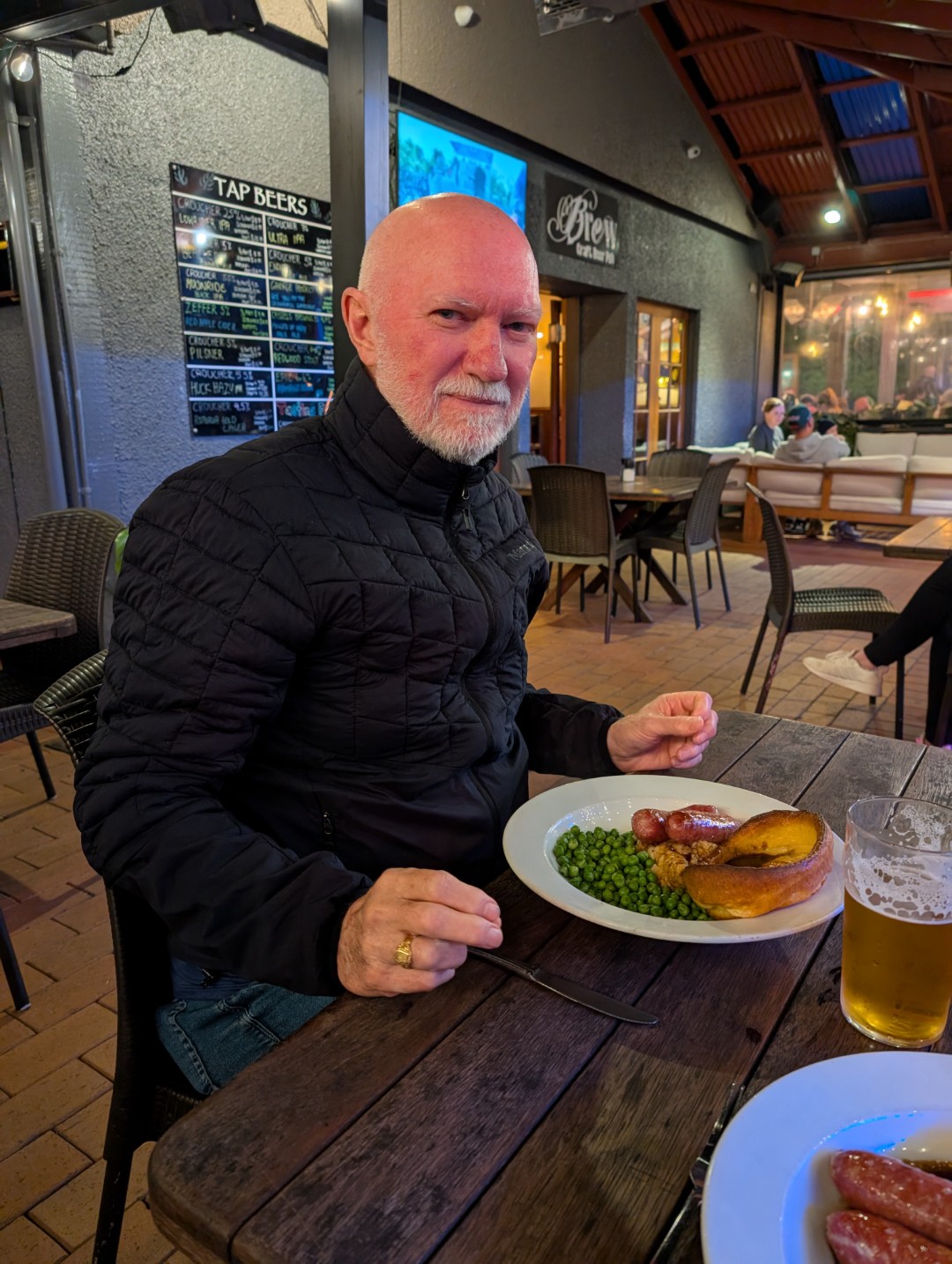
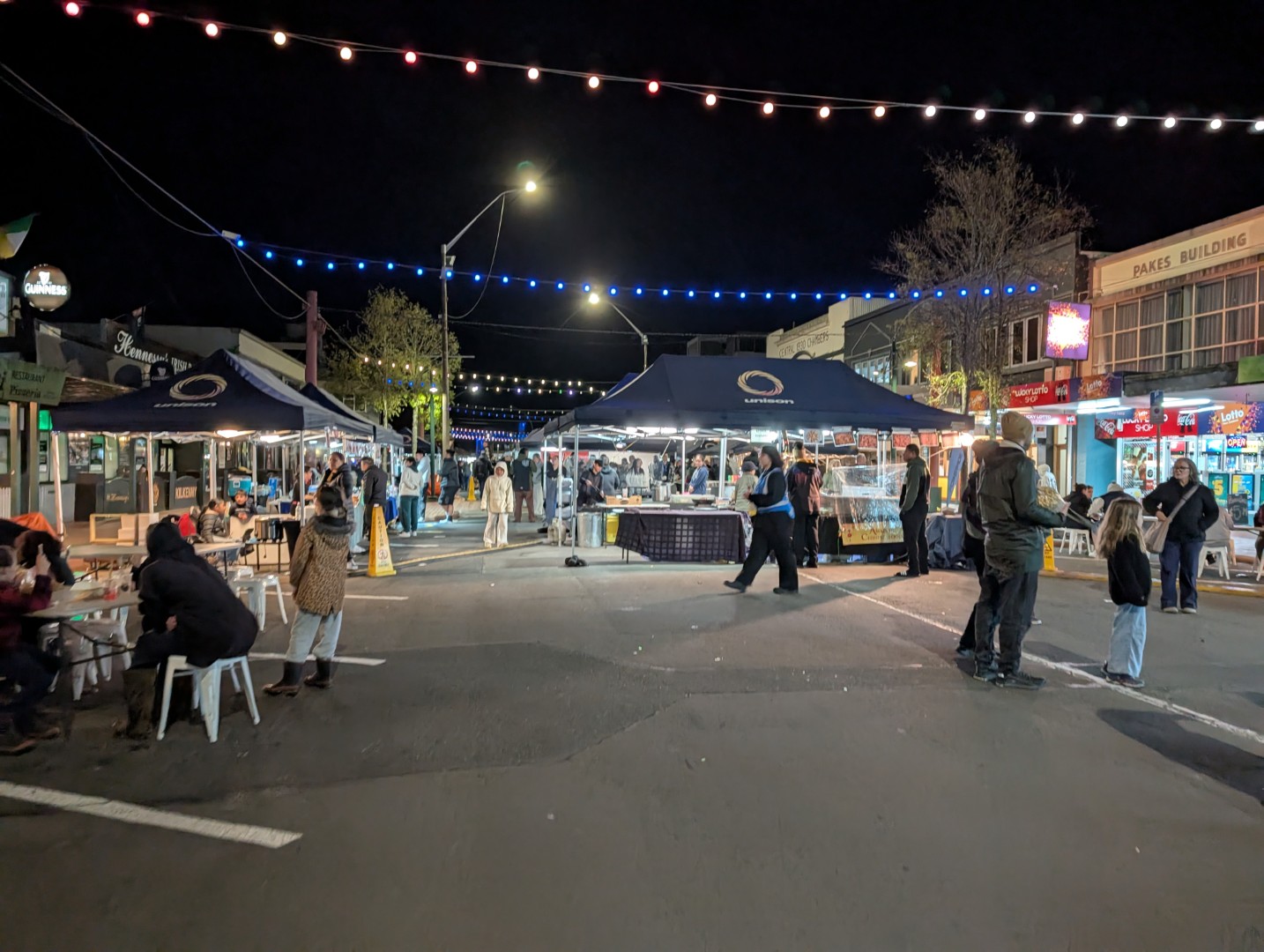
Back at the hotel we had to deal with some laundry, before we set out down into the town to find a spot for dinner. Tonight we chose the Brew Craft Beer Pub. They had the requisite selection of craft beer for Neil and a very nice selection of options on the menu – we both went for the Bangers and Mash with peas and Yorkshire pudding – delicious! On the way back to the hotel we walked through the stalls of the Night Food Market, which takes over the main street every Thursday night. It looked very popular and had an interesting mix of food trucks, but we were glad we’d selected our pub.
Tomorrow we leave Rotorua and head east to Napier.