
We had a mission at breakfast this morning, to swipe food for Erin. Her guesthouse booking does not include breakfast and as we were all booked on a tour we had promised to provide her with brekky from our buffet! She got biscuits, cheese and spinach pastry, an apple and a boiled egg, peeled for her by Neil. 🙂
Our tour bus arrived a little after 9 am to pick us up as well as two other couples from our hotel. Erin was already on board.
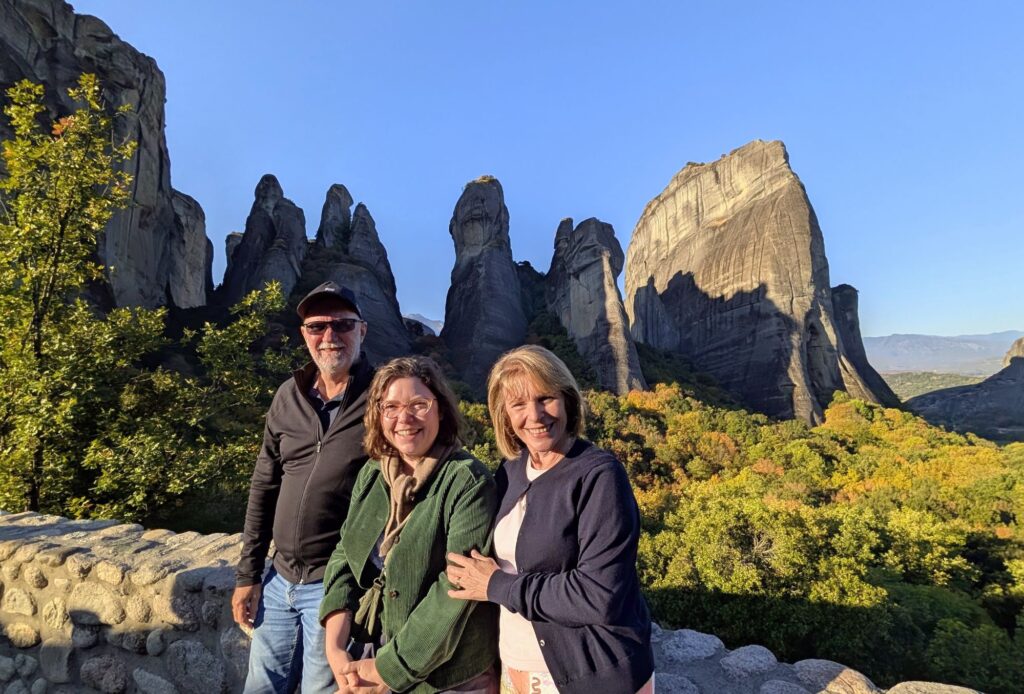
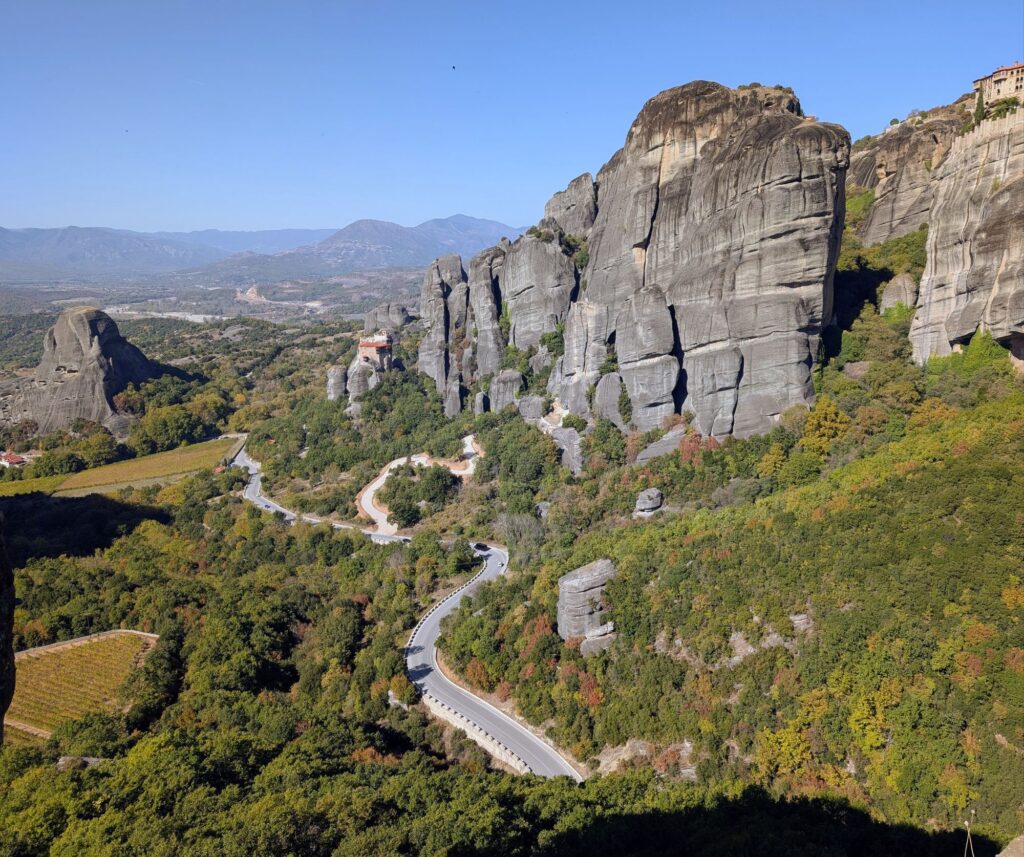
So began our tour of this incredible area. Meteora is a dramatic rock formation and Eastern Orthodox monastic complex. It is a UNESCO World Heritage Site and the second most visited tourist attraction on Mainland Greece ( after the Acropolis). Six monasteries perch on the top of towering grey stone rock monoliths.The sandstone pillars rise up to 400 meters above the plain. They formed roughly 60 million years ago through tectonic movement and wind and rain erosion.
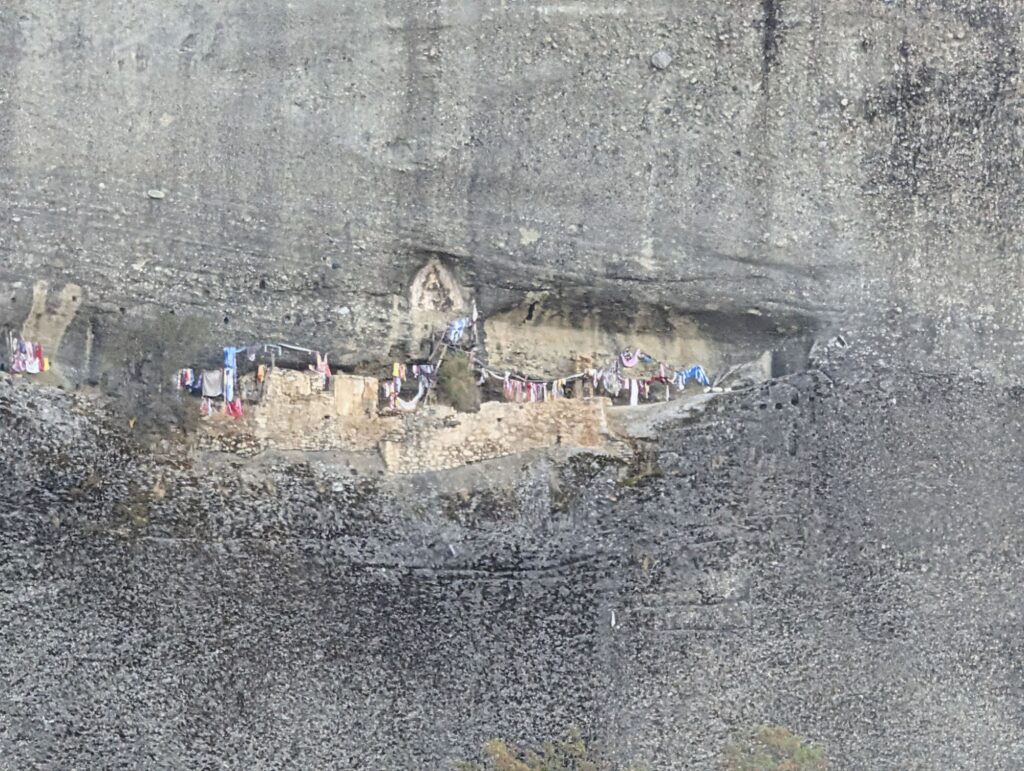
The first hermits arrived in the area in the 10th and 11th centuries and lived in the many caves that are scattered around the rock faces.
In the 14th century, political instability, Byzantine civil wars, and expanding Ottoman raids forced the monks to abandon their accessible caves and seek absolute safety atop the sheer vertical stone pillars. In roughly 1340, a scholar-monk named Saint Athanasios the Meteorite came from Mount Athos. He established the first communal monastery on the highest rock pillar and named it Meteoro “suspended in the air”. This one is known today as the Great Meteoron Monastery.
Building the monasteries was an extraordinary task, every single brick, piece of timber, and tool had to be hoisted up the cliffs using man-powered wooden pulleys, nets, and baskets. By the 16th century there were 24 monasteries!
In the 17th century there started a gradual decline and today there remain only 6 functioning monasteries. We saw a few ruins of old ones on our drive.
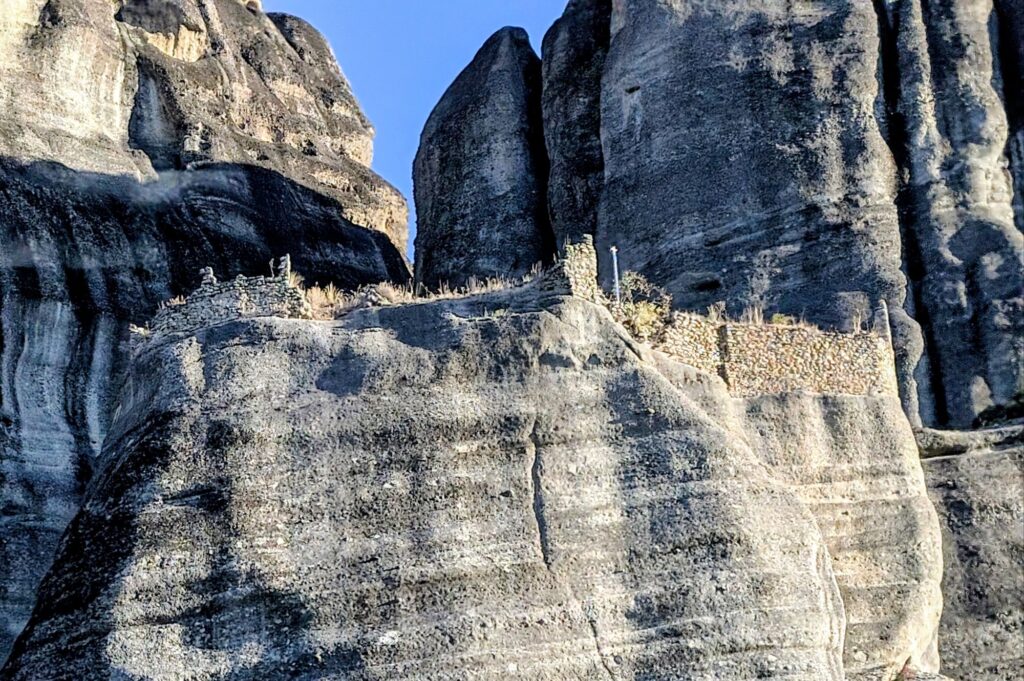
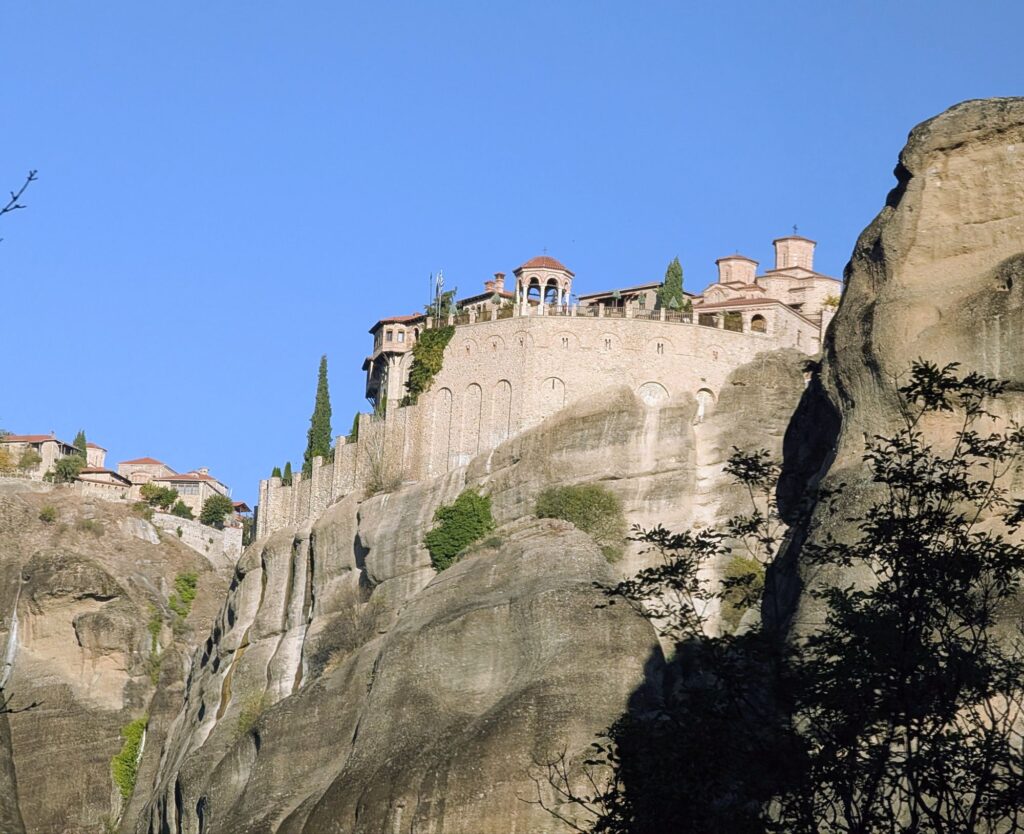
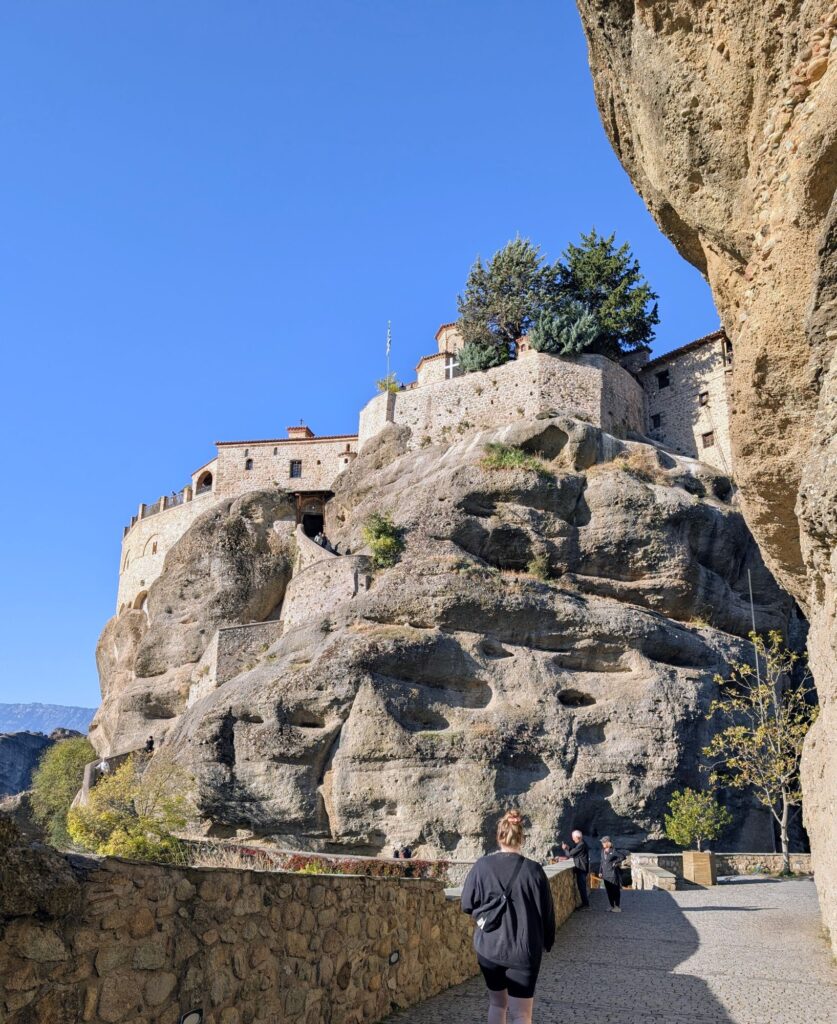
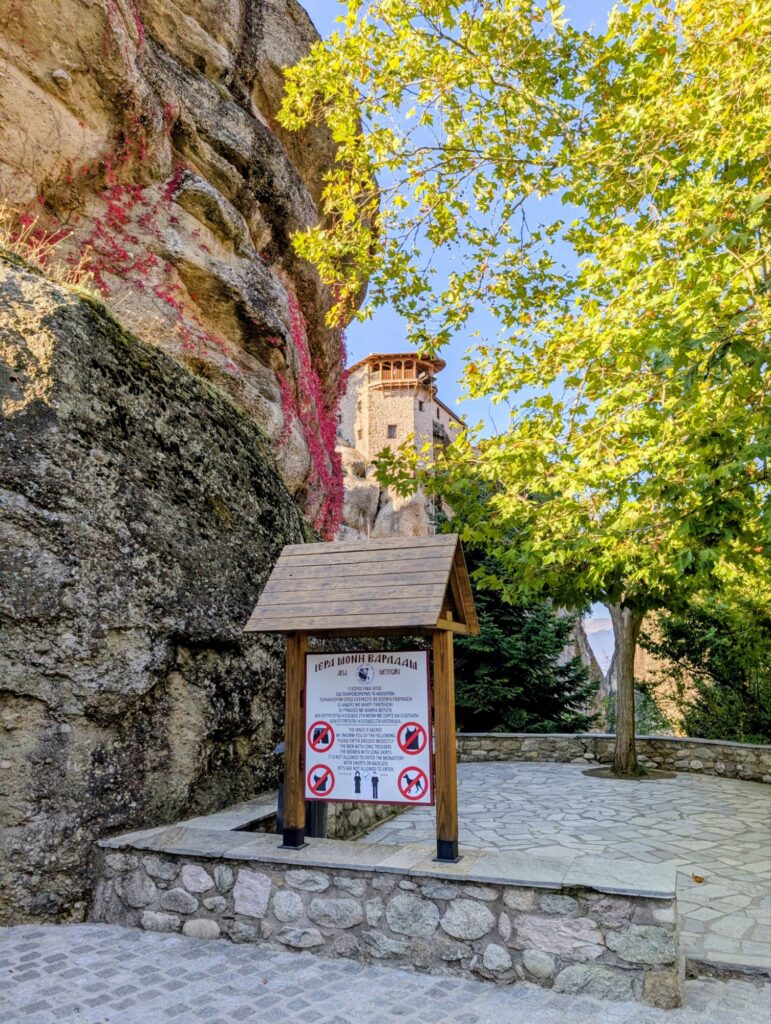
We visited three of the monasteries and made several stops to take in the views. The first one was Varlaam, the second oldest and second largest. We had to climb a lot of steps to get up to it!
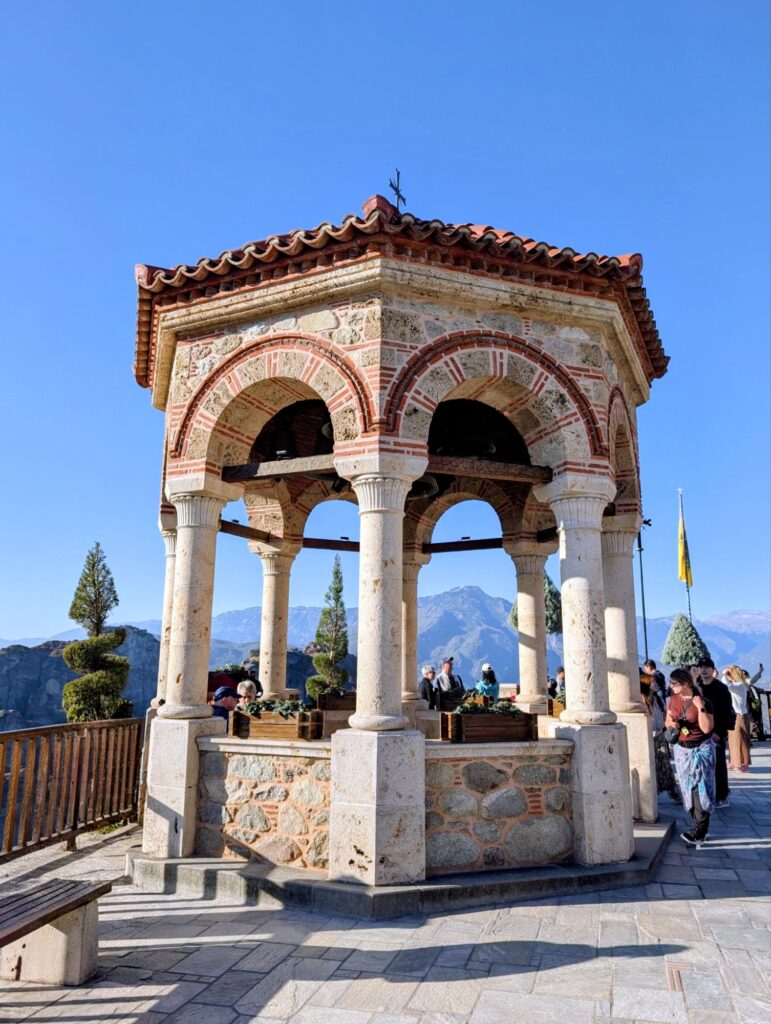
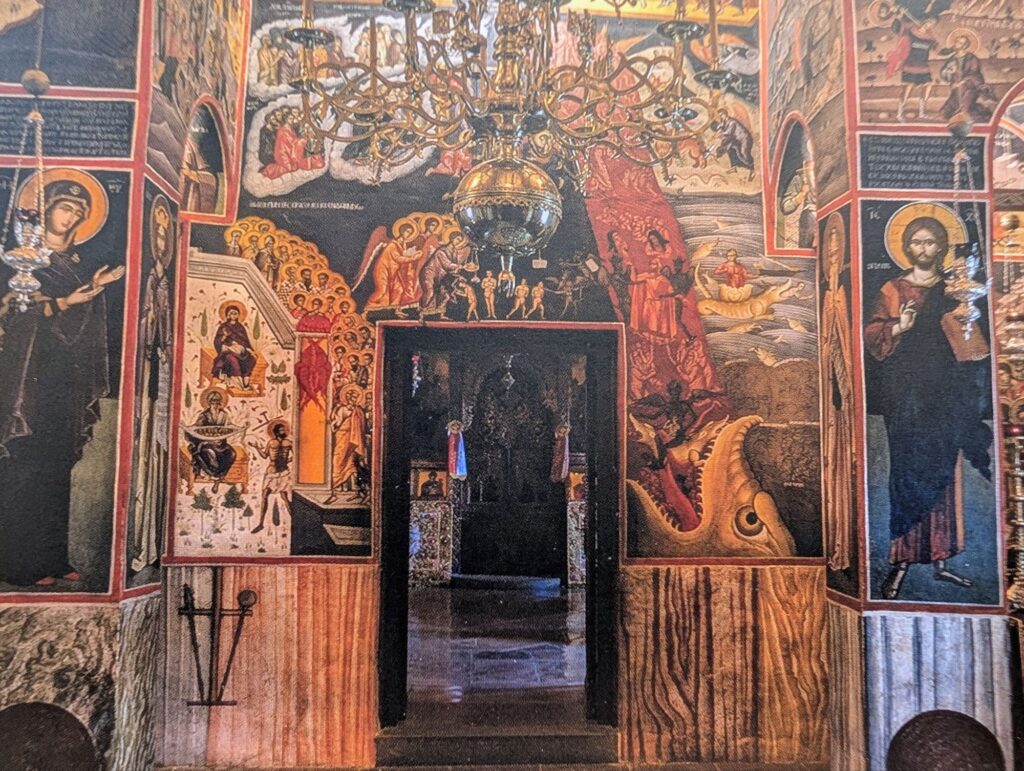
The interior had a series of beautiful rooms with Byzantine paintings and icons. The church was incredible! Entirely covered with paintings and gold leaf and a magnificent gold chandelier. Unfortunately we weren’t allowed to take photos, so I’ve taken a photo of a postcard Erin bought.
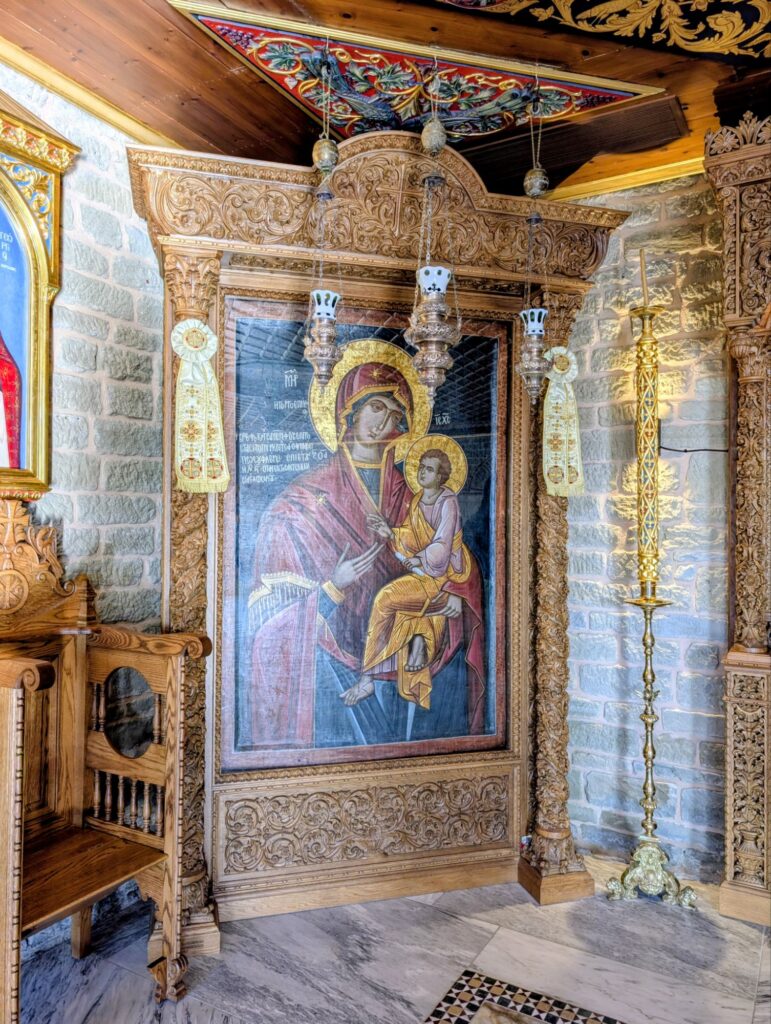
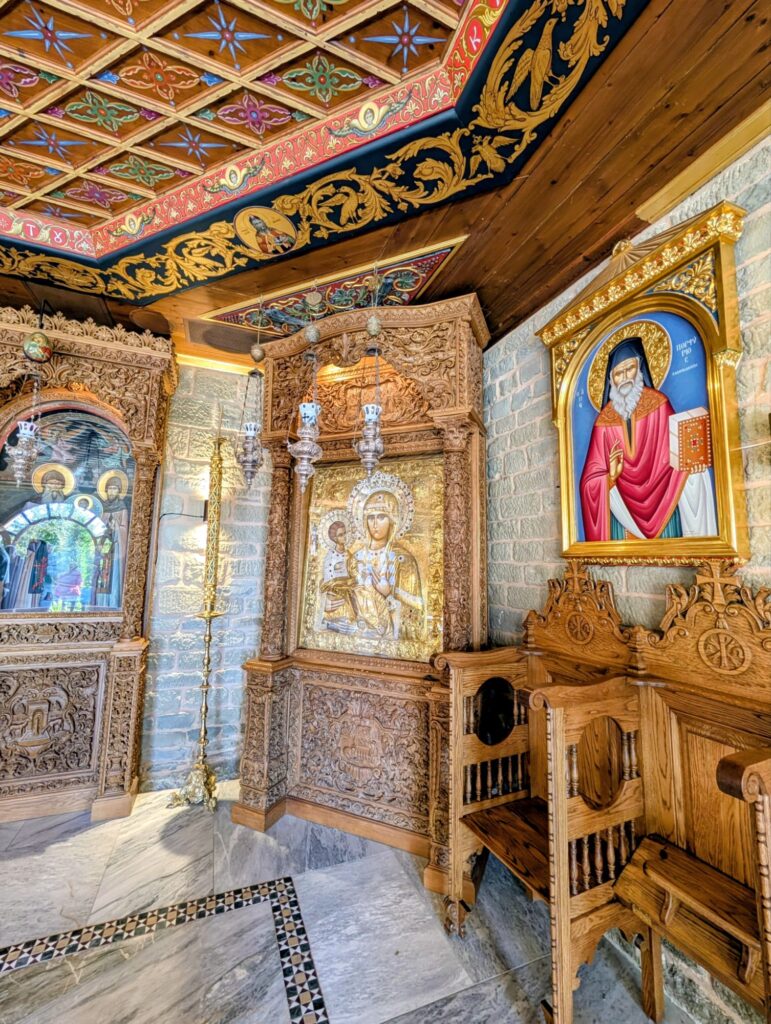
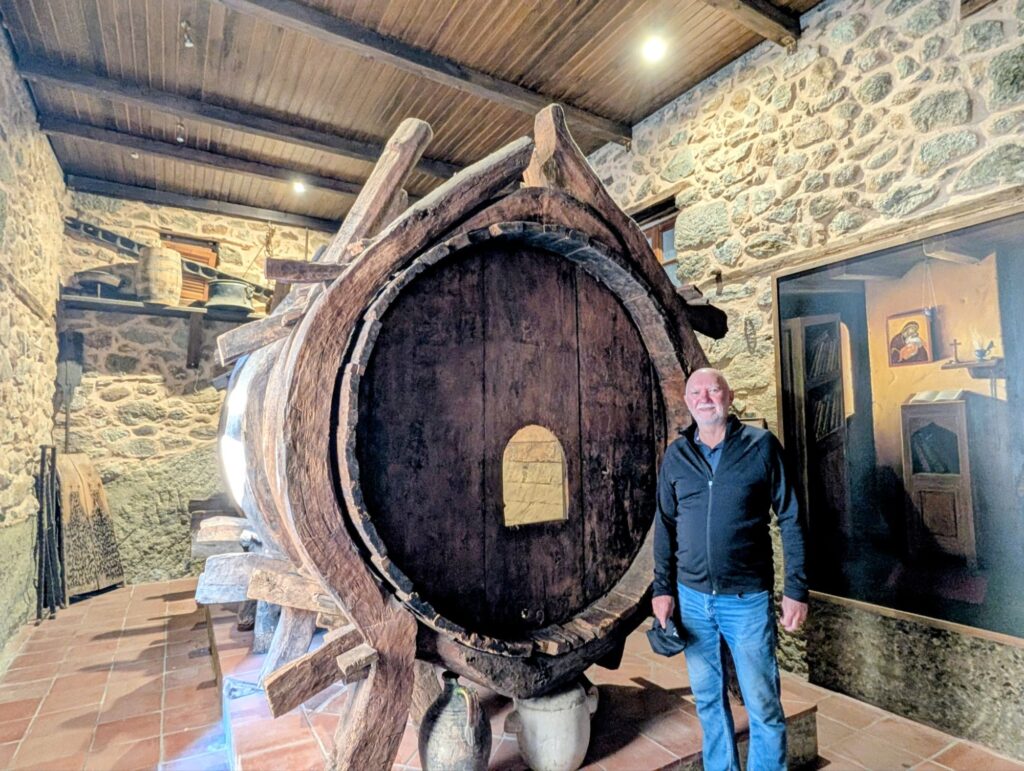
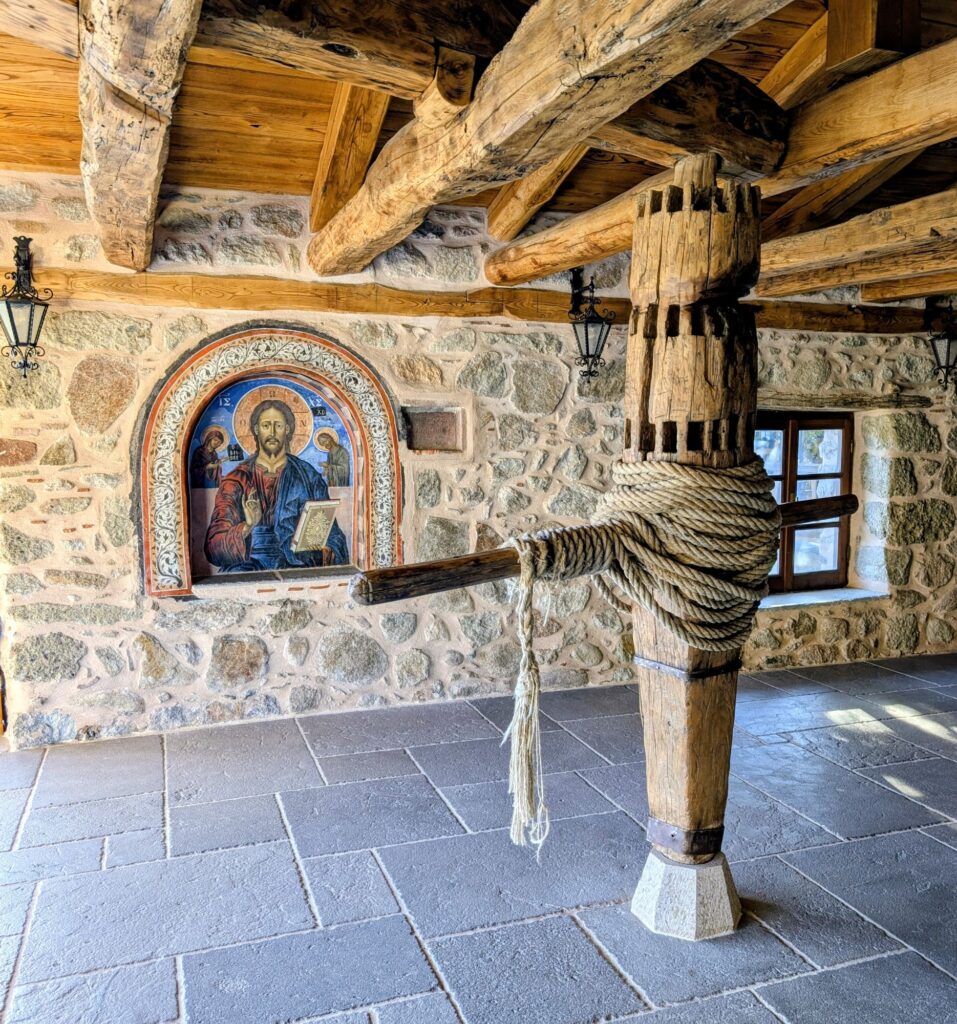
In one area was a 12000 litre wooden barrel that was used to store water and on a balcony we could see the massive winch used to drop baskets over the side.
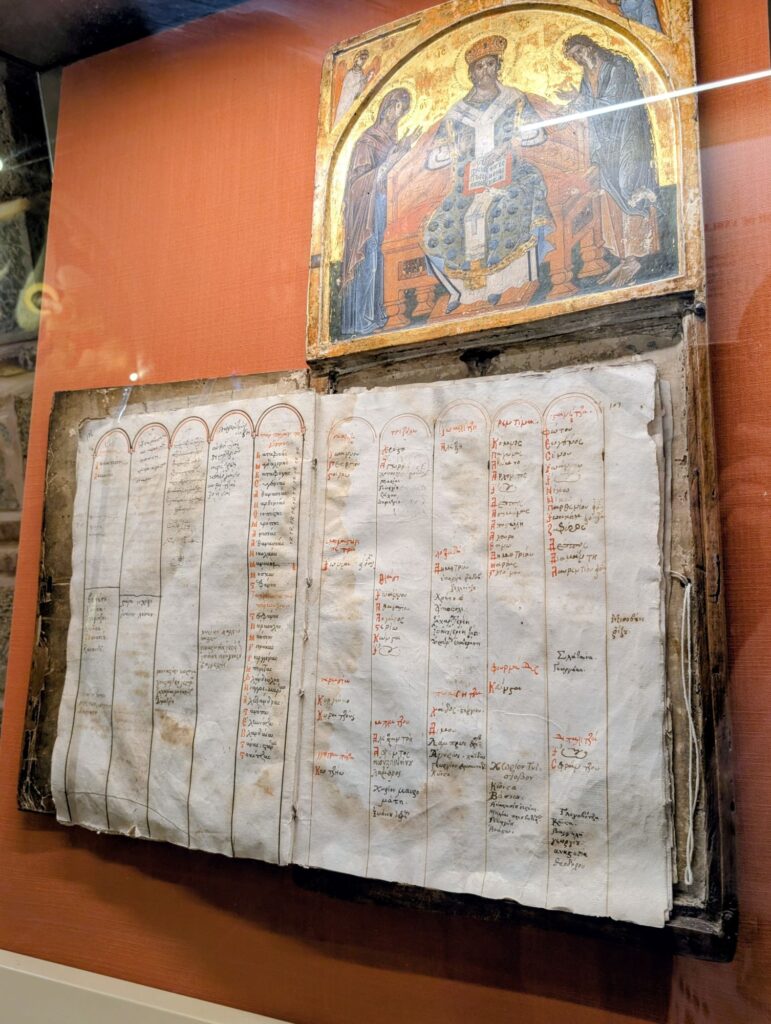
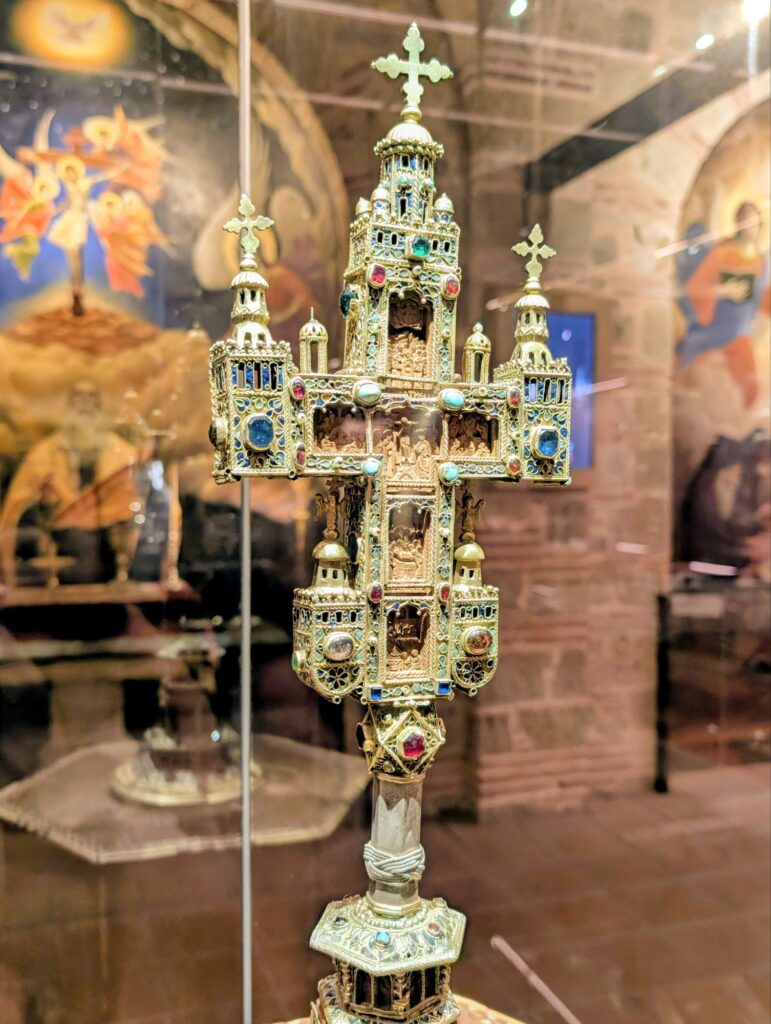
They also had an excellent museum with displays of ancient documents and gorgeously decorated religious pieces.
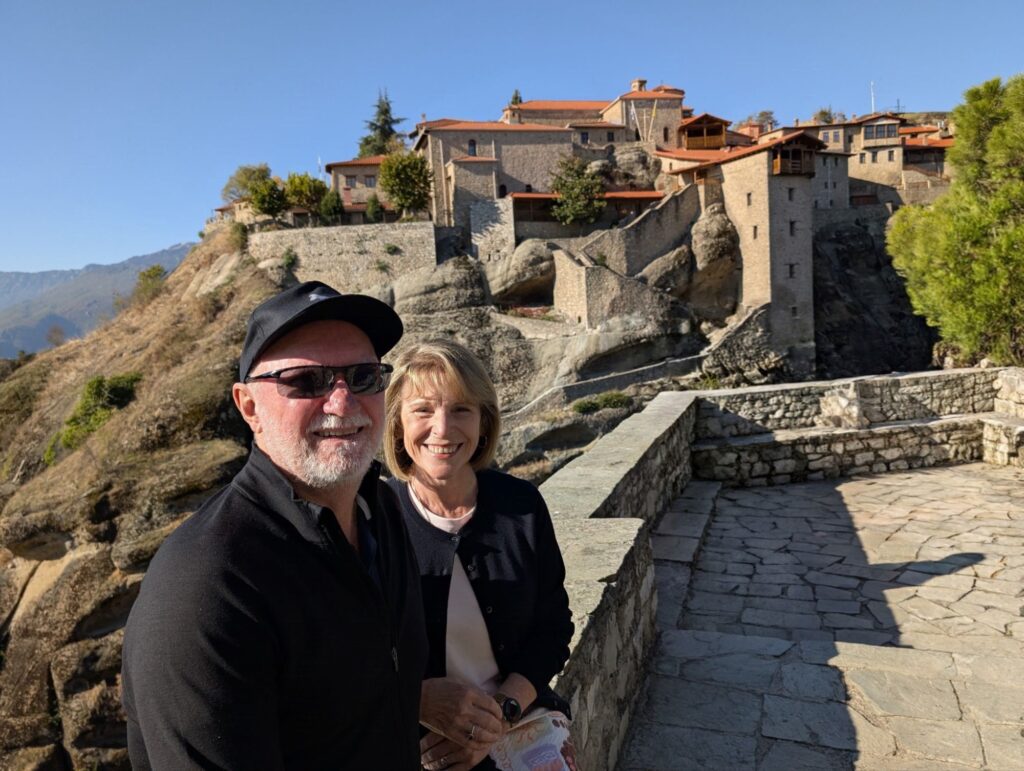
Back on the bus we drove to see the exterior of the Great Meteoron Monastery, which was closed today. When I learned how many steps you needed to climb to enter it I decided I wasn’t sorry!
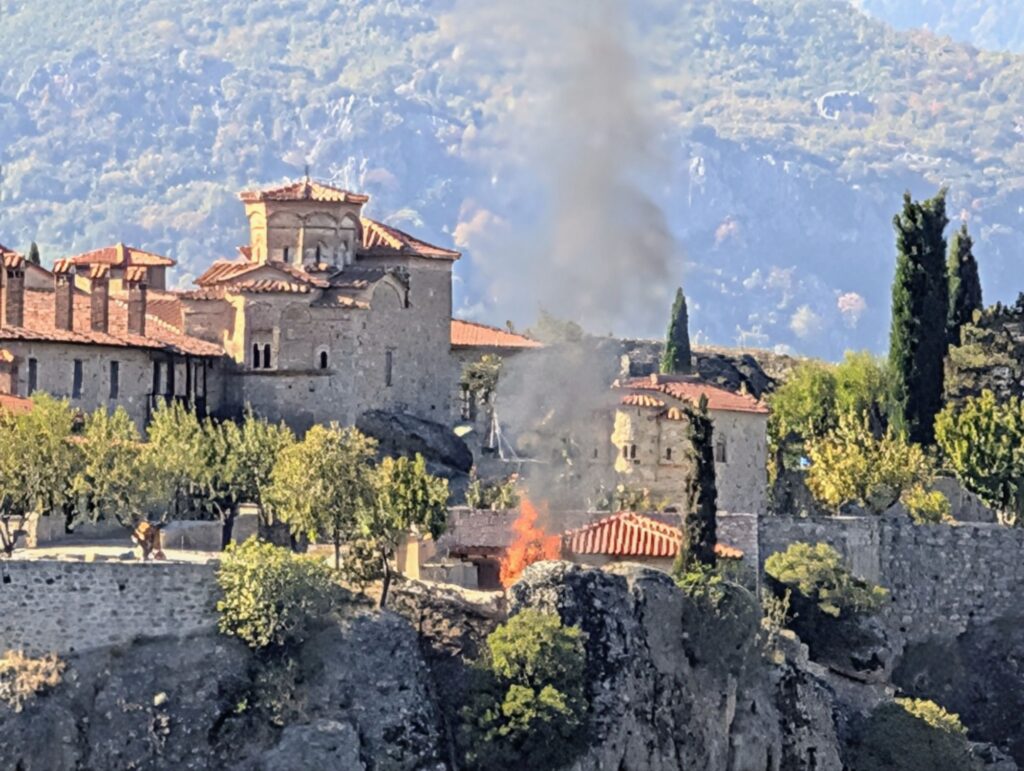
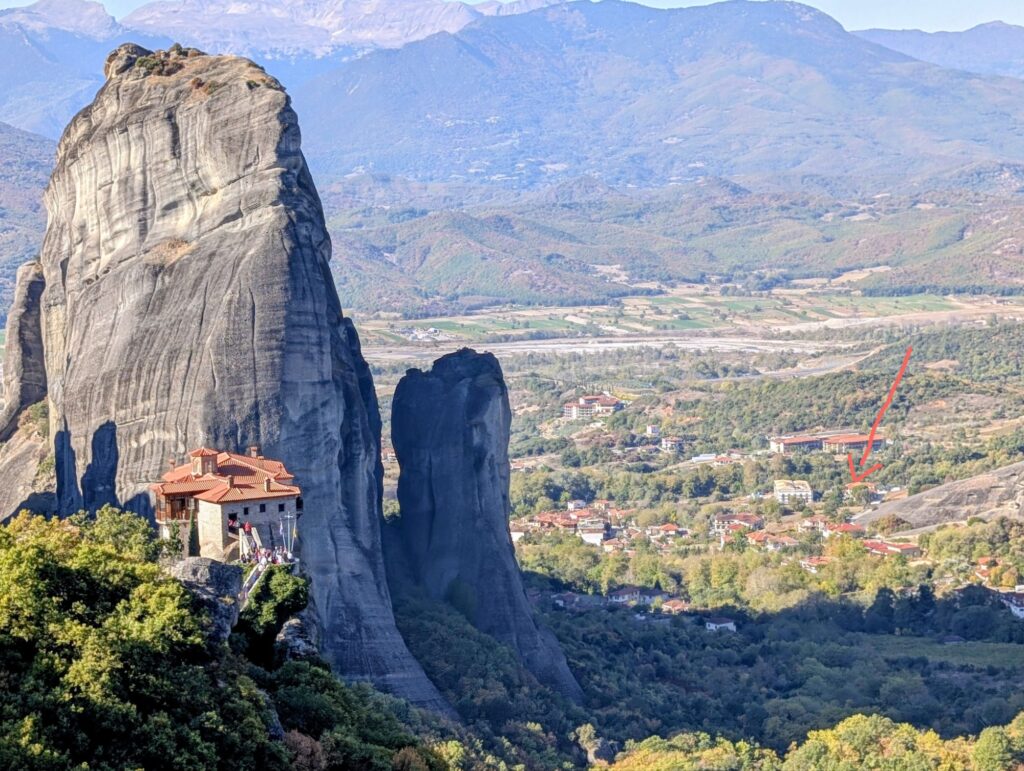
Our driver stopped a little further up the road so we could see the Monastery of the Holy Trinity. He did what our guide called a “Greek stop” , he stopped in the middle of the road and put his hazard lights on! This monastery was the one that introduced the work to Meteora, after it was used as a location in the James Bond movie, “For Your Eyes Only” in the early 1980s. It’s the most inaccessible of the monasteries, so we did not visit it. As we watched we noticed smoke rising from its terrace and then some very substantial flames. The guide was a bit surprised and when we saw the fire engine drive past we figured it was t a normal event! Fortunately they seemed to get it under control fairly quickly.
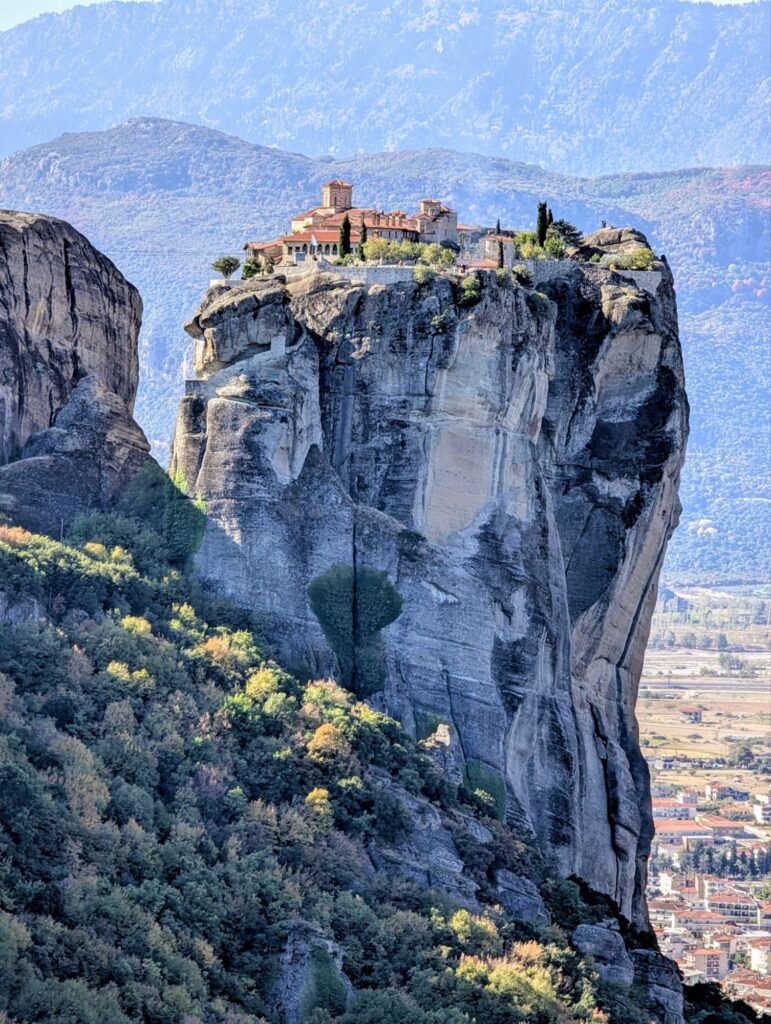
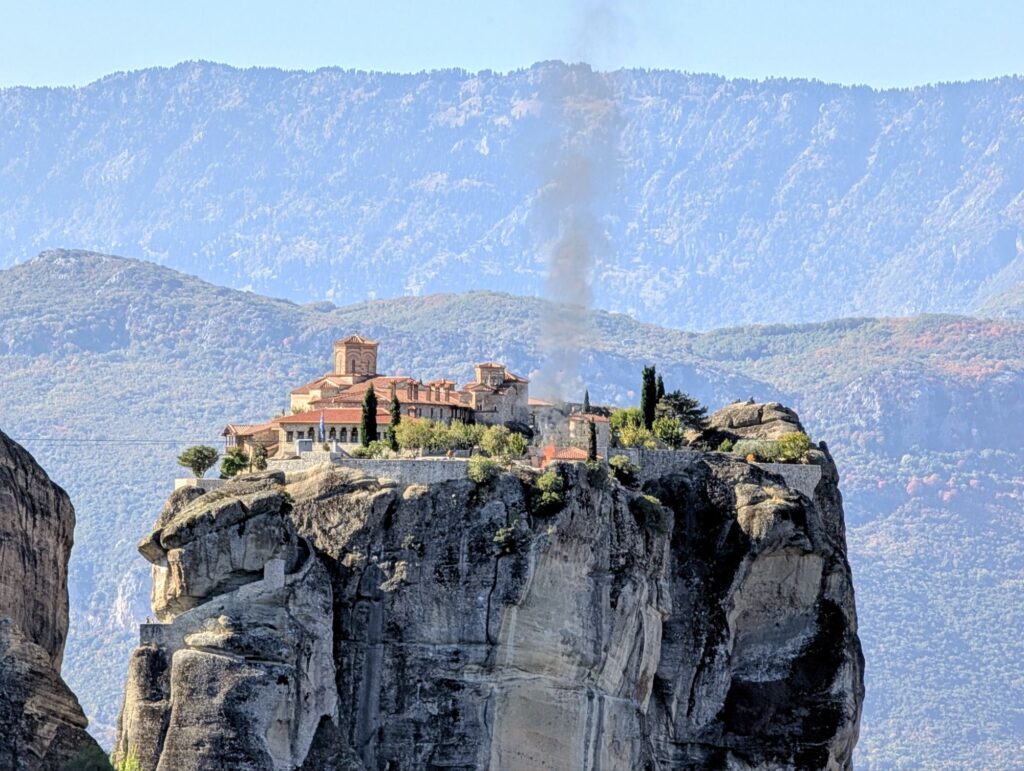
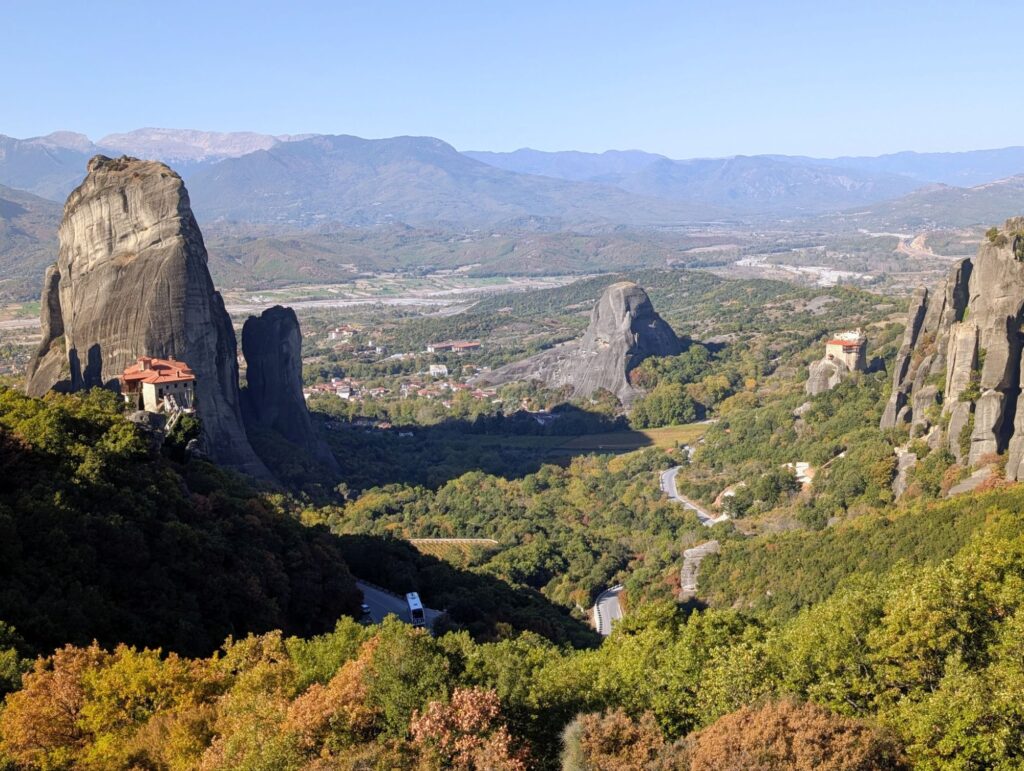
At another stop we had a view of 4 of the six monasteries. We could also see our hotel.in the valley below, I’ve added an arrow to the second picture below pointing to it.
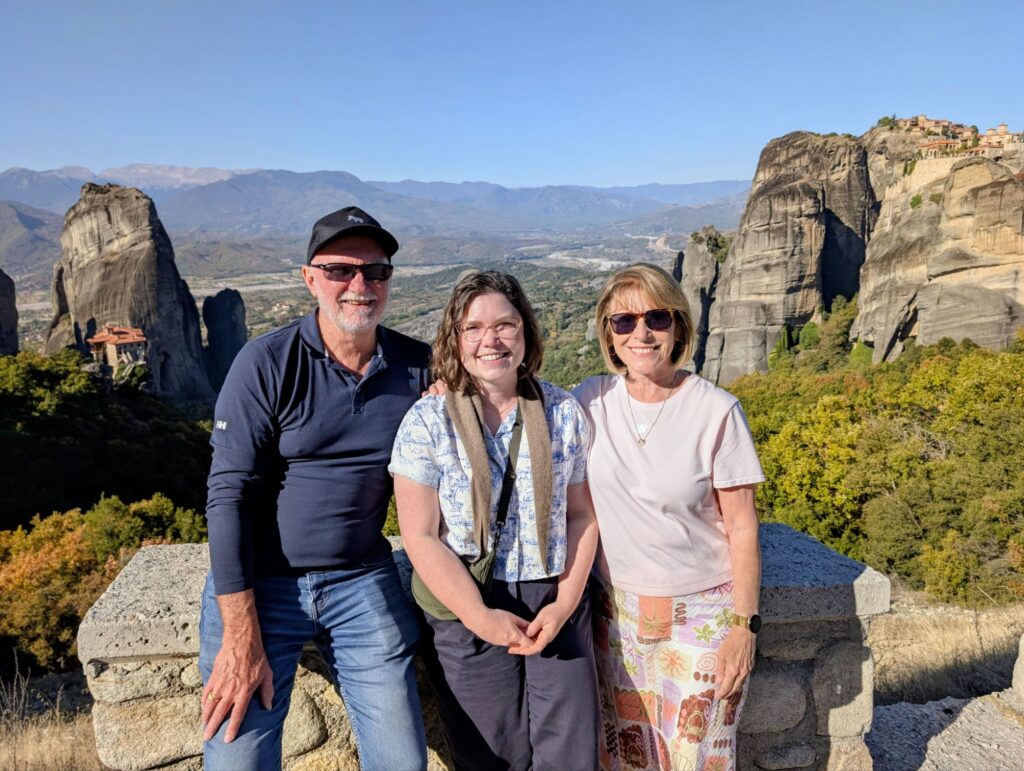
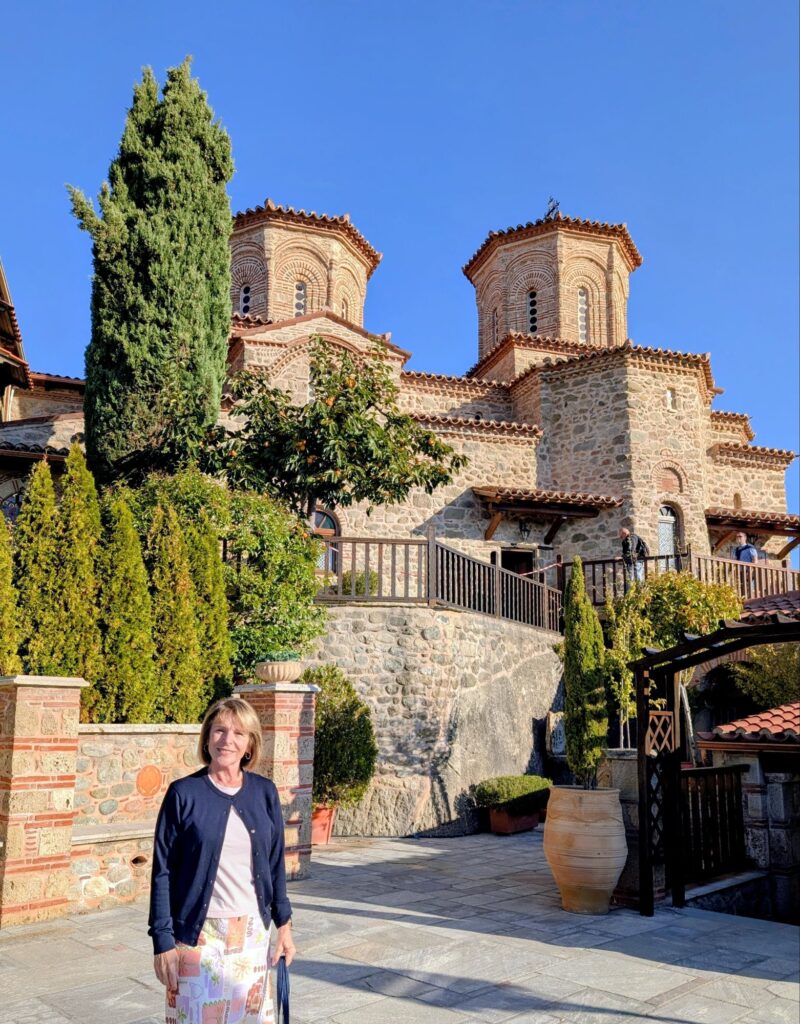
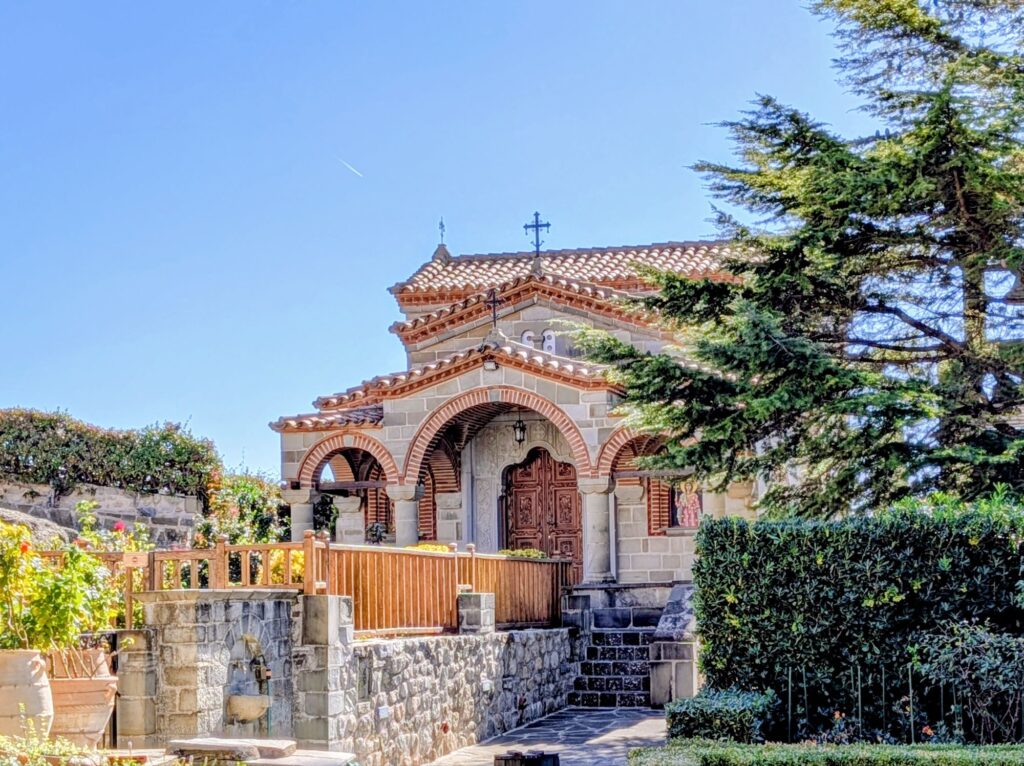
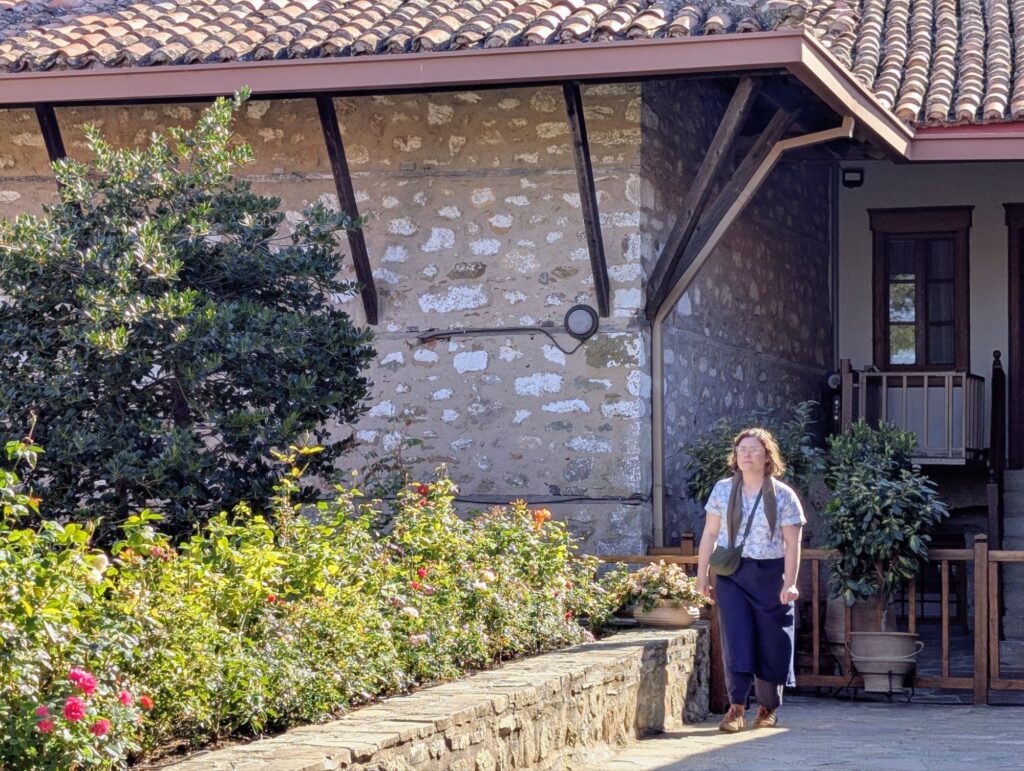
The next monastery we visited is called St Stephan, it’s actually a nunnery. At each place we paid 5 euro each to enter and any woman wearing pants or shorts had to borrow a wrap around skirt to cover the knees. I’d come prepared in my own long skirt, worn fetchingly over my cropped pants.
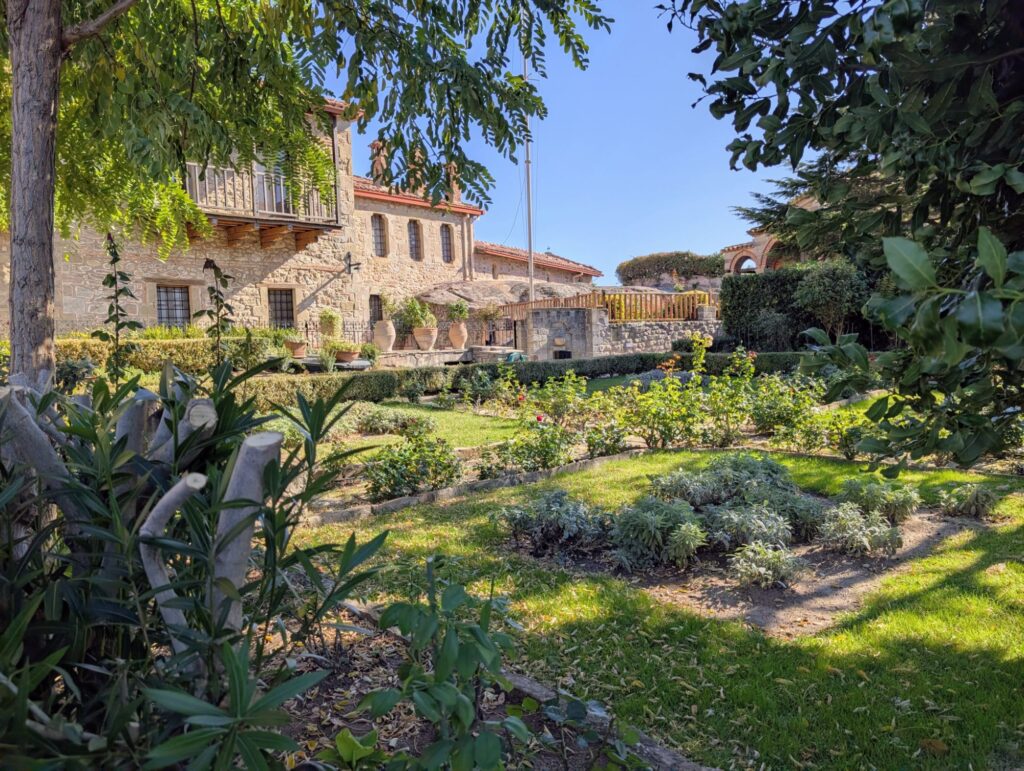
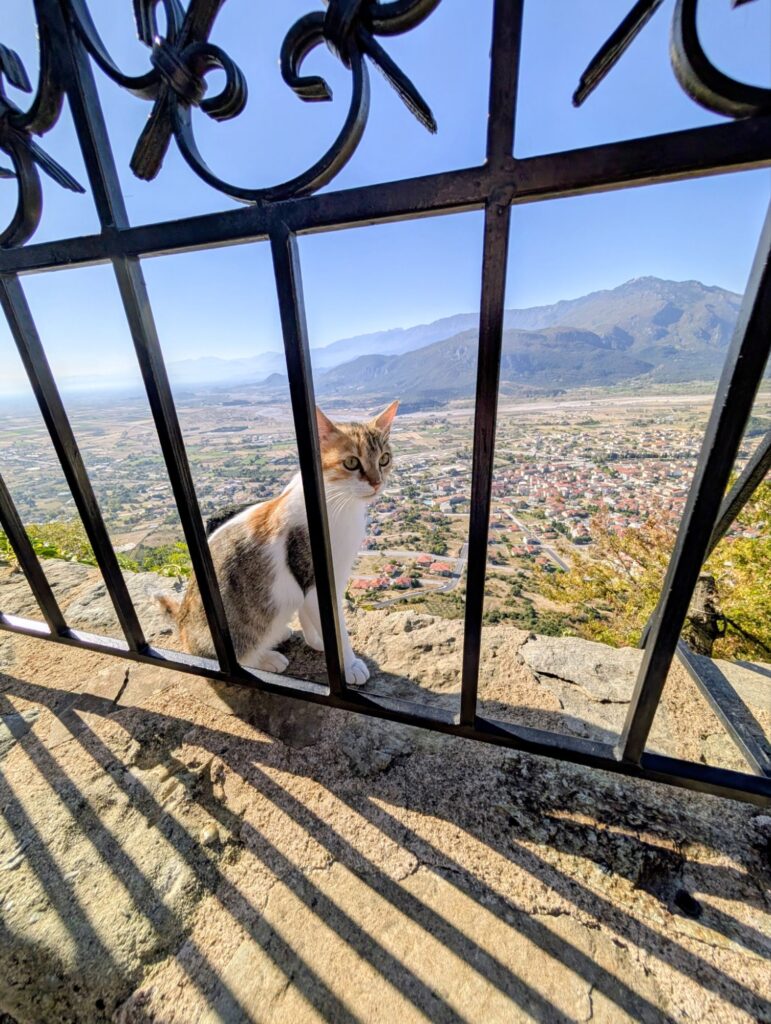
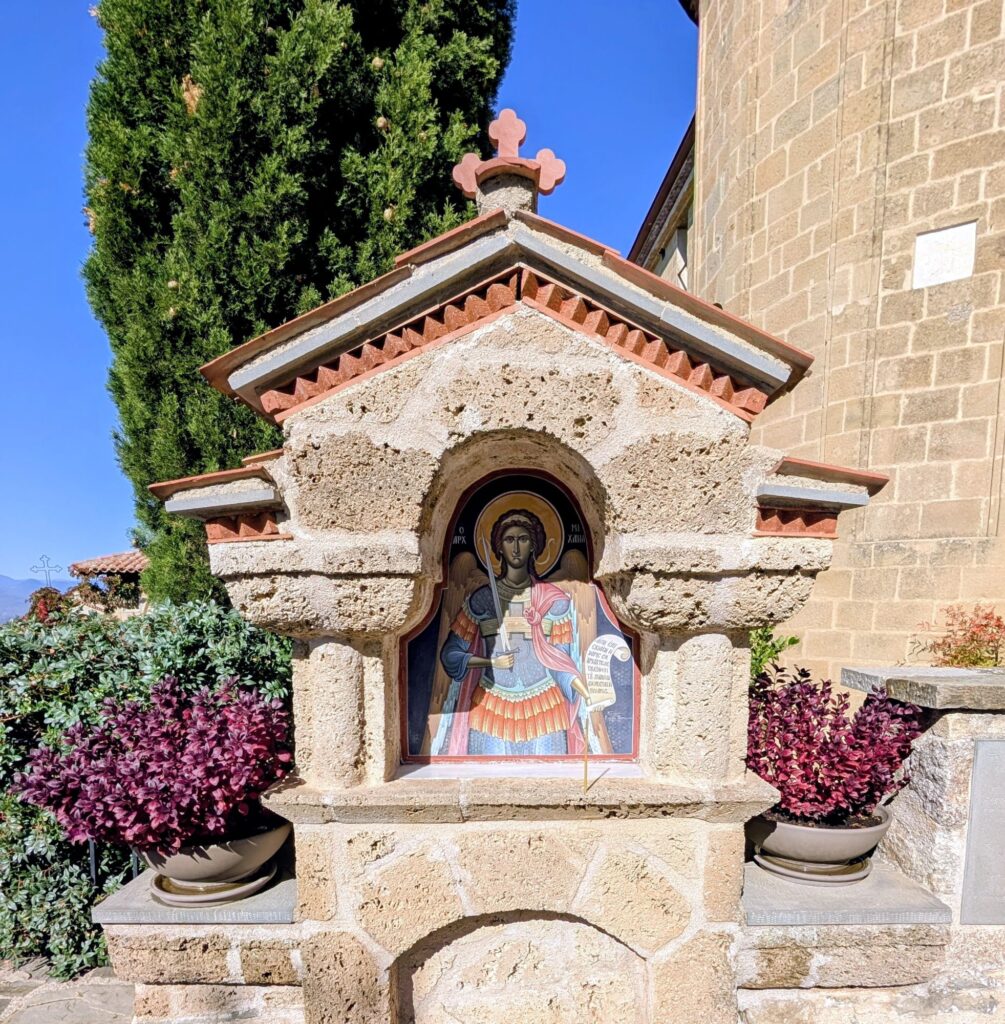
St Stephan was smaller but also had a stunning church and lovely gardens. As well as a cute cat!
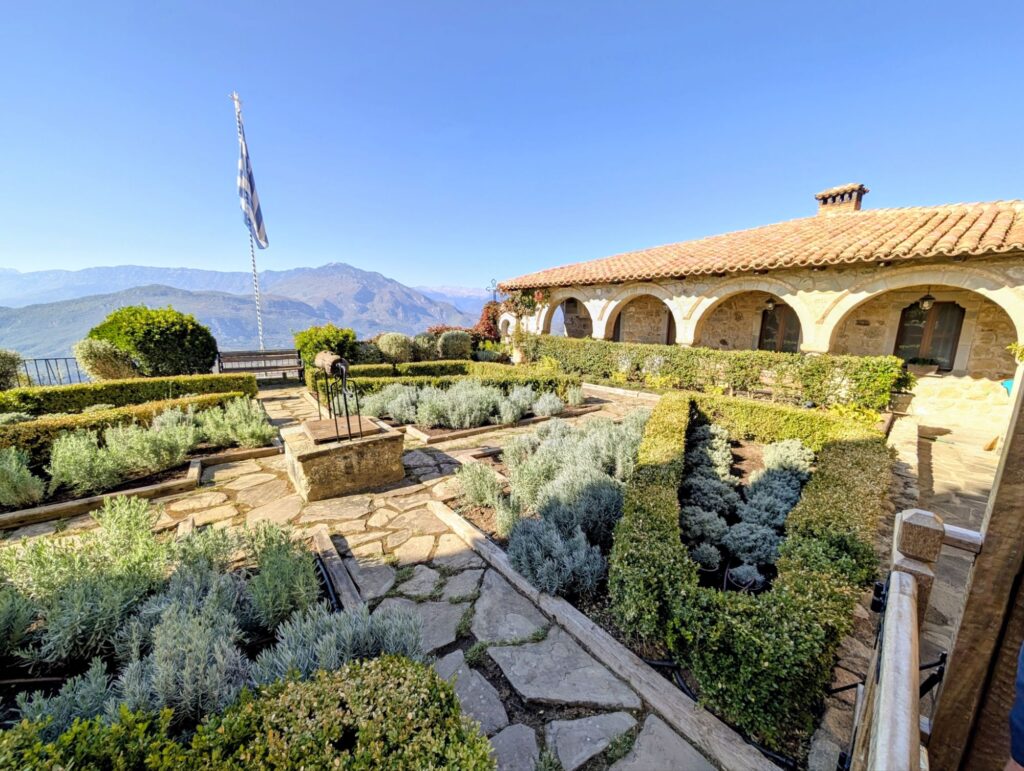
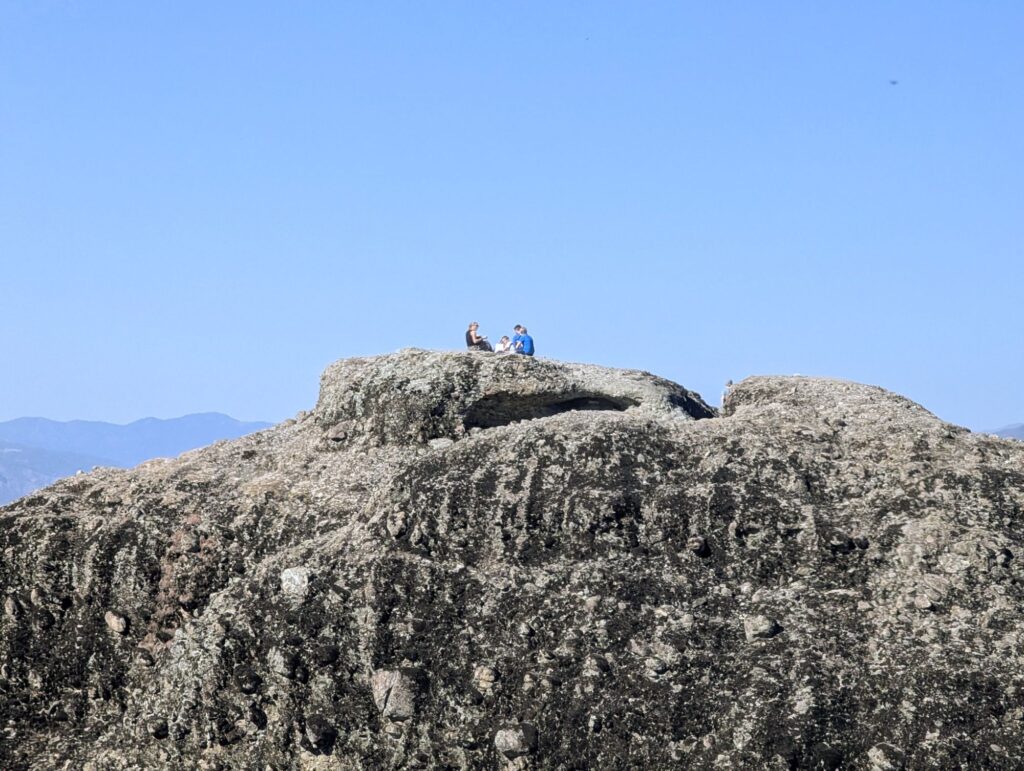
We drove on past other lookouts where people were climbing up on the rocks for the ultimate risk.
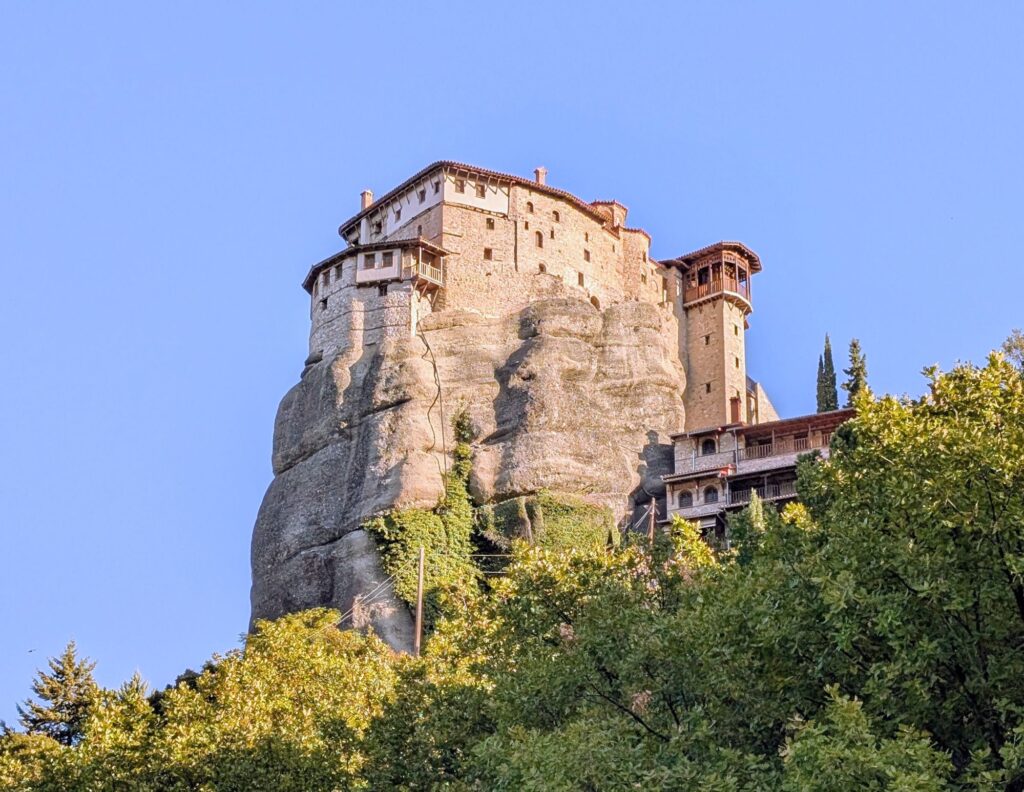
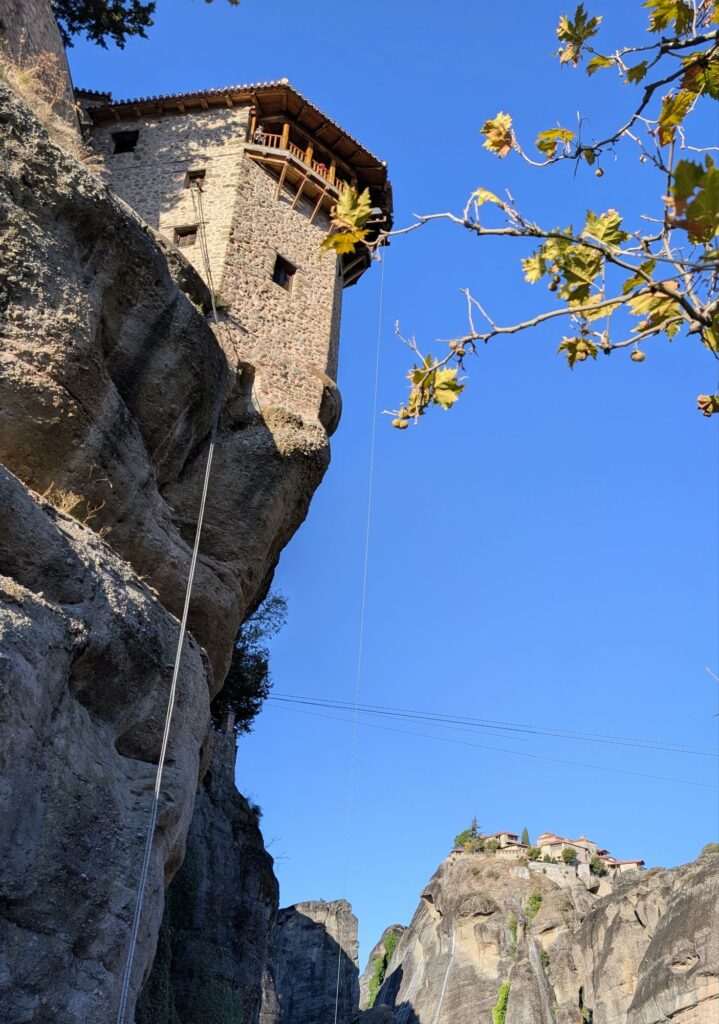
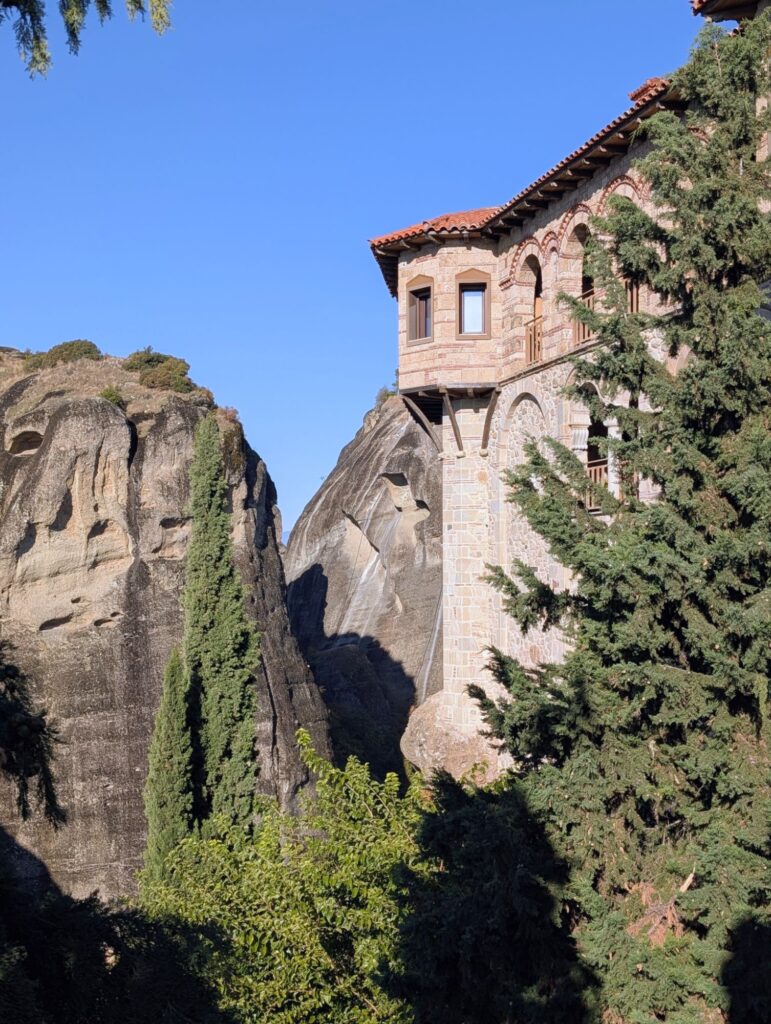
The last Monastery ( also actually run by nuns) was St Barbara, also called Roussanou by the local people. It is tiny, the structure not much different to a small house. But again a lovely, but tiny church, and a small museum.
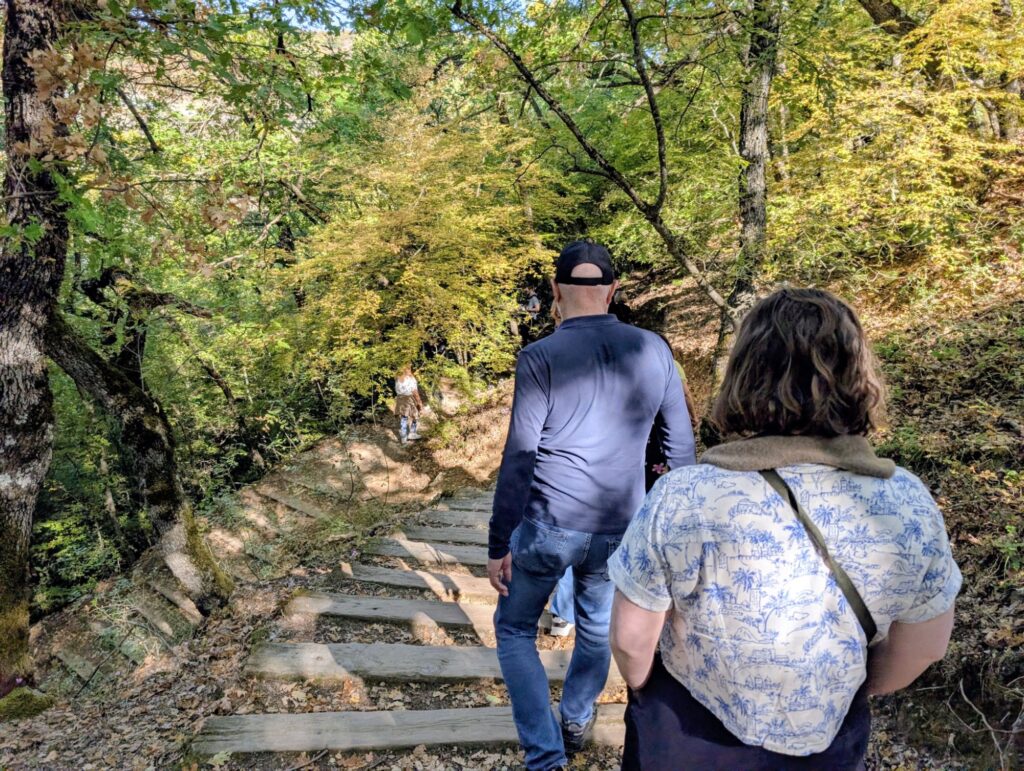
To reach it we walked down through a forest path.
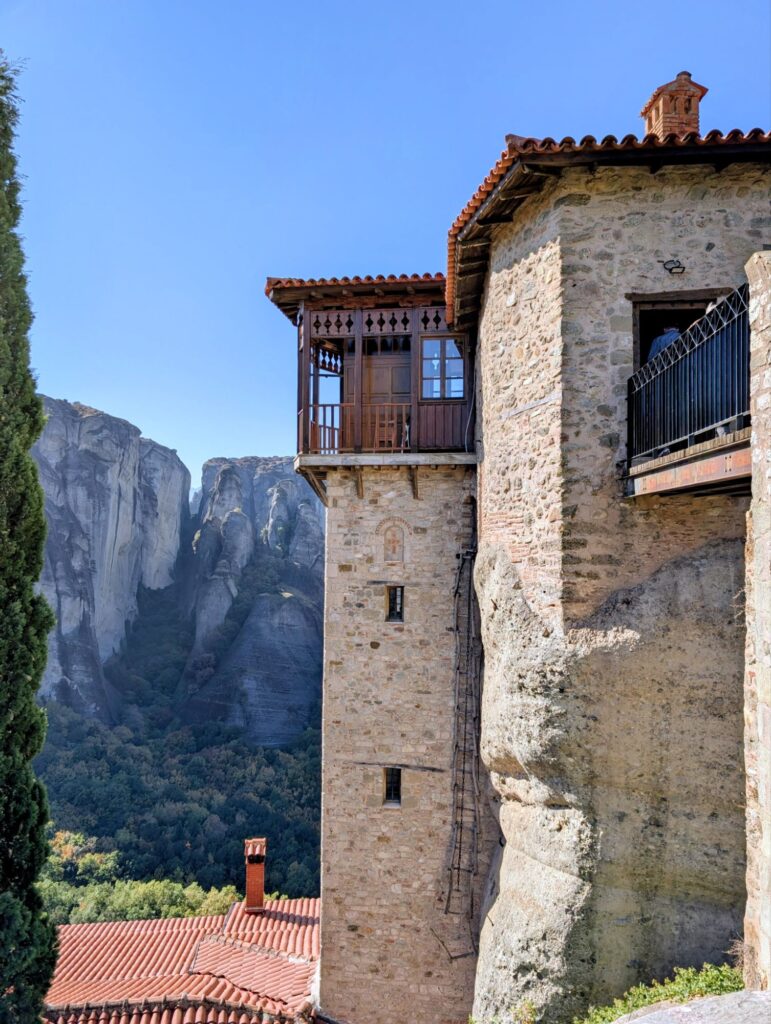
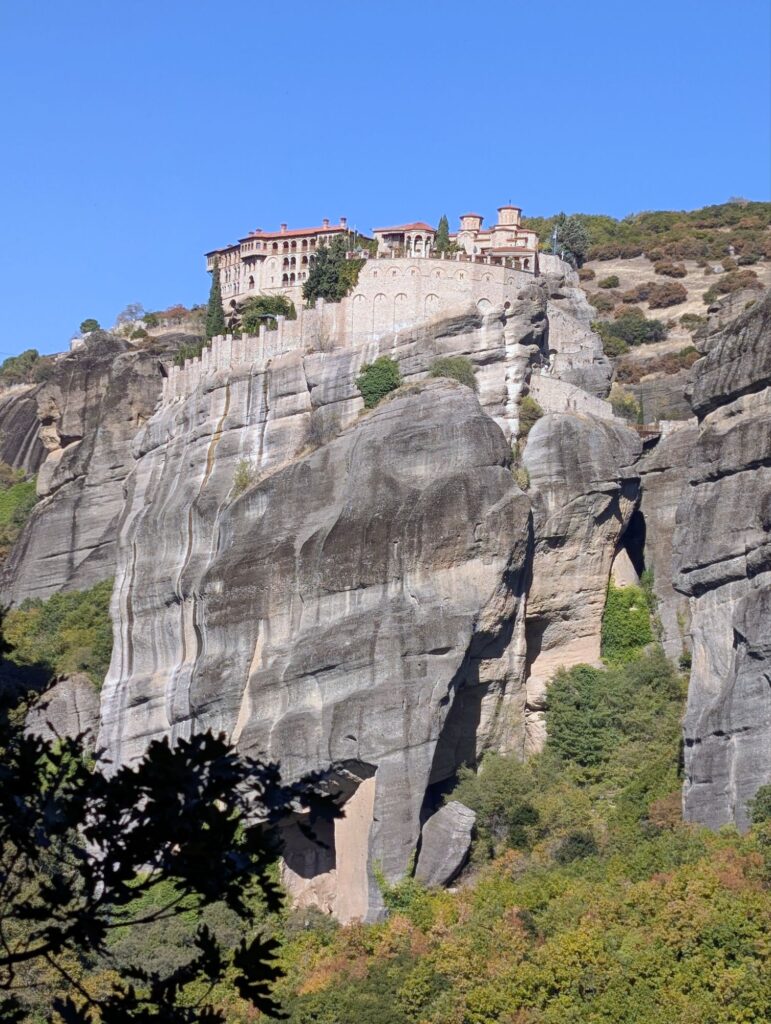
There were more stunning views from its balconies, both up to Vandaam monastery above and the valley floor below.
At the end of the tour we asked to be dropped in the centre of Kastraki village where we had a light lunch in a little cafe. Baguette and cheese pastry and excellent coffee.
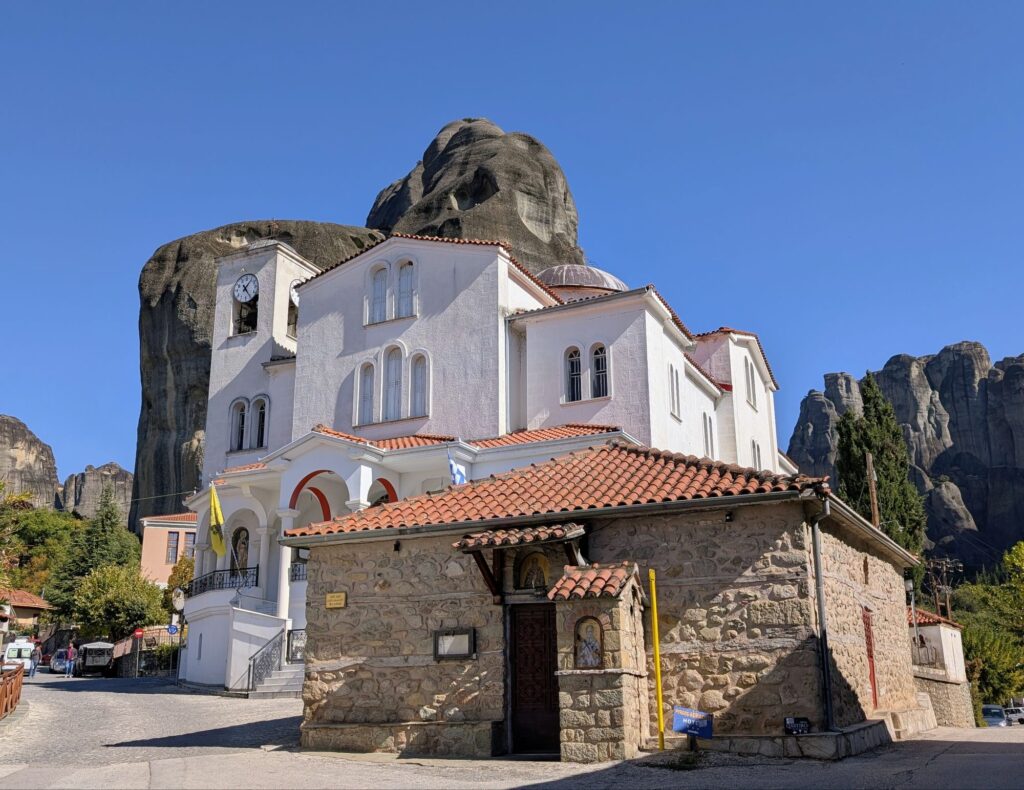
The white town church in the main squares had another little stone church in front of it, were not sure why?
We walked back to our hotels to relax for a few hours, in our case to blog and in Erin’s case to catch up on Celebrity Traitors!
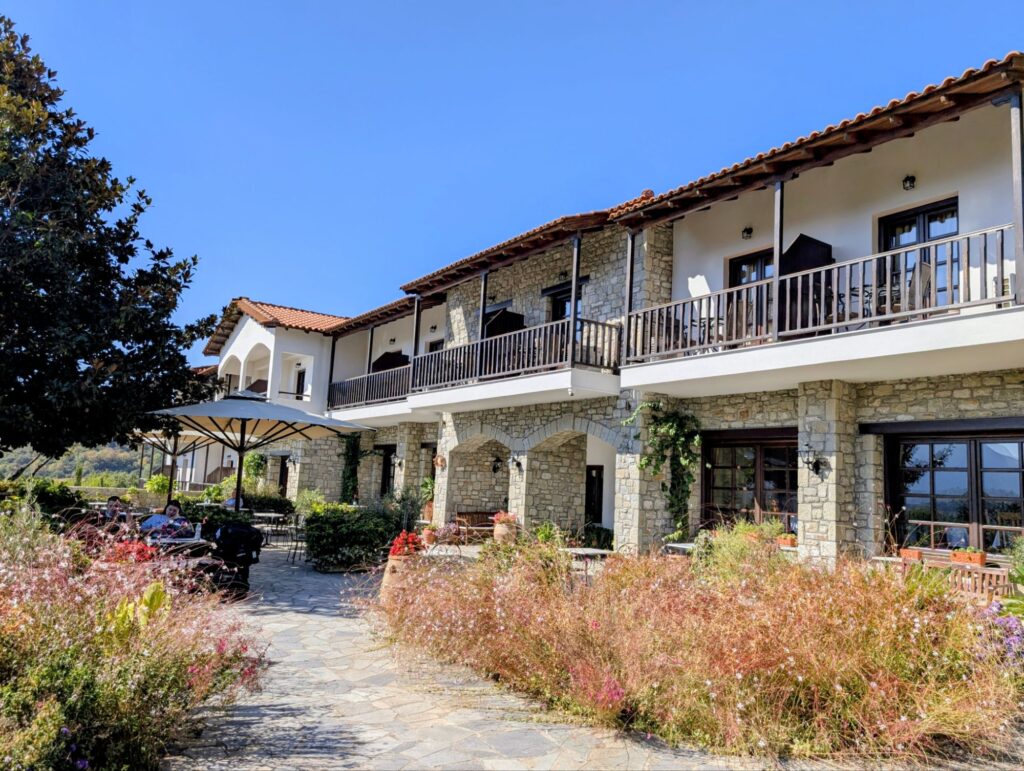
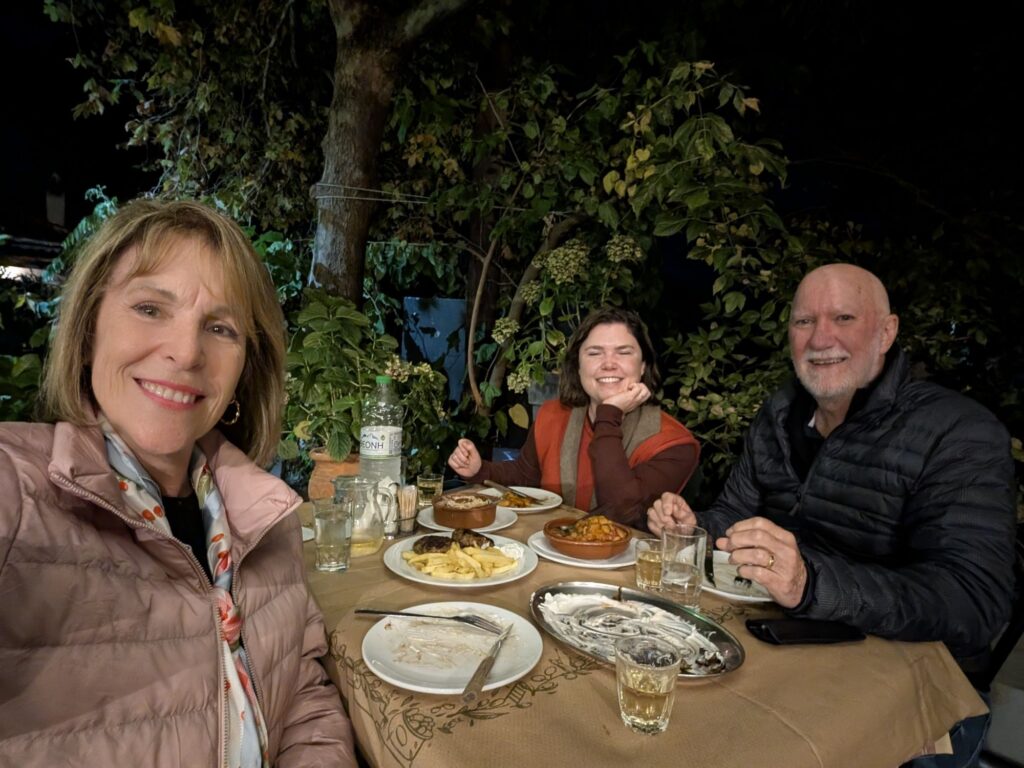
Late afternoon, we sat down to enjoy our last evening together in Greece. Drinks and chips on the terrace watching the sun go down again, before we walking up the road to try another local taverna for dinner. This time we had grilled oyster mushrooms, a wonderful cheese and vegetable dip, beans cooked in a rich tomato sauce and beef sausage with chips. Tomorrow we drive back to Athens airport.